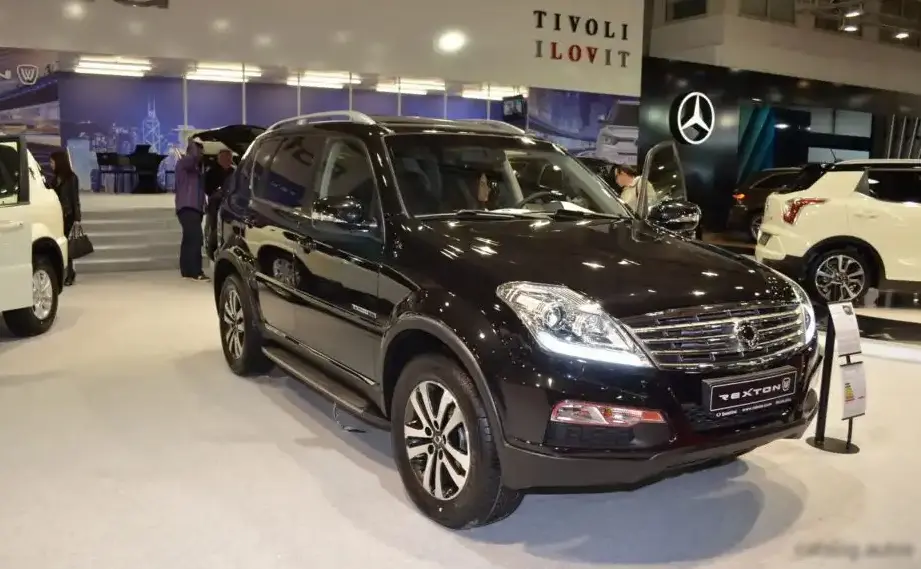
The SsangYong Rexton I, specifically the RX 270 XDi variant produced from 2012 to 2017, represents a significant mid-cycle refresh of the first-generation Rexton SUV. Introduced as a more refined and technologically updated version of the original, the facelifted Rexton aimed to improve upon its predecessor’s capabilities while maintaining its core value proposition: a robust, body-on-frame SUV with available four-wheel drive. The RX 270 XDi, equipped with a 2.7-liter diesel engine producing 165 horsepower, occupied a middle ground within the Rexton lineup, offering a balance between performance, fuel economy, and affordability. It was positioned as a practical choice for families and those needing a capable tow vehicle.
Technical Specifications
| Brand | SsangYong |
| Model | Rexton |
| Generation | Rexton I (facelift 2012) |
| Type (Engine) | RX 270 XDi (165 Hp) TOD 4WD |
| Start of production | 2012 |
| End of production | 2017 |
| Powertrain Architecture | Internal Combustion engine |
| Body type | SUV |
| Seats | 5-7 |
| Doors | 5 |
| Fuel consumption (urban) | 11.6 l/100 km (20.3 US mpg, 24.4 UK mpg, 8.6 km/l) |
| Fuel consumption (extra urban) | 7.5 l/100 km (31.4 US mpg, 37.7 UK mpg, 13.3 km/l) |
| Fuel consumption (combined) | 9 l/100 km (26.1 US mpg, 31.4 UK mpg, 11.1 km/l) |
| CO2 emissions | 232 g/km |
| Fuel Type | Diesel |
| Maximum speed | 177 km/h (109.98 mph) |
| Emission standard | Euro 4 |
| Weight-to-power ratio | 12 kg/Hp, 83.1 Hp/tonne |
| Weight-to-torque ratio | 5.8 kg/Nm, 171.2 Nm/tonne |
| Power | 165 Hp @ 4000 rpm |
| Power per litre | 61.2 Hp/l |
| Torque | 340 Nm @ 1800-3250 rpm (250.77 lb.-ft. @ 1800-3250 rpm) |
| Engine layout | Front, Longitudinal |
| Engine Model/Code | D27DT |
| Engine displacement | 2696 cm3 (164.52 cu. in.) |
| Number of cylinders | 5 |
| Engine configuration | Inline |
| Cylinder Bore | 86.2 mm (3.39 in.) |
| Piston Stroke | 92.4 mm (3.64 in.) |
| Compression ratio | 17.5:1 |
| Number of valves per cylinder | 4 |
| Fuel injection system | Diesel Commonrail |
| Engine aspiration | Turbocharger, Intercooler |
| Valvetrain | DOHC |
| Engine oil capacity | 8.5 l (8.98 US qt | 7.48 UK qt) |
| Coolant | 11 l (11.62 US qt | 9.68 UK qt) |
| Kerb Weight | 1986-2088 kg (4378.38 – 4603.25 lbs.) |
| Max. weight | 2760 kg (6084.76 lbs.) |
| Max load | 672-774 kg (1481.51 – 1706.38 lbs.) |
| Fuel tank capacity | 78 l (20.61 US gal | 17.16 UK gal) |
| Permitted trailer load with brakes (12%) | 3200 kg (7054.79 lbs.) |
| Permitted trailer load without brakes | 750 kg (1653.47 lbs.) |
| Length | 4755 mm (187.2 in.) |
| Width | 1900 mm (74.8 in.) |
| Height | 1840 mm (72.44 in.) |
| Wheelbase | 2835 mm (111.61 in.) |
| Front track | 1570 mm (61.81 in.) |
| Rear track | 1570 mm (61.81 in.) |
| Front overhang | 885 mm (34.84 in.) |
| Rear overhang | 1035 mm (40.75 in.) |
| Ride height (ground clearance) | 206 mm (8.11 in.) |
| Minimum turning circle | 11.4 m (37.4 ft.) |
| Approach angle | 28° |
| Departure angle | 25.5° |
| Ramp-over angle | 22.5° |
| Drivetrain Architecture | The Internal combustion engine (ICE) drives the rear wheels permanently, and the front wheels are driven through an electrically or mechanically operated clutch if necessary. |
| Drive wheel | All wheel drive (4×4) |
| Number of gears and type of gearbox | 5 gears, manual transmission |
| Front suspension | Coil spring, Double wishbone |
| Rear suspension | Rigid axle suspension, Coil spring |
| Front brakes | Ventilated discs |
| Rear brakes | Disc |
| Assisting systems | ABS (Anti-lock braking system) |
| Steering type | Steering rack and pinion |
| Power steering | Hydraulic Steering |
| Tires size | 235/75 R16; 255/70 R16; 255/60 R18 |
| Wheel rims size | 16; 18 |
Powertrain & Engine Architecture
The RX 270 XDi is powered by SsangYong’s D27DT 2.7-liter inline five-cylinder diesel engine. This engine, a mainstay in SsangYong vehicles for a period, utilizes a common-rail direct injection system to deliver fuel directly into the cylinders at extremely high pressure. This contributes to improved combustion efficiency and reduced emissions. The engine also features a turbocharger with an intercooler, enhancing power output and responsiveness. The DOHC (Double Overhead Camshaft) valvetrain manages the intake and exhaust valves, optimizing airflow for improved performance. The engine produces 165 horsepower at 4000 rpm and 340 Nm (250.77 lb.-ft.) of torque between 1800 and 3250 rpm. The engine is longitudinally mounted in the chassis. The 5-speed manual transmission was the standard offering, delivering power to all four wheels via SsangYong’s TOD (Torque on Demand) four-wheel-drive system.
Driving Characteristics
The 165 hp RX 270 XDi offered adequate, though not exhilarating, performance. Acceleration was reasonable for everyday driving, but the vehicle felt somewhat sluggish when fully loaded or attempting quick overtaking maneuvers. The manual transmission, while providing driver control, had relatively long throws. The TOD four-wheel-drive system provided enhanced traction in slippery conditions, making it a capable vehicle for off-road excursions and inclement weather. The gear ratios were tuned for fuel efficiency and towing capacity rather than outright speed. Compared to higher-output Rexton variants, the RX 270 XDi prioritized practicality and economy over performance.
Equipment & Trim Levels
The RX 270 XDi typically came equipped with features such as air conditioning, power windows, central locking, and an audio system. Higher trim levels added features like leather upholstery, sunroof, and upgraded audio systems. Safety features included ABS (Anti-lock Braking System) and airbags. The interior design was functional and durable, prioritizing practicality over luxury. The dashboard layout was straightforward and easy to use. Optional extras included a navigation system and parking sensors.
Chassis & Braking
The Rexton I utilized a traditional body-on-frame construction, providing a robust and durable chassis. The front suspension consisted of a double wishbone setup with coil springs, while the rear suspension employed a rigid axle with coil springs. This configuration provided a comfortable ride, but handling was not as precise as more modern SUVs with independent rear suspension. The braking system featured ventilated discs at the front and discs at the rear, providing adequate stopping power for the vehicle’s weight. Hydraulic power steering offered reasonable assistance at low speeds.
Market Reception & Comparison
The SsangYong Rexton I, including the RX 270 XDi variant, received mixed reviews. Critics praised its robust construction, spacious interior, and capable four-wheel-drive system. However, it was often criticized for its dated design, agricultural engine refinement, and relatively high fuel consumption. Compared to other SUVs in its class, such as the Hyundai Santa Fe or Kia Sorento, the Rexton offered a more rugged and utilitarian experience. The RX 270 XDi’s fuel economy was comparable to other diesel-powered SUVs of the time, but its CO2 emissions were relatively high.
Legacy
The SsangYong Rexton I, and specifically the RX 270 XDi, has developed a reputation for reliability, particularly its engine and drivetrain. While not known for its sophistication, the vehicle’s simple construction and robust components contribute to its longevity. In the used car market, the RX 270 XDi represents an affordable and capable SUV for those seeking a practical and durable vehicle. However, potential buyers should be aware of the vehicle’s age and potential maintenance requirements. Parts availability can sometimes be a challenge, but a dedicated community of SsangYong enthusiasts exists to provide support and assistance.