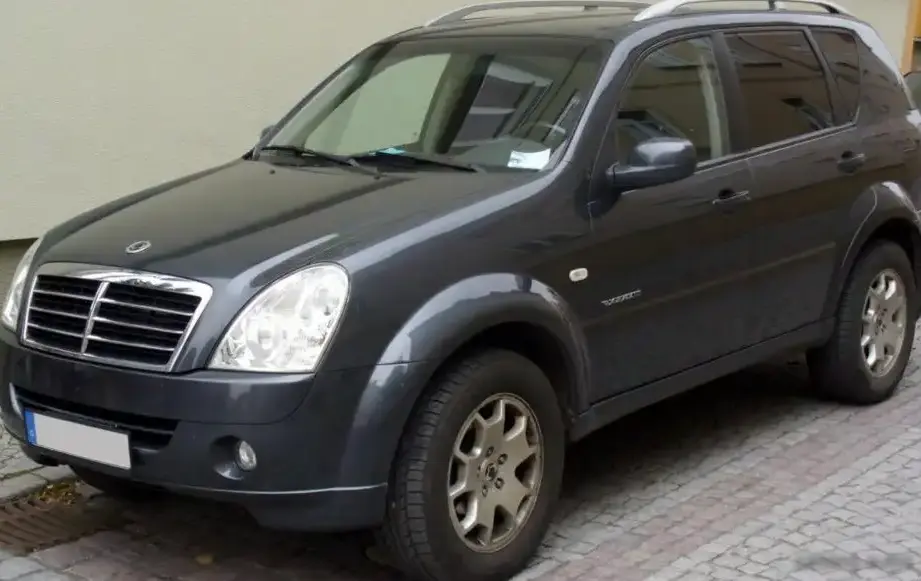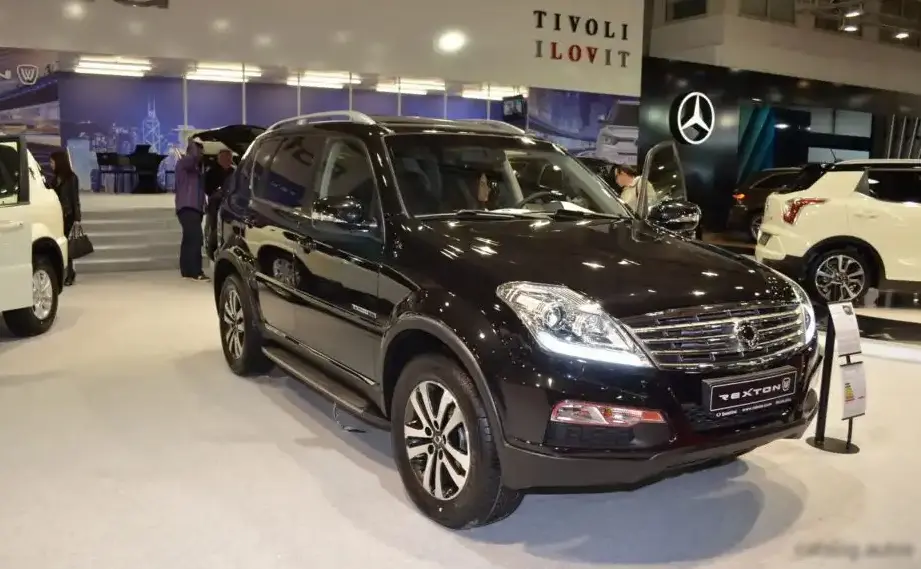
The SsangYong Rexton I (facelift 2012) RX 320 AWD Automatic represents a significant iteration of SsangYong’s flagship SUV, produced from 2012 to 2017. This model, positioned as a premium offering within the Rexton lineup, aimed to provide a blend of off-road capability, spaciousness, and relative luxury for the Korean automaker. The facelift brought updated styling and refinements to the original Rexton, which was initially based on the Mercedes-Benz M-Class platform (W163) from its 2001 introduction. The RX 320, with its 3.2-liter gasoline engine and automatic transmission, catered to buyers seeking a more powerful and refined Rexton experience, particularly in markets where diesel options were less favored.
Technical Specifications
| Brand | SsangYong |
| Model | Rexton |
| Generation | Rexton I (facelift 2012) |
| Type (Engine) | RX 320 (220 Hp) AWD Automatic |
| Start of production | 2012 |
| End of production | 2017 |
| Powertrain Architecture | Internal Combustion engine |
| Body type | SUV |
| Seats | 5-7 |
| Doors | 5 |
| Fuel consumption (urban) | 19.6 l/100 km (12 US mpg, 14.4 UK mpg, 5.1 km/l) |
| Fuel consumption (extra urban) | 11.4 l/100 km (20.6 US mpg, 24.8 UK mpg, 8.8 km/l) |
| Fuel consumption (combined) | 14.4 l/100 km (16.3 US mpg, 19.6 UK mpg, 6.9 km/l) |
| CO2 emissions | 323 g/km |
| Fuel Type | Petrol (Gasoline) |
| Maximum speed | 184 km/h (114.33 mph) |
| Emission standard | Euro 4 |
| Weight-to-power ratio | 9.1 kg/Hp, 110.5 Hp/tonne |
| Weight-to-torque ratio | 6.4 kg/Nm, 156.7 Nm/tonne |
| Power | 220 Hp @ 6100 rpm |
| Power per litre | 68.8 Hp/l |
| Torque | 312 Nm @ 4600 rpm (230.12 lb.-ft. @ 4600 rpm) |
| Engine layout | Front, Longitudinal |
| Engine Model/Code | G32D |
| Engine displacement | 3199 cm3 (195.21 cu. in.) |
| Number of cylinders | 6 |
| Engine configuration | Inline |
| Cylinder Bore | 89.9 mm (3.54 in.) |
| Piston Stroke | 84 mm (3.31 in.) |
| Compression ratio | 10:1 |
| Number of valves per cylinder | 4 |
| Fuel injection system | Multi-port manifold injection |
| Engine aspiration | Naturally aspirated engine |
| Valvetrain | DOHC |
| Engine oil capacity | 9 l (9.51 US qt | 7.92 UK qt) |
| Coolant | 11.5 l (12.15 US qt | 10.12 UK qt) |
| Kerb Weight | 1991-2088 kg (4389.4 – 4603.25 lbs.) |
| Max. weight | 2760 kg (6084.76 lbs.) |
| Max load | 672-769 kg (1481.51 – 1695.35 lbs.) |
| Fuel tank capacity | 78 l (20.61 US gal | 17.16 UK gal) |
| Permitted trailer load with brakes (12%) | 3200 kg (7054.79 lbs.) |
| Permitted trailer load without brakes | 750 kg (1653.47 lbs.) |
| Length | 4755 mm (187.2 in.) |
| Width | 1900 mm (74.8 in.) |
| Height | 1840 mm (72.44 in.) |
| Wheelbase | 2835 mm (111.61 in.) |
| Front track | 1570 mm (61.81 in.) |
| Rear track | 1570 mm (61.81 in.) |
| Front overhang | 885 mm (34.84 in.) |
| Rear overhang | 1035 mm (40.75 in.) |
| Ride height (ground clearance) | 247 mm (9.72 in.) |
| Approach angle | 28° |
| Departure angle | 25.5° |
| Ramp-over angle | 22.5° |
| Drivetrain Architecture | ICE drives four wheels permanently |
| Drive wheel | All wheel drive (4×4) |
| Number of gears | 5 |
| Gearbox type | automatic transmission |
| Front suspension | Coil spring, Double wishbone |
| Rear suspension | Independent multi-link spring suspension with stabilizer |
| Front brakes | Ventilated discs |
| Rear brakes | Disc |
| Assisting systems | ABS (Anti-lock braking system) |
| Steering type | Steering rack and pinion |
| Power steering | Hydraulic Steering |
| Tires size | 235/75 R16; 255/70 R16; 255/60 R18 |
| Wheel rims size | 16; 18 |
Powertrain & Engine Architecture
The RX 320 is powered by SsangYong’s G32D, a 3.2-liter inline-six cylinder gasoline engine. This engine, while not a cutting-edge design, provided a substantial power output for its time. It utilizes a multi-port fuel injection system and a double overhead camshaft (DOHC) valvetrain, contributing to reasonable efficiency and responsiveness. The engine produces 220 horsepower at 6,100 rpm and 312 Nm (230 lb-ft) of torque at 4,600 rpm. The engine is longitudinally mounted, directing power to all four wheels through a five-speed automatic transmission. This transmission, while providing convenience, wasn’t known for its particularly quick shifts or advanced features compared to some contemporary automatic gearboxes.
Driving Characteristics
The Rexton RX 320 Automatic offered a comfortable, if not particularly sporty, driving experience. The 3.2-liter engine provided adequate acceleration for highway cruising and overtaking, but it wasn’t a performance-oriented vehicle. The automatic transmission, while smooth, could feel somewhat sluggish, especially when downshifting. The all-wheel-drive system provided enhanced traction in various conditions, making it suitable for both on-road and light off-road use. Compared to the diesel-powered Rextons, the RX 320 offered a quieter and smoother engine experience, but at the cost of significantly lower fuel economy. Manual transmission versions, when available, offered more driver engagement and slightly improved fuel efficiency.
Equipment & Trim Levels
The RX 320 typically came well-equipped, reflecting its position as a premium trim level. Standard features often included leather upholstery, automatic climate control, power windows and mirrors, a CD/radio system, and alloy wheels. Higher-spec versions could be equipped with optional extras such as a sunroof, navigation system, and upgraded audio system. The interior design was functional and relatively spacious, offering comfortable seating for up to seven passengers depending on the configuration. The facelifted model featured minor interior refinements, including updated dashboard trim and improved materials.
Chassis & Braking
The Rexton I utilized a body-on-frame construction, providing robust durability and off-road capability. The front suspension consisted of a coil spring, double wishbone setup, while the rear featured an independent multi-link spring suspension with a stabilizer bar. This suspension configuration aimed to balance ride comfort with handling stability. Braking duties were handled by ventilated discs at the front and solid discs at the rear, assisted by an Anti-lock Braking System (ABS). The steering was a hydraulic rack and pinion system, providing reasonable precision and feedback.
Market Reception & Comparison
The Rexton RX 320 received mixed reviews. Critics generally praised its spaciousness, off-road capability, and comfortable ride. However, the gasoline engine’s fuel economy was a significant drawback, especially compared to the more popular diesel options. The automatic transmission also drew criticism for its lack of responsiveness. In terms of competition, the Rexton RX 320 faced rivals such as the Mitsubishi Pajero, Kia Sorento, and Hyundai Santa Fe. The Rexton offered a more rugged and utilitarian appeal compared to some of its more car-like competitors.
Legacy
The SsangYong Rexton I RX 320, while not a mainstream success, holds a niche appeal among enthusiasts seeking a capable and affordable SUV. The 3.2-liter engine, while thirsty, is generally considered reliable if properly maintained. The automatic transmission, however, can be prone to issues with age. Today, the RX 320 can be found on the used car market at relatively low prices, making it an attractive option for those seeking a spacious and capable SUV for a budget. Its robust construction and all-wheel-drive system continue to make it a viable choice for those needing a vehicle for occasional off-road adventures or challenging weather conditions.