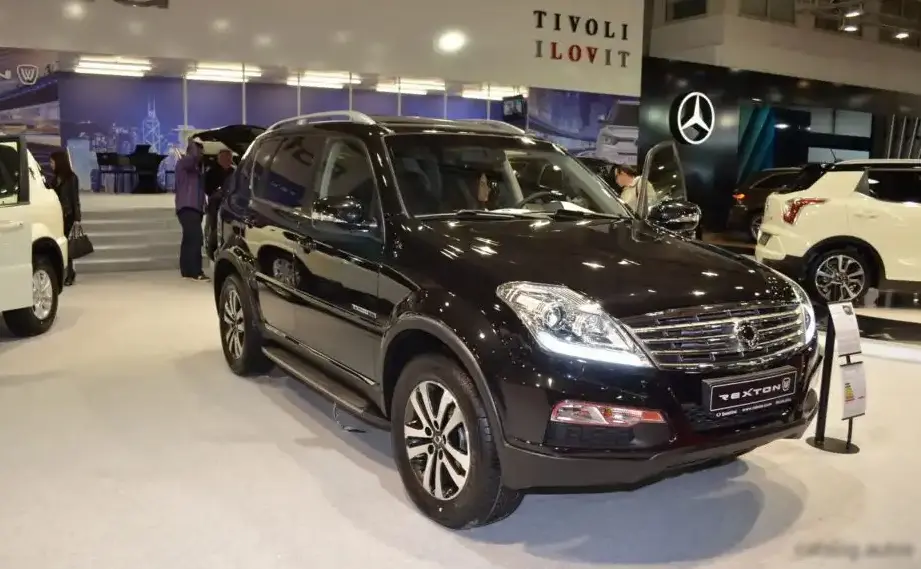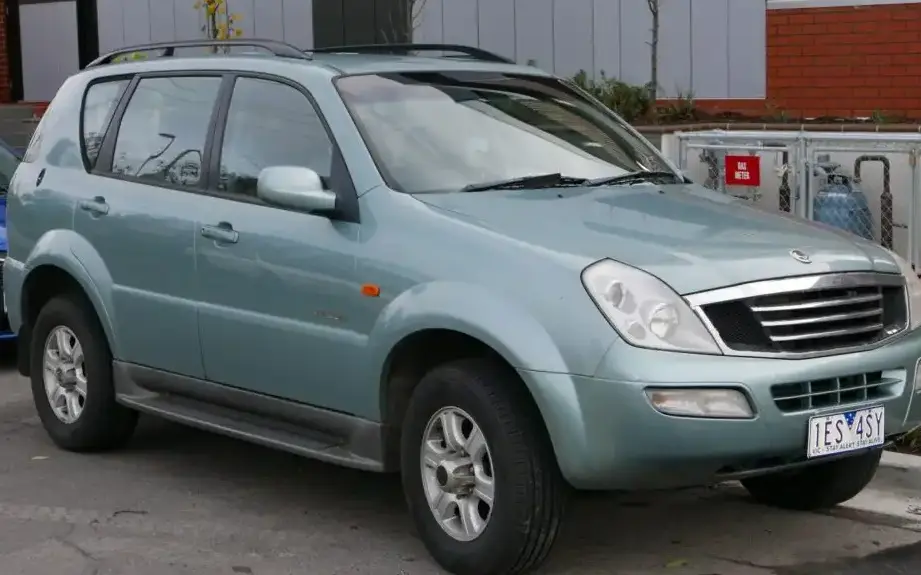
The SsangYong Rexton I RX 230, produced from 2001 to 2006, represents the initial foray of the South Korean automaker into the mid-size SUV segment. Built upon a body-on-frame construction, the Rexton aimed to provide a robust and capable vehicle, particularly appealing to those seeking a blend of off-road ability and family practicality. The RX 230 variant, equipped with a 2.3-liter gasoline engine producing 143 horsepower, served as the entry-level offering in the Rexton lineup, positioned below the more powerful 2.7-liter and later, the 2.9-liter diesel models. It was primarily marketed in South Korea and select export markets, including parts of Europe and the Middle East, offering a more affordable alternative to established Japanese and European competitors.
Technical Specifications
| Brand | SsangYong |
| Model | Rexton |
| Generation | Rexton I |
| Type (Engine) | RX 230 (143 Hp) |
| Start of production | 2001 |
| End of production | 2006 |
| Powertrain Architecture | Internal Combustion engine |
| Body type | SUV |
| Seats | 5 |
| Doors | 5 |
| Fuel consumption (urban) | 15.8 l/100 km (14.9 US mpg, 17.9 UK mpg, 6.3 km/l) |
| Fuel consumption (extra urban) | 9.4 l/100 km (25 US mpg, 30.1 UK mpg, 10.6 km/l) |
| Fuel consumption (combined) | 11.7 l/100 km (20.1 US mpg, 24.1 UK mpg, 8.5 km/l) |
| Fuel Type | Petrol (Gasoline) |
| Maximum speed | 170 km/h (105.63 mph) |
| Weight-to-power ratio | 12.7 kg/Hp, 78.8 Hp/tonne |
| Weight-to-torque ratio | 8.7 kg/Nm, 115.2 Nm/tonne |
| Power | 143 Hp @ 5250 rpm |
| Power per litre | 62.3 Hp/l |
| Torque | 209 Nm @ 4000 rpm (154.15 lb.-ft. @ 4000 rpm) |
| Engine layout | Front, Longitudinal |
| Engine Model/Code | G23D |
| Engine displacement | 2295 cm3 (140.05 cu. in.) |
| Number of cylinders | 4 |
| Engine configuration | Inline |
| Cylinder Bore | 90.9 mm (3.58 in.) |
| Piston Stroke | 88.4 mm (3.48 in.) |
| Compression ratio | 10.4:1 |
| Number of valves per cylinder | 4 |
| Fuel injection system | Multi-port manifold injection |
| Engine aspiration | Naturally aspirated engine |
| Valvetrain | DOHC |
| Coolant Capacity | 10.5 l (11.1 US qt | 9.24 UK qt) |
| Kerb Weight | 1815 kg (4001.39 lbs.) |
| Max. weight | 2550 kg (5621.79 lbs.) |
| Max load | 735 kg (1620.4 lbs.) |
| Trunk (boot) space – minimum | 500 l (17.66 cu. ft.) |
| Trunk (boot) space – maximum | 1920 l (67.8 cu. ft.) |
| Fuel tank capacity | 80 l (21.13 US gal | 17.6 UK gal) |
| Length | 4720 mm (185.83 in.) |
| Width | 1870 mm (73.62 in.) |
| Height | 1760 mm (69.29 in.) |
| Wheelbase | 2828 mm (111.34 in.) |
| Front track | 1550 mm (61.02 in.) |
| Rear (Back) track | 1540 mm (60.63 in.) |
| Drive wheel | All wheel drive (4×4) |
| Number of gears and type of gearbox | 5 gears, manual transmission |
| Front suspension | Double wishbone |
| Rear suspension | Coil spring |
| Front brakes | Ventilated discs |
| Rear brakes | Disc |
| Assisting systems | ABS (Anti-lock braking system) |
| Steering type | Steering rack and pinion |
| Power steering | Hydraulic Steering |
| Tires size | 235/70 R16 |
Powertrain & Engine Architecture
The RX 230’s heart is the SsangYong G23D engine, a 2.3-liter inline-four cylinder gasoline engine. This engine utilizes a multi-port fuel injection system, a relatively common setup for the period, providing adequate fuel atomization for efficient combustion. The engine features a double overhead camshaft (DOHC) valvetrain, operating four valves per cylinder, which aids in improved breathing and higher-rpm performance. The G23D engine, while not particularly groundbreaking, was known for its relative simplicity and durability. The engine is longitudinally mounted within the chassis, driving all four wheels through a five-speed manual transmission. The transmission was chosen to balance cost and functionality, offering a reasonable level of driver control without the added expense of an automatic option in this base trim.
Driving Characteristics
The RX 230, with its 143 horsepower and 209 Nm (154 lb-ft) of torque, offered modest performance. Acceleration was adequate for everyday driving, but not particularly brisk. The five-speed manual transmission allowed drivers to keep the engine in its optimal power band, but the vehicle’s substantial weight (1815 kg / 4001 lbs) limited overall responsiveness. Compared to the available 2.7-liter gasoline or diesel options, the RX 230 felt noticeably less powerful, especially when fully loaded or tackling steep inclines. The all-wheel-drive system provided enhanced traction in slippery conditions, making it a capable vehicle for inclement weather or light off-road use. The gear ratios were tuned for a balance of fuel economy and usability, prioritizing smooth cruising over outright acceleration.
Equipment & Trim Levels
The RX 230, as the entry-level Rexton, typically came equipped with a fairly basic level of standard features. Interior appointments generally included cloth upholstery, manual air conditioning, and a basic audio system. Power windows and door locks were often included, but features like leather seats, sunroofs, or advanced audio systems were typically reserved for higher trim levels. The dashboard layout was functional and straightforward, prioritizing ease of use over aesthetic flair. Optional extras included alloy wheels, upgraded audio systems, and a rear parking sensor.
Chassis & Braking
The Rexton I utilized a traditional body-on-frame construction, providing a robust and durable chassis. The front suspension employed a double wishbone setup, while the rear suspension utilized a coil spring arrangement. This configuration aimed to provide a comfortable ride while maintaining reasonable handling characteristics. Braking duties were handled by ventilated discs at the front and solid discs at the rear. An Anti-lock Braking System (ABS) was standard, enhancing safety by preventing wheel lockup during hard braking. Steering was provided by a hydraulic power steering rack and pinion system, offering a reasonable level of assistance and feedback.
Market Reception & Comparison
The RX 230 received mixed reviews. Critics generally acknowledged its robust construction and all-wheel-drive capability, but often criticized its relatively underpowered engine and somewhat dated interior. Compared to competitors like the Toyota RAV4 or Honda CR-V, the Rexton RX 230 offered a more rugged and utilitarian experience, but lacked the refinement and fuel efficiency of those Japanese rivals. Fuel economy, at around 11.7 l/100km (20.1 US mpg), was considered average for its class. The RX 230’s primary appeal lay in its affordability and its ability to handle both on-road and off-road conditions.
Legacy
The SsangYong Rexton I RX 230, while not a sales success on a global scale, established SsangYong as a player in the SUV market. The G23D engine proved to be reasonably reliable, and well-maintained examples continue to be found on the used car market today. However, finding parts can sometimes be challenging due to SsangYong’s relatively limited presence in many markets. The RX 230 represents a unique and somewhat overlooked vehicle, offering a blend of ruggedness, affordability, and all-wheel-drive capability that appeals to a niche group of buyers seeking a practical and durable SUV.