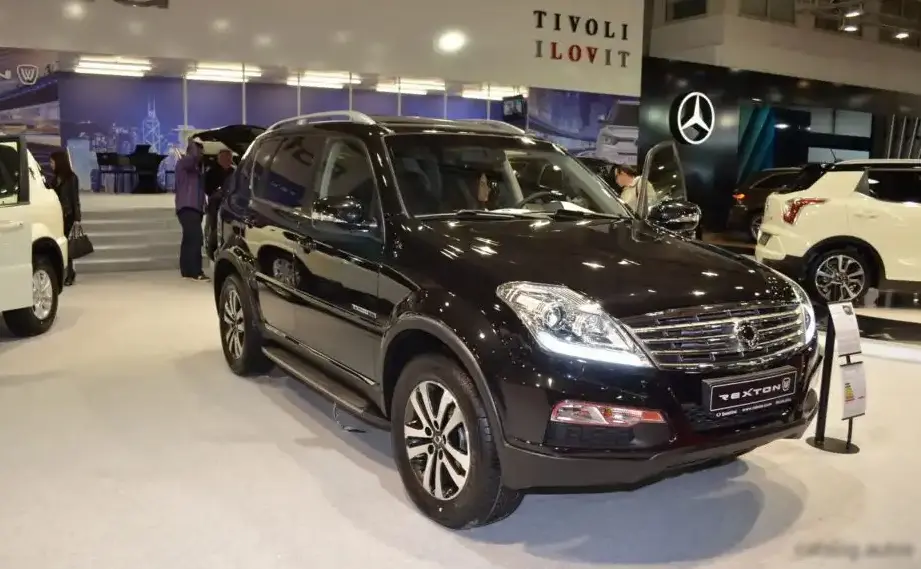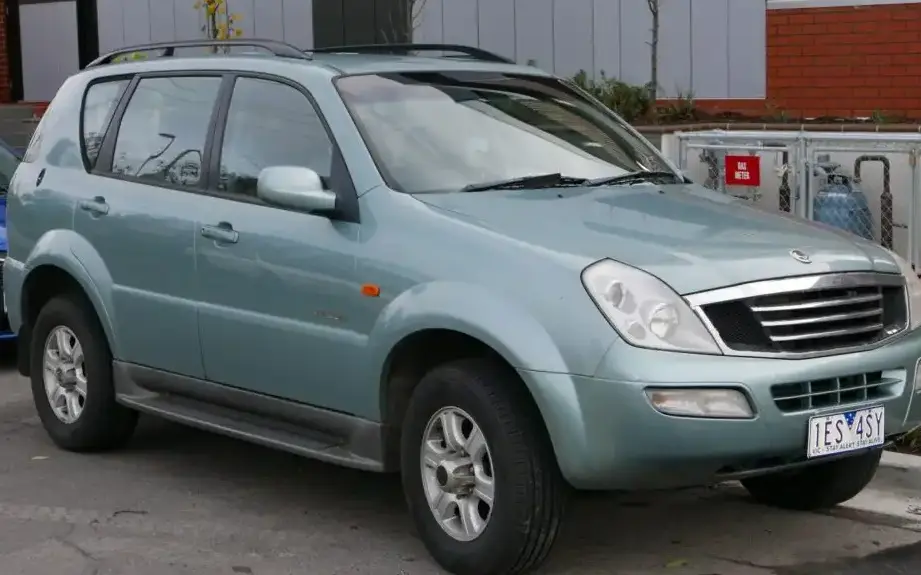
The SsangYong Rexton I RX 290 TD Automatic, produced between 2001 and 2006, represents the initial foray of the South Korean automaker into the mid-size SUV segment. Built upon a body-on-frame construction, the Rexton aimed to offer a robust and capable vehicle, particularly appealing to those seeking a blend of off-road ability and passenger comfort. The RX 290 TD, equipped with a 2.9-liter turbodiesel engine and a five-speed automatic transmission, occupied a middle ground within the Rexton lineup, offering a balance between performance and fuel efficiency. It was positioned as a more accessible option compared to the later, more powerful petrol variants, and aimed to compete with established European and Japanese SUVs.
Technical Specifications
| Brand | SsangYong |
| Model | Rexton |
| Generation | Rexton I |
| Type (Engine) | RX 290 TD (120 Hp) Automatic |
| Start of production | 2001 |
| End of production | 2006 |
| Powertrain Architecture | Internal Combustion engine |
| Body type | SUV |
| Seats | 5 |
| Doors | 5 |
| Fuel consumption (urban) | 15 l/100 km (15.7 US mpg, 18.8 UK mpg, 6.7 km/l) |
| Fuel consumption (extra urban) | 9.3 l/100 km (25.3 US mpg, 30.4 UK mpg, 10.8 km/l) |
| Fuel consumption (combined) | 11.3 l/100 km (20.8 US mpg, 25 UK mpg, 8.8 km/l) |
| Fuel Type | Diesel |
| Acceleration 0 – 100 km/h | 17 sec |
| Acceleration 0 – 62 mph | 17 sec |
| Acceleration 0 – 60 mph | 16.2 sec |
| Maximum speed | 157 km/h (97.56 mph) |
| Weight-to-power ratio | 15.4 kg/Hp, 64.9 Hp/tonne |
| Weight-to-torque ratio | 7.4 kg/Nm, 135.1 Nm/tonne |
| Power | 120 Hp @ 4000 rpm |
| Power per litre | 41.8 Hp/l |
| Torque | 250 Nm @ 2200 rpm (184.39 lb.-ft. @ 2200 rpm) |
| Engine layout | Front, Longitudinal |
| Engine displacement | 2874 cm3 (175.38 cu. in.) |
| Number of cylinders | 5 |
| Engine configuration | Inline |
| Cylinder Bore | 89 mm (3.5 in.) |
| Piston Stroke | 92.4 mm (3.64 in.) |
| Compression ratio | 22:1 |
| Number of valves per cylinder | 2 |
| Fuel injection system | Precombustion chamber injection |
| Engine aspiration | Turbocharger, Intercooler |
| Valvetrain | DOHC |
| Kerb Weight | 1850 kg (4078.55 lbs.) |
| Max. weight | 2550 kg (5621.79 lbs.) |
| Max load | 700 kg (1543.24 lbs.) |
| Trunk (boot) space – minimum | 500 l (17.66 cu. ft.) |
| Trunk (boot) space – maximum | 1920 l (67.8 cu. ft.) |
| Fuel tank capacity | 80 l (21.13 US gal, 17.6 UK gal) |
| Length | 4720 mm (185.83 in.) |
| Width | 1870 mm (73.62 in.) |
| Height | 1760 mm (69.29 in.) |
| Wheelbase | 2820 mm (111.02 in.) |
| Front track | 1550 mm (61.02 in.) |
| Rear (Back) track | 1540 mm (60.63 in.) |
| Drive wheel | All wheel drive (4×4) |
| Number of gears and type of gearbox | 5 gears, automatic transmission |
| Front suspension | Double wishbone |
| Rear suspension | Coil spring |
| Front brakes | Ventilated discs |
| Rear brakes | Disc |
| Assisting systems | ABS (Anti-lock braking system) |
| Steering type | Steering rack and pinion |
| Power steering | Hydraulic Steering |
| Tires size | 235/70 R16 |
Powertrain & Engine Architecture
The RX 290 TD utilizes SsangYong’s 2.9-liter (2874 cc) inline five-cylinder diesel engine. This engine, often identified by engine codes such as XLD290, features a precombustion chamber injection system, a common design for diesel engines of that era. A turbocharger with an intercooler was employed to boost power output to 120 horsepower at 4000 rpm and 250 Nm (184 lb-ft) of torque at 2200 rpm. The engine’s longitudinal mounting allowed for a traditional rear-wheel-drive layout, with the added benefit of a selectable four-wheel-drive system. The five-speed automatic transmission, while providing convenience, was not known for its particularly quick shifts or fuel efficiency compared to contemporary manual transmissions. It was a fairly standard torque converter automatic, prioritizing smooth operation over outright performance.
Driving Characteristics
The Rexton RX 290 TD Automatic offered a comfortable, if not particularly exhilarating, driving experience. The 120 hp output, coupled with the automatic transmission, resulted in a 0-60 mph time of around 16.2 seconds and a top speed of approximately 97 mph. Acceleration was adequate for everyday driving, but overtaking maneuvers required careful planning. The automatic transmission’s gear ratios were geared towards fuel economy and relaxed cruising rather than sporty performance. The four-wheel-drive system provided enhanced traction in slippery conditions, making it a capable vehicle for light off-road use. However, the Rexton’s considerable weight (approximately 4079 lbs) was noticeable, particularly when cornering or braking.
Equipment & Trim Levels
The RX 290 TD Automatic typically came equipped with a reasonable level of standard features for its price point. These included air conditioning, power windows, central locking, and an AM/FM radio. Higher trim levels offered options such as leather upholstery, sunroof, and upgraded audio systems. Interior appointments were generally functional and durable, reflecting the Rexton’s focus on practicality. The dashboard layout was straightforward, with clearly labeled controls. Safety features were relatively basic by modern standards, typically including ABS brakes and a driver’s airbag.
Chassis & Braking
The Rexton I utilized a traditional body-on-frame construction, providing a robust and durable chassis. The front suspension employed a double wishbone setup, while the rear suspension featured coil springs. This configuration aimed to balance ride comfort with off-road capability. Braking duties were handled by ventilated discs at the front and solid discs at the rear. The ABS system helped to prevent wheel lockup during hard braking, enhancing stability. Steering was provided by a hydraulic rack-and-pinion system, offering reasonable precision and feedback.
Market Reception & Comparison
The SsangYong Rexton I RX 290 TD Automatic received mixed reviews from automotive critics. While praised for its spacious interior, robust construction, and off-road capability, it was often criticized for its relatively slow performance, dated technology, and unrefined engine. Compared to its competitors, such as the Toyota Land Cruiser Prado and Mitsubishi Pajero, the Rexton offered a more affordable price point but lacked the same level of refinement and brand recognition. Fuel economy was average for a diesel SUV of its size, with combined figures around 20.8 US mpg. Reliability was generally considered acceptable, but some owners reported issues with the automatic transmission and electrical components.
Legacy
The SsangYong Rexton I RX 290 TD Automatic, while not a runaway success, played a significant role in establishing SsangYong as a player in the global SUV market. The 2.9-liter diesel engine, while not particularly sophisticated, proved to be reasonably durable and is still found in many used examples today. The Rexton I’s body-on-frame construction and four-wheel-drive system continue to appeal to those seeking a rugged and capable vehicle. In the used car market, the RX 290 TD Automatic represents an affordable entry point into the world of mid-size SUVs, offering a blend of practicality, durability, and off-road capability. However, potential buyers should be aware of the potential for age-related issues with the transmission and other components, and a thorough inspection is recommended before purchase.