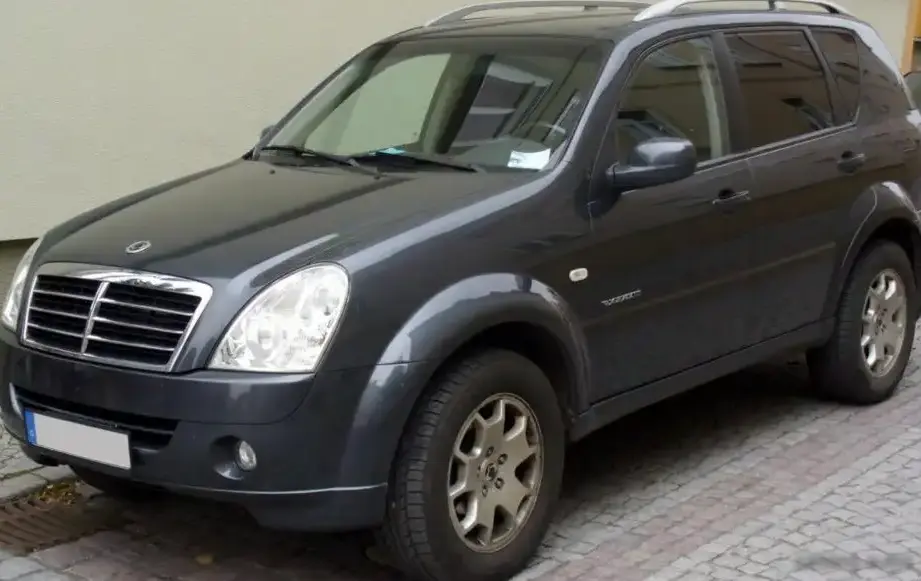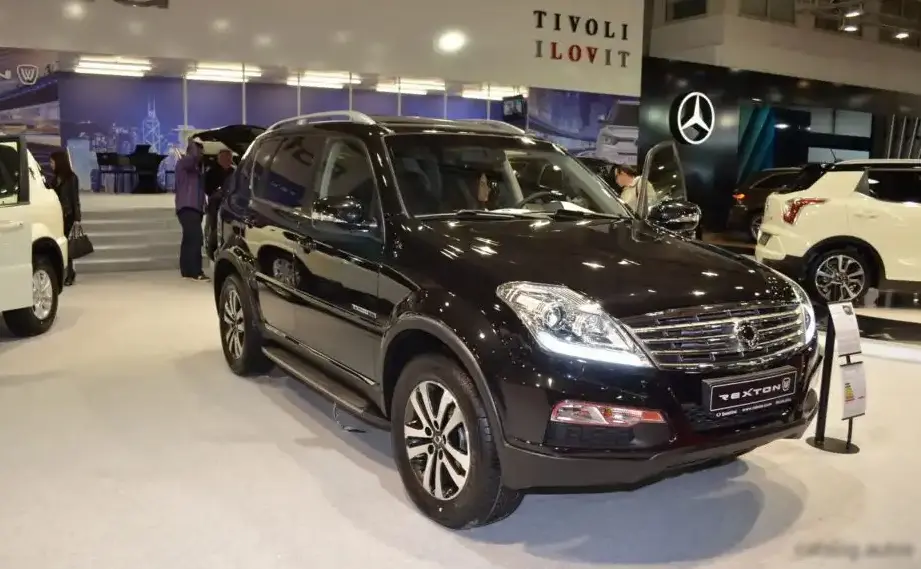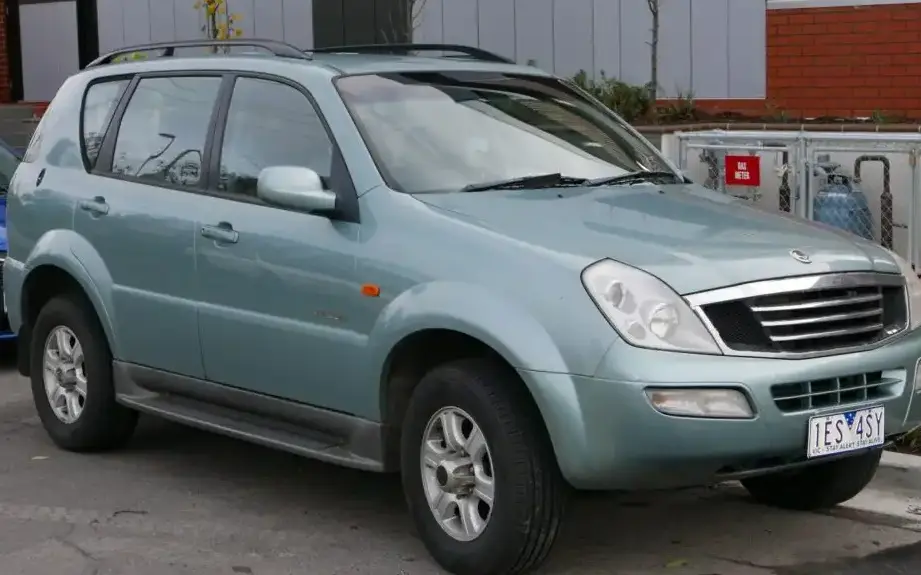
The SsangYong Rexton I RX 320, produced from 2001 to 2006, represents the initial foray of the South Korean automaker into the mid-size SUV segment. Built upon a body-on-frame construction, the Rexton aimed to provide a robust and capable vehicle, particularly appealing to those seeking towing capacity and off-road ability. The RX 320 variant, equipped with the 3.2-liter inline-six engine, served as the premium offering within the first-generation Rexton lineup, positioned above the lower-trim models with smaller displacement engines. While not a major sales success in the highly competitive US market, the Rexton established SsangYong as a contender in the global SUV landscape.
Technical Specifications
| Brand | SsangYong |
| Model | Rexton |
| Generation | Rexton I |
| Type (Engine) | RX 320 (220 Hp) |
| Start of production | 2001 |
| End of production | 2006 |
| Powertrain Architecture | Internal Combustion engine |
| Body type | SUV |
| Seats | 5 |
| Doors | 5 |
| Fuel consumption (urban) | 18.2 l/100 km (12.9 US mpg) |
| Fuel consumption (extra urban) | 10.9 l/100 km (21.6 US mpg) |
| Fuel Type | Petrol (Gasoline) |
| Acceleration 0 – 100 km/h | 9.9 sec |
| Acceleration 0 – 62 mph | 9.9 sec |
| Acceleration 0 – 60 mph | 9.4 sec |
| Maximum speed | 190 km/h (118.06 mph) |
| Weight-to-power ratio | 8.5 kg/Hp |
| Weight-to-torque ratio | 6.3 kg/Nm |
| Power | 220 Hp @ 5750 rpm |
| Torque | 295 Nm @ 4000 rpm (217.58 lb.-ft. @ 4000 rpm) |
| Engine layout | Front, Longitudinal |
| Engine Model/Code | G32D |
| Engine displacement | 3199 cm3 (195.21 cu. in.) |
| Number of cylinders | 6 |
| Engine configuration | Inline |
| Cylinder Bore | 89.9 mm (3.54 in.) |
| Piston Stroke | 84 mm (3.31 in.) |
| Compression ratio | 10:1 |
| Number of valves per cylinder | 4 |
| Fuel injection system | Multi-port manifold injection |
| Engine aspiration | Naturally aspirated engine |
| Valvetrain | DOHC |
| Kerb Weight | 1860 kg (4100.6 lbs.) |
| Max. weight | 2550 kg (5621.79 lbs.) |
| Max load | 690 kg (1521.19 lbs.) |
| Trunk (boot) space – minimum | 500 l (17.66 cu. ft.) |
| Trunk (boot) space – maximum | 1920 l (67.8 cu. ft.) |
| Fuel tank capacity | 80 l (21.13 US gal) |
| Length | 4720 mm (185.83 in.) |
| Width | 1870 mm (73.62 in.) |
| Height | 1760 mm (69.29 in.) |
| Wheelbase | 2820 mm (111.02 in.) |
| Front track | 1550 mm (61.02 in.) |
| Rear (Back) track | 1540 mm (60.63 in.) |
| Drive wheel | All wheel drive (4×4) |
| Number of gears | 5 |
| Gearbox type | Manual transmission |
| Front suspension | Double wishbone |
| Rear suspension | Coil spring |
| Front brakes | Ventilated discs |
| Rear brakes | Disc |
| Assisting systems | ABS (Anti-lock braking system) |
| Steering type | Steering rack and pinion |
| Power steering | Hydraulic Steering |
| Tires size | 235/70 R16 |
Powertrain & Engine Architecture
The RX 320’s heart is the SsangYong G32D, a 3.2-liter inline-six cylinder gasoline engine. This engine, while not a cutting-edge design, was known for its relative smoothness and durability. It utilizes a multi-port fuel injection system, delivering fuel to each cylinder independently. The engine features a double overhead camshaft (DOHC) valvetrain, operating four valves per cylinder to optimize airflow and enhance performance. The 10:1 compression ratio strikes a balance between power output and fuel efficiency. The engine’s longitudinal mounting allowed for a traditional rear-wheel-drive layout, with the added benefit of a selectable four-wheel-drive system. The five-speed manual transmission was the standard offering for the RX 320, providing drivers with direct control over the engine’s power. While an automatic transmission was available in some markets, the manual was favored by enthusiasts for its responsiveness.
Driving Characteristics
The RX 320, with its 220 horsepower and 217 lb-ft of torque, offered respectable performance for its size and class. Acceleration from 0 to 60 mph took approximately 9.4 seconds, making it competitive with other mid-size SUVs of the era. The manual transmission allowed for precise gear selection, enabling drivers to maximize the engine’s power. The four-wheel-drive system provided enhanced traction in various conditions, making the Rexton capable both on and off-road. However, the Rexton’s body-on-frame construction resulted in a less refined ride compared to more modern, unibody SUVs. Body roll was noticeable during cornering, and the steering lacked the precision of some competitors. Compared to the smaller-engined Rexton variants, the RX 320 offered a significant performance advantage, making it more suitable for highway driving and towing.
Equipment & Trim Levels
The RX 320 typically came equipped with a reasonable level of standard features, including air conditioning, power windows and locks, and an AM/FM stereo. Higher trim levels offered upgrades such as leather upholstery, a sunroof, and upgraded audio systems. The interior design was functional but lacked the sophistication of some European and Japanese competitors. The Rexton’s spacious interior provided ample room for passengers and cargo. The rear seats could be folded down to create a larger cargo area, increasing versatility. Optional extras included a navigation system and a rear parking sensor.
Chassis & Braking
The Rexton I utilized a traditional body-on-frame chassis, providing a robust and durable platform. The front suspension featured a double wishbone design, while the rear suspension employed coil springs. This setup offered a comfortable ride, but as mentioned previously, didn’t provide the handling characteristics of a unibody SUV. The braking system consisted of ventilated discs at the front and solid discs at the rear. Anti-lock brakes (ABS) were standard, enhancing safety and control during emergency braking situations. The Rexton’s relatively heavy weight contributed to longer stopping distances compared to lighter vehicles.
Market Reception & Comparison
The SsangYong Rexton I RX 320 received mixed reviews from automotive critics. While praised for its spacious interior, robust construction, and capable four-wheel-drive system, it was often criticized for its unrefined ride, dated interior design, and lack of brand recognition. Compared to competitors like the Toyota 4Runner and Jeep Grand Cherokee, the Rexton offered a more affordable price point but lacked the same level of refinement and brand prestige. Fuel economy was also a concern, with the 3.2-liter engine consuming a significant amount of gasoline. The RX 320 offered a better driving experience than the lower-trim Rexton models, but its higher price tag limited its appeal to a smaller segment of the market.
Legacy
The SsangYong Rexton I RX 320, while not a runaway success, laid the foundation for SsangYong’s future SUV offerings. The G32D engine proved to be relatively reliable, and many examples are still on the road today. However, finding replacement parts can be challenging due to SsangYong’s limited presence in some markets. The Rexton I is now considered a collectible vehicle by some enthusiasts, particularly those interested in Korean automotive history. The RX 320 variant, with its more powerful engine, is often preferred by those seeking a more engaging driving experience. The Rexton I demonstrated SsangYong’s commitment to building capable and durable SUVs, a legacy that continues with the current generation Rexton.