Technical Specifications
| Brand | SsangYong |
| Model | Rexton |
| Generation | Rexton II |
| Type (Engine) | 2.2 e-XDi (181 Hp) |
| Start of production | 2017 |
| End of production | March, 2021 |
| Powertrain Architecture | Internal Combustion engine |
| Body type | SUV |
| Seats | 5 |
| Doors | 5 |
| Fuel consumption (economy) – urban (NEDC) | 9.6 l/100 km (24.5 US mpg, 29.4 UK mpg, 10.4 km/l) |
| Fuel consumption (economy) – extra urban (NEDC) | 6.4 l/100 km (36.8 US mpg, 44.1 UK mpg, 15.6 km/l) |
| Fuel consumption (economy) – combined (NEDC) | 7.6 l/100 km (30.9 US mpg, 37.2 UK mpg, 13.2 km/l) |
| CO2 emissions (NEDC) | 199 g/km |
| Fuel Type | Diesel |
| Maximum speed | 185 km/h (114.95 mph) |
| Emission standard | Euro 6 |
| Weight-to-power ratio | 11.2 kg/Hp, 89.1 Hp/tonne |
| Weight-to-torque ratio | 5.1 kg/Nm, 196.9 Nm/tonne |
| Power | 181 Hp @ 4000 rpm |
| Power per litre | 83.9 Hp/l |
| Torque | 400 Nm @ 1400-2800 rpm (295.02 lb.-ft. @ 1400-2800 rpm) |
| Engine layout | Front, Longitudinal |
| Engine Model/Code | D22DTR |
| Engine displacement | 2157 cm3 (131.63 cu. in.) |
| Number of cylinders | 4 |
| Engine configuration | Inline |
| Cylinder Bore | 86.2 mm (3.39 in.) |
| Piston Stroke | 92.4 mm (3.64 in.) |
| Compression ratio | 15.5:1 |
| Number of valves per cylinder | 4 |
| Fuel injection system | Diesel Commonrail |
| Engine aspiration | Turbocharger, Intercooler |
| Engine oil capacity | 6 l (6.34 US qt | 5.28 UK qt) |
| Kerb Weight | 2032 kg (4479.79 lbs.) |
| Max. weight | 2750 kg (6062.71 lbs.) |
| Max load | 718 kg (1582.92 lbs.) |
| Fuel tank capacity | 70 l (18.49 US gal | 15.4 UK gal) |
| Permitted trailer load with brakes (12%) | 2700 kg (5952.48 lbs.) |
| Permitted trailer load without brakes | 750 kg (1653.47 lbs.) |
| Length | 4850 mm (190.94 in.) |
| Width | 1960 mm (77.17 in.) |
| Height | 1825 mm (71.85 in.) |
| Wheelbase | 2865 mm (112.8 in.) |
| Front track | 1640 mm (64.57 in.) |
| Rear (Back) track | 1640 mm (64.57 in.) |
| Front overhang | 895 mm (35.24 in.) |
| Rear overhang | 1090 mm (42.91 in.) |
| Ride height (ground clearance) | 224 mm (8.82 in.) |
| Minimum turning circle (turning diameter) | 11.0 m (36.09 ft.) |
| Drivetrain Architecture | The Internal combustion engine (ICE) drives the rear wheels of the vehicle. |
| Drive wheel | Rear wheel drive |
| Number of gears and type of gearbox | 6 gears, manual transmission |
| Front brakes | Ventilated discs |
| Rear brakes | Disc |
| Assisting systems | ABS (Anti-lock braking system) |
| Steering type | Steering rack and pinion |
| Power steering | Electric Steering |
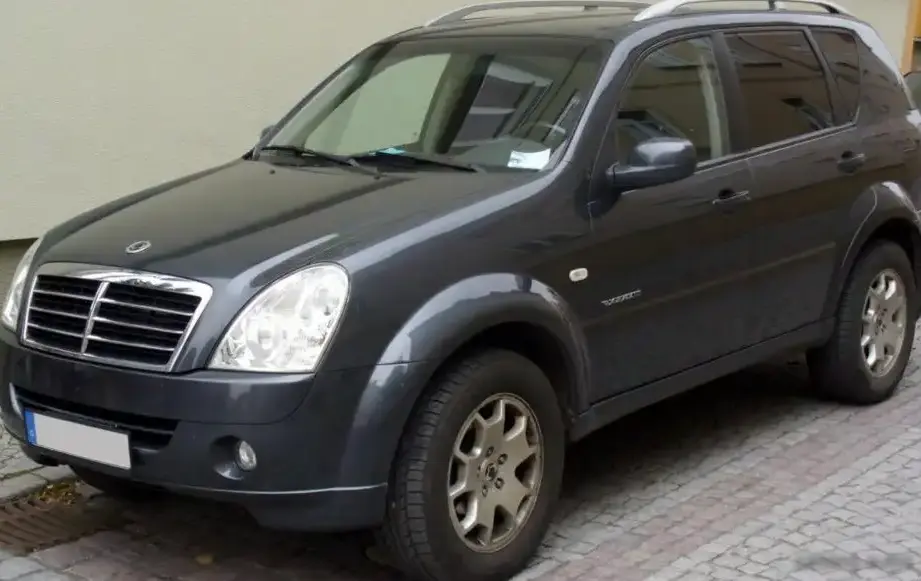
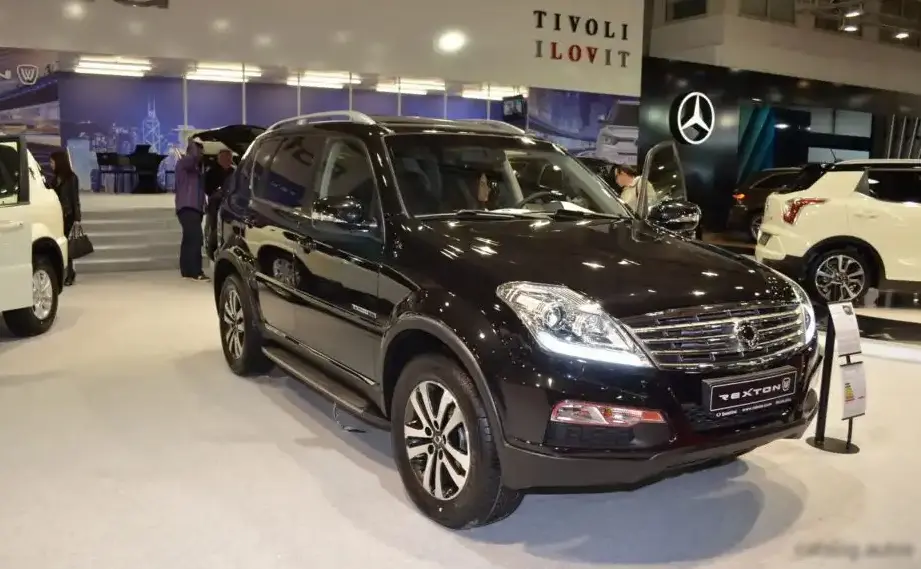
The SsangYong Rexton II 2.2 e-XDi, produced from 2017 to March 2021, represents the second generation of SsangYong’s flagship SUV. Positioned as a body-on-frame SUV, the Rexton II aimed to offer a compelling alternative to more established competitors in the mid-size SUV segment, particularly in European and Asian markets. This specific 2.2 e-XDi variant, generating 181 horsepower, served as a key offering within the Rexton II lineup, balancing performance with fuel efficiency and affordability. It was designed to appeal to buyers seeking a capable and spacious SUV for family use and occasional off-road adventures.
Powertrain & Engine Architecture
The heart of the Rexton II 2.2 e-XDi is the D22DTR, a 2.2-liter inline-four cylinder diesel engine. This engine utilizes a common-rail direct injection system, delivering fuel at extremely high pressure for optimized combustion. A turbocharger with an intercooler further enhances performance by forcing more air into the cylinders. The engine produces 181 horsepower at 4000 rpm and a substantial 400 Nm (295 lb-ft) of torque between 1400 and 2800 rpm. This broad torque curve is characteristic of modern diesel engines and contributes to the Rexton II’s usability in various driving conditions. The engine features a compression ratio of 15.5:1 and 4 valves per cylinder. The 6-speed manual transmission was standard for this variant, providing drivers with direct control over gear selection.
Driving Characteristics
The 181 hp diesel engine, paired with the 6-speed manual transmission, provides adequate performance for everyday driving and highway cruising. While not a sports SUV, the Rexton II 2.2 e-XDi offers sufficient power for overtaking maneuvers and maintaining speed on inclines. The manual transmission allows for precise control, but the gear ratios are tuned more for fuel efficiency than outright acceleration. Compared to higher-output Rexton II variants, such as those with more powerful diesel engines, this version feels less urgent in its acceleration. However, the strong low-end torque makes it a capable towing vehicle. The rear-wheel-drive configuration contributes to a more traditional SUV feel, offering a balance between on-road comfort and off-road capability.
Equipment & Trim Levels
The Rexton II 2.2 e-XDi typically came equipped with a respectable level of standard features. These included air conditioning, power windows and mirrors, a basic audio system, and ABS brakes. Higher trim levels added features such as leather upholstery, a sunroof, navigation system, and parking sensors. Interior materials were generally durable and functional, reflecting the Rexton II’s focus on practicality. The dashboard layout was straightforward and easy to use, prioritizing ergonomics over flashy design. Optional extras included a premium audio system, heated seats, and a rear-view camera.
Chassis & Braking
The Rexton II utilizes a body-on-frame construction, providing a robust and durable chassis. The suspension system consists of double wishbones at the front and a multi-link setup at the rear. This configuration aims to balance ride comfort with handling stability. The front brakes are ventilated discs, while the rear brakes are solid discs. ABS (Anti-lock Braking System) is standard, enhancing safety during emergency braking situations. The Rexton II’s relatively high ground clearance of 224 mm (8.82 in) contributes to its off-road capability.
Market Reception & Comparison
The SsangYong Rexton II 2.2 e-XDi was generally well-received by critics as a practical and value-for-money SUV. It offered a spacious interior, a capable diesel engine, and a robust chassis at a competitive price point. However, it faced stiff competition from established rivals such as the Hyundai Santa Fe, Kia Sorento, and Mitsubishi Outlander. Compared to these competitors, the Rexton II sometimes lagged in terms of refinement and brand recognition. Fuel economy was respectable for its class, averaging around 30.9 US mpg in combined driving. Reliability was generally considered to be good, although SsangYong’s reputation for long-term durability was not as strong as some of its competitors.
Legacy
The SsangYong Rexton II 2.2 e-XDi has established itself as a reasonably reliable and affordable used SUV. The D22DTR diesel engine is known for its durability, provided it has been properly maintained. Common maintenance items include regular oil changes, filter replacements, and inspection of the turbocharger and fuel injection system. While parts availability may be slightly more challenging compared to more mainstream brands, SsangYong parts are generally accessible. Today, the Rexton II 2.2 e-XDi represents a viable option for buyers seeking a spacious, capable, and value-oriented SUV.