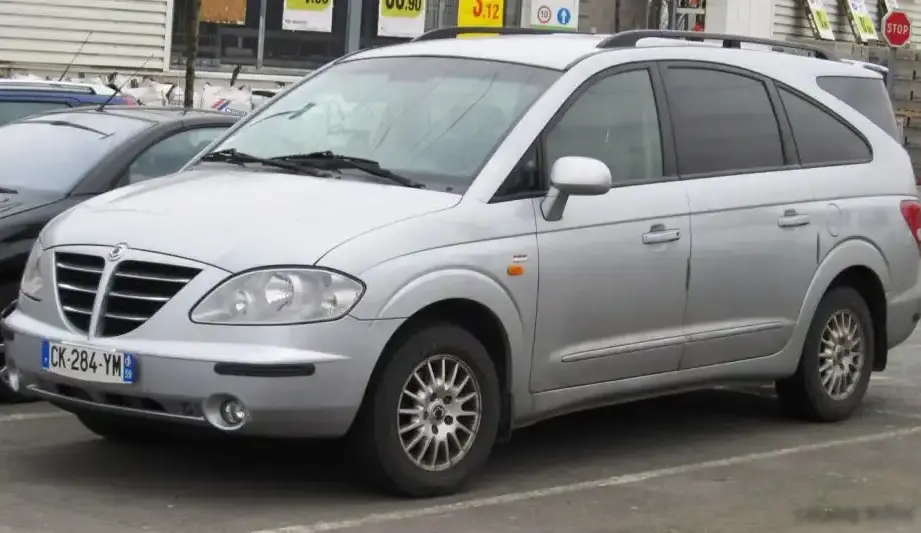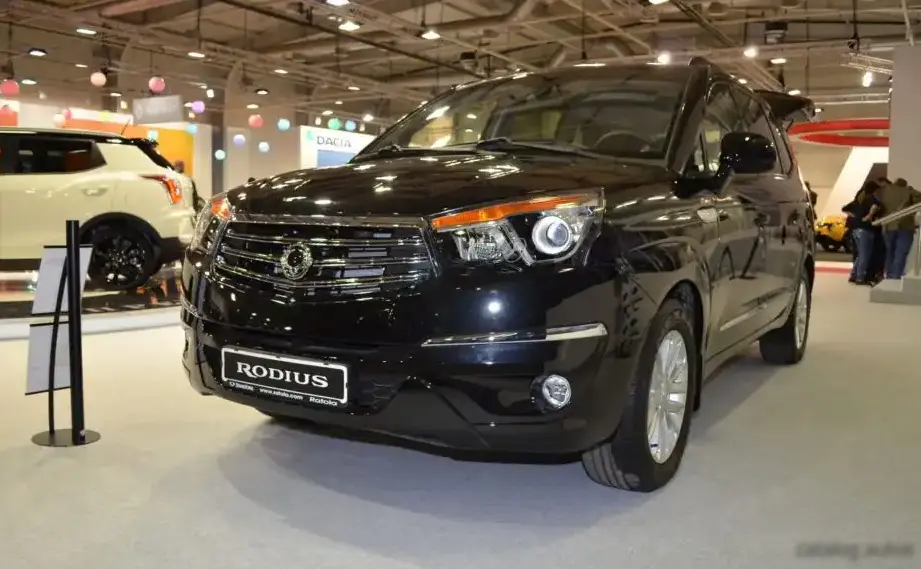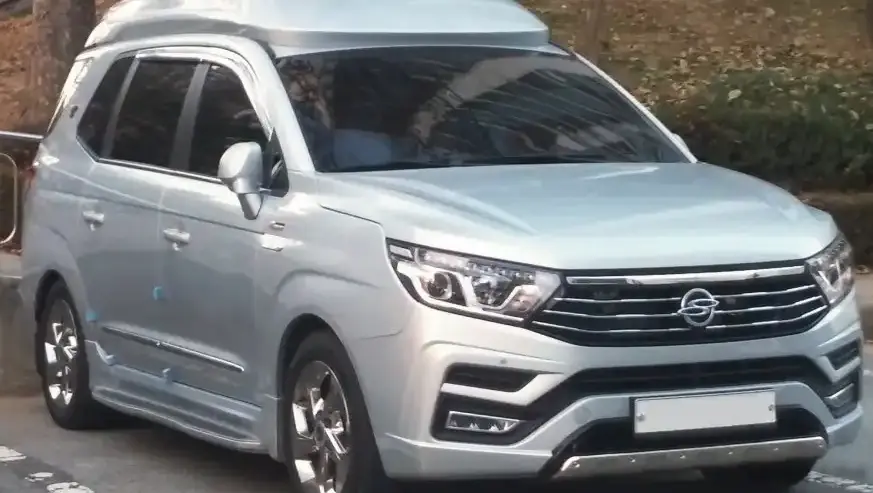
The SsangYong Rodius II, particularly the SV200 variant with the automatic transmission, represents a unique offering in the large MPV (Multi-Purpose Vehicle) segment. Introduced with the 2018 facelift, and continuing through 2023, this model aimed to provide spacious, family-oriented transportation with a focus on practicality. The Rodius II, built on a body-on-frame construction, was primarily marketed outside of North America, finding a niche in markets where large passenger capacity and towing capability were highly valued. The SV200 trim, powered by a 2.0-liter diesel engine producing 155 horsepower, occupied a mid-range position within the Rodius II lineup, offering a balance between performance, fuel economy, and price. It was positioned below the more powerful engine options, but above base trims with less equipment.
Technical Specifications
| Brand | SsangYong |
| Model | Rodus |
| Generation | Rodus II (facelift 2018) |
| Type (Engine) | SV200 (155 Hp) Automatic |
| Start of production | 2018 |
| End of production | 2023 |
| Powertrain Architecture | Internal Combustion engine |
| Body type | MPV |
| Seats | 7-11 |
| Doors | 5 |
| Fuel consumption (urban) | 10.4 l/100 km (22.6 US mpg) |
| Fuel consumption (extra urban) | 7.1 l/100 km (33.1 US mpg) |
| Fuel consumption (combined) | 8.3 l/100 km (28.3 US mpg) |
| CO2 emissions | 217 g/km |
| Fuel Type | Diesel |
| Maximum speed | 181 km/h (112.47 mph) |
| Emission standard | Euro 5 |
| Weight-to-power ratio | 13.5 kg/Hp |
| Weight-to-torque ratio | 5.8 kg/Nm |
| Power | 155 Hp @ 3400-4000 rpm |
| Torque | 360 Nm @ 1500-2800 rpm (265.52 lb.-ft.) |
| Engine Model/Code | D20DTR |
| Engine displacement | 1998 cm3 (121.93 cu. in.) |
| Number of cylinders | 4 |
| Engine configuration | Inline |
| Cylinder Bore | 86.2 mm (3.39 in.) |
| Piston Stroke | 85.6 mm (3.37 in.) |
| Compression ratio | 16.5:1 |
| Number of valves per cylinder | 4 |
| Fuel injection system | Diesel Commonrail |
| Engine aspiration | Turbocharger, Intercooler |
| Engine oil capacity | 6 l (6.34 US qt | 5.28 UK qt) |
| Coolant | 11.5 l (12.15 US qt | 10.12 UK qt) |
| Kerb Weight | 2097-2157 kg (4623.09 – 4755.37 lbs.) |
| Max. weight | 2820 kg (6217.04 lbs.) |
| Max load | 663-723 kg (1461.66 – 1593.94 lbs.) |
| Permitted trailer load (braked) | 2000 kg (4409.25 lbs.) |
| Permitted trailer load (unbraked) | 750 kg (1653.47 lbs.) |
| Length | 5130 mm (201.97 in.) |
| Width | 1915 mm (75.39 in.) |
| Height | 1815-1850 mm (71.46 – 72.83 in.) |
| Wheelbase | 3000 mm (118.11 in.) |
| Front track | 1610 mm (63.39 in.) |
| Rear track | 1620 mm (63.78 in.) |
| Number of gears | 5 |
| Gearbox type | Automatic transmission |
Powertrain & Engine Architecture
The heart of the Rodius II SV200 is the D20DTR, a 2.0-liter inline-four cylinder diesel engine. This engine utilizes a common-rail direct injection system, delivering fuel directly into the combustion chamber at extremely high pressure for improved efficiency and reduced emissions. A turbocharger with an intercooler is employed to boost power output, providing 155 horsepower at 3400-4000 rpm and a substantial 360 Nm (265.52 lb.-ft.) of torque between 1500-2800 rpm. The engine features four valves per cylinder and a compression ratio of 16.5:1. The five-speed automatic transmission, while providing convenience, was not known for its particularly quick shifts or advanced features. It was a conventional torque-converter automatic, prioritizing smooth operation over sporty responsiveness.
Driving Characteristics
The SV200 automatic offered a comfortable, if not particularly exhilarating, driving experience. The engine’s torque peak at low rpm made it well-suited for everyday driving and hauling passengers. However, the automatic transmission, combined with the vehicle’s substantial weight (over 4,600 lbs), meant acceleration was modest. Compared to the manual transmission versions of the Rodius II, the automatic felt noticeably slower. The gear ratios were geared towards fuel efficiency and relaxed cruising rather than spirited performance. The rear-wheel-drive configuration provided a stable feel, especially when loaded, but didn’t offer the all-weather capability of an all-wheel-drive system.
Equipment & Trim Levels
The SV200 trim level typically included features such as air conditioning, power windows and locks, a basic audio system, and cloth upholstery. Higher trim levels added features like leather seats, a more advanced infotainment system with navigation, and parking sensors. The Rodius II was designed with practicality in mind, offering flexible seating configurations with options for 7, 9, or even 11 seats depending on the configuration. Safety features included ABS (Anti-lock Braking System) as standard, but advanced driver-assistance systems were generally limited.
Chassis & Braking
The Rodius II utilized a body-on-frame construction, which contributed to its robust build quality and towing capacity. The suspension consisted of a double wishbone setup at the front and a multi-link suspension at the rear. Braking was typically accomplished with disc brakes at the front and drum brakes at the rear, a cost-saving measure common in this class of vehicle. Stabilizer bars were included to reduce body roll during cornering, but the Rodius II was not designed for sporty handling. Ride height was relatively generous, providing good ground clearance for navigating uneven terrain.
Market Reception & Comparison
The SsangYong Rodius II, and the SV200 variant specifically, received mixed reviews. Critics generally praised its spacious interior, flexible seating, and value for money. However, the styling was often criticized as being unconventional and somewhat dated. The diesel engine was considered adequate for its intended purpose, but the automatic transmission was often described as sluggish. Compared to competitors like the Mercedes-Benz V-Class or Volkswagen Multivan, the Rodius II offered a lower price point but lacked the refinement and brand prestige of those European models. Fuel economy was reasonable for a vehicle of its size and weight, but CO2 emissions were relatively high.
Legacy
The SsangYong Rodius II, including the SV200 automatic, has established a reputation as a durable and practical MPV, particularly in the used car market. The D20DTR engine, while not without its quirks, has proven to be relatively reliable with proper maintenance. The automatic transmission, however, remains a potential weak point, and regular fluid changes are crucial. Today, the Rodius II represents an affordable option for large families or those needing a vehicle with significant cargo capacity and towing ability. Its unique styling and robust construction continue to appeal to a niche group of buyers seeking a practical and unconventional MPV.