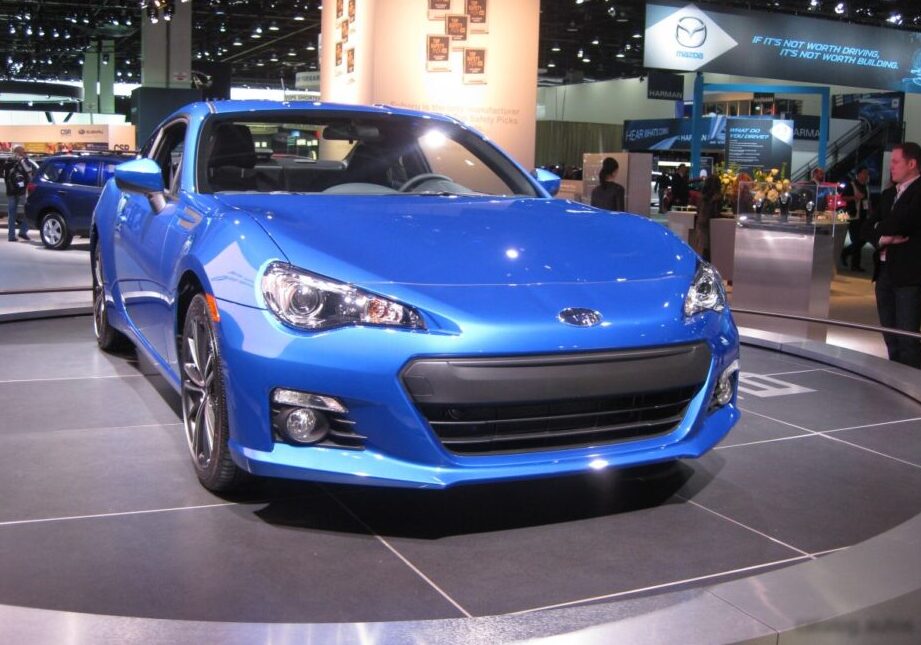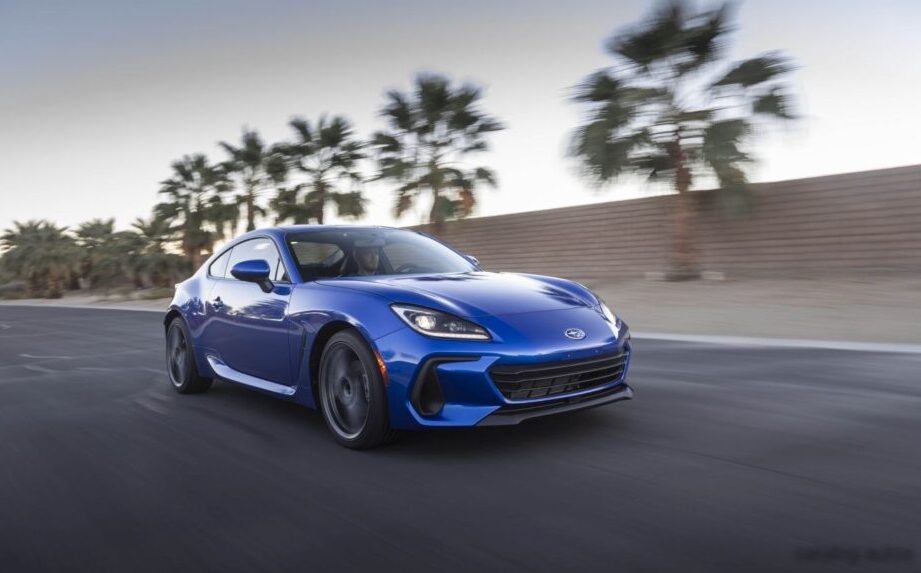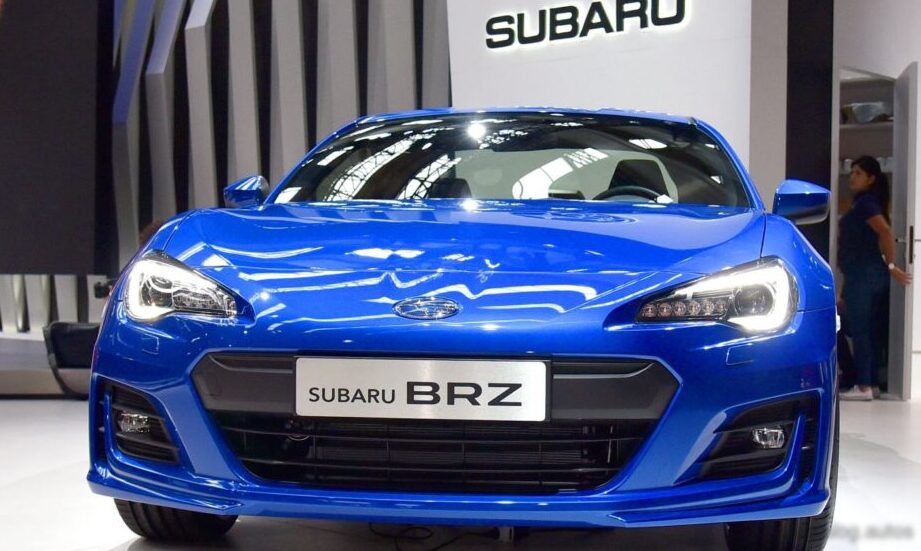
The Subaru BRZ, specifically the first generation (internally designated BRZ I) facelift model produced from 2016 to July 2020, represents a collaborative effort between Subaru and Toyota, resulting in the jointly-developed 86/BRZ platform. This 2.0-liter (200 horsepower) variant was a key offering within the BRZ lineup, positioned as the performance-focused model. It aimed to deliver an engaging, affordable sports car experience, harking back to the classic lightweight, rear-wheel-drive coupes of the past. The facelift brought subtle styling revisions and improvements to the suspension, enhancing the car’s already praised handling characteristics. This generation BRZ was primarily marketed in North America, Europe, and Japan, offering a unique alternative in a segment largely dominated by heavier, more powerful grand tourers.
Technical Specifications
| Brand | Subaru |
| Model | BRZ |
| Generation | BRZ I (facelift 2016) |
| Type (Engine) | 2.0 (200 Hp) |
| Start of production | 2016 |
| End of production | July, 2020 |
| Powertrain Architecture | Internal Combustion engine |
| Body type | Coupe |
| Seats | 4 |
| Doors | 2 |
| Fuel consumption (urban) | 10.4 l/100 km (22.6 US mpg, 27.2 UK mpg, 9.6 km/l) |
| Fuel consumption (extra urban) | 6.3 l/100 km (37.3 US mpg, 44.8 UK mpg, 15.9 km/l) |
| Fuel consumption (combined) | 7.8 l/100 km (30.2 US mpg, 36.2 UK mpg, 12.8 km/l) |
| CO2 emissions | 180 g/km |
| Fuel Type | Petrol (Gasoline) |
| Acceleration 0 – 100 km/h | 7.6 sec |
| Acceleration 0 – 62 mph | 7.6 sec |
| Acceleration 0 – 60 mph | 7.2 sec |
| Maximum speed | 226 km/h (140.43 mph) |
| Emission standard | Euro 6 |
| Weight-to-power ratio | 6.2 kg/Hp, 160.9 Hp/tonne |
| Weight-to-torque ratio | 6.1 kg/Nm, 164.9 Nm/tonne |
| Power | 200 Hp @ 7000 rpm |
| Power per litre | 100.1 Hp/l |
| Torque | 205 Nm @ 6400-6600 rpm (151.2 lb.-ft. @ 6400-6600 rpm) |
| Engine layout | Front, Longitudinal |
| Engine Model/Code | FA20D |
| Engine displacement | 1998 cm3 (121.93 cu. in.) |
| Number of cylinders | 4 |
| Engine configuration | Boxer |
| Cylinder Bore | 86 mm (3.39 in.) |
| Piston Stroke | 86 mm (3.39 in.) |
| Compression ratio | 12.5:1 |
| Number of valves per cylinder | 4 |
| Fuel injection system | Multi-port manifold injection |
| Engine aspiration | Naturally aspirated engine |
| Engine oil capacity | 5.4 l (5.71 US qt | 4.75 UK qt) |
| Coolant | 7.2 l (7.61 US qt | 6.34 UK qt) |
| Kerb Weight | 1243 kg (2740.35 lbs.) |
| Max. weight | 1670 kg (3681.72 lbs.) |
| Max load | 427 kg (941.37 lbs.) |
| Trunk (boot) space – minimum | 243 l (8.58 cu. ft.) |
| Trunk (boot) space – maximum | 330 l (11.65 cu. ft.) |
| Fuel tank capacity | 50 l (13.21 US gal | 11 UK gal) |
| Length | 4240 mm (166.93 in.) |
| Width | 1775 mm (69.88 in.) |
| Height | 1320 mm (51.97 in.) |
| Wheelbase | 2570 mm (101.18 in.) |
| Front track | 1520 mm (59.84 in.) |
| Rear (Back) track | 1540 mm (60.63 in.) |
| Ride height (ground clearance) | 120 mm (4.72 in.) |
| Drag coefficient (Cd) | 0.28 |
| Minimum turning circle (turning diameter) | 10.8 m (35.43 ft.) |
| Drivetrain Architecture | Rear wheel drive |
| Drive wheel | Rear wheel drive |
| Number of gears and type of gearbox | 6 gears, manual transmission |
| Front brakes | Ventilated discs |
| Rear brakes | Ventilated discs |
| Assisting systems | ABS (Anti-lock braking system) |
| Steering type | Steering rack and pinion |
| Power steering | Electric Steering |
| Tires size | 215/45 R17 87W |
| Wheel rims size | 7J x 17 |
Powertrain & Engine Architecture
The heart of the 2016-2020 BRZ facelift is the Subaru FA20D 2.0-liter naturally aspirated boxer-four engine. This engine is notable for its horizontally-opposed cylinder configuration, which contributes to a low center of gravity, enhancing handling. The FA20D utilizes multi-port fuel injection and features dual overhead camshafts with four valves per cylinder. The engine produces 200 horsepower at 7,000 rpm and 151.2 lb-ft of torque between 6,400 and 6,600 rpm. The engine’s design prioritizes responsiveness and a linear power delivery, rather than peak torque figures. The 6-speed manual transmission was standard, offering precise shifts and a direct connection to the rear wheels. The transmission ratios were tuned to maximize acceleration in the lower gears while providing comfortable cruising at highway speeds.
Driving Characteristics
The BRZ 2.0, even with the increased power output over earlier models, is characterized by its balanced handling and engaging driving experience. While not exceptionally quick in a straight line, the car excels in corners. The low center of gravity, combined with a well-tuned suspension, minimizes body roll and provides a confident feel. The steering is precise and communicative, offering good feedback to the driver. Compared to a hypothetical higher-output turbocharged variant, the 2.0-liter BRZ offers a more predictable and accessible powerband, making it easier to control at the limit. The manual transmission further enhances the driving experience, allowing for precise gear selection and engine braking.
Equipment & Trim Levels
The 2016-2020 BRZ facelift was offered in two primary trim levels: Premium and Limited. The Premium trim served as the base model and included standard features such as a Torsen limited-slip differential, LED headlights, a 7-inch touchscreen infotainment system with Bluetooth connectivity, and a rearview camera. The Limited trim added features like leather and Alcantara upholstery, heated front seats, a premium audio system, and keyless entry with push-button start. Optional extras included a performance exhaust system and various cosmetic enhancements. Interior materials were generally functional and focused on providing a sporty, driver-centric environment.
Chassis & Braking
The BRZ utilizes a MacPherson strut front suspension and a double-wishbone rear suspension, optimized for handling and ride comfort. The facelift model received revisions to the suspension tuning, resulting in improved damping and reduced body roll. Braking duties are handled by ventilated disc brakes on all four wheels, providing adequate stopping power for the car’s weight and performance. ABS (Anti-lock Braking System) is standard. The chassis is relatively lightweight, contributing to the car’s agility. The rear track is slightly wider than the front track, further enhancing stability.
Market Reception & Comparison
The 2016-2020 BRZ facelift was generally well-received by automotive critics, who praised its handling, balanced chassis, and engaging driving experience. However, some criticisms were leveled at the engine’s lack of low-end torque and the relatively basic interior. Compared to the Toyota 86, which was mechanically identical, the BRZ often benefited from Subaru’s reputation for reliability and all-weather capability. Compared to other sports cars in its price range, such as the Mazda MX-5 Miata, the BRZ offered a more practical 2+2 seating configuration and a more focused driving experience. Fuel economy was respectable, averaging around 30 mpg combined.
Legacy
The Subaru BRZ (and its Toyota 86 counterpart) has become a popular choice among enthusiasts for its affordability, engaging driving dynamics, and potential for modification. The FA20D engine is generally considered to be reliable, although regular maintenance is crucial. The BRZ has also fostered a strong aftermarket support community, with a wide range of performance parts and accessories available. On the used car market, well-maintained examples of the 2016-2020 BRZ facelift continue to hold their value, reflecting the car’s enduring appeal and cult following. The BRZ helped revive the affordable rear-wheel-drive sports car segment and paved the way for the second-generation model.