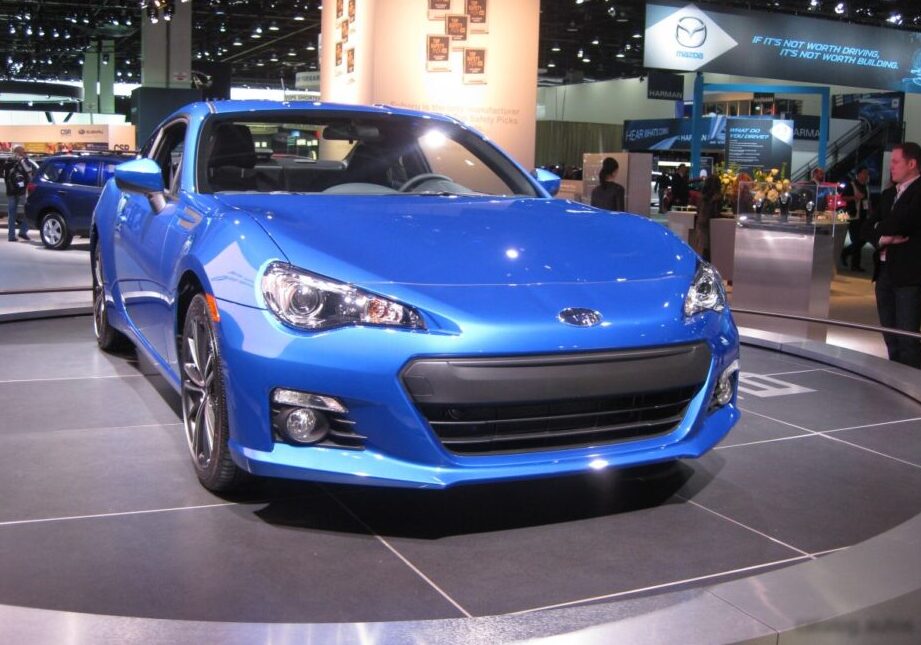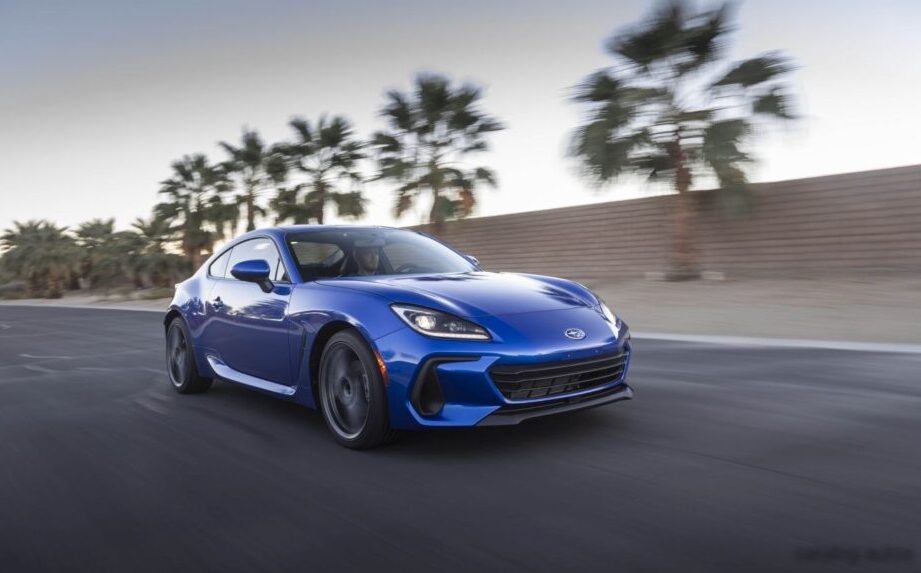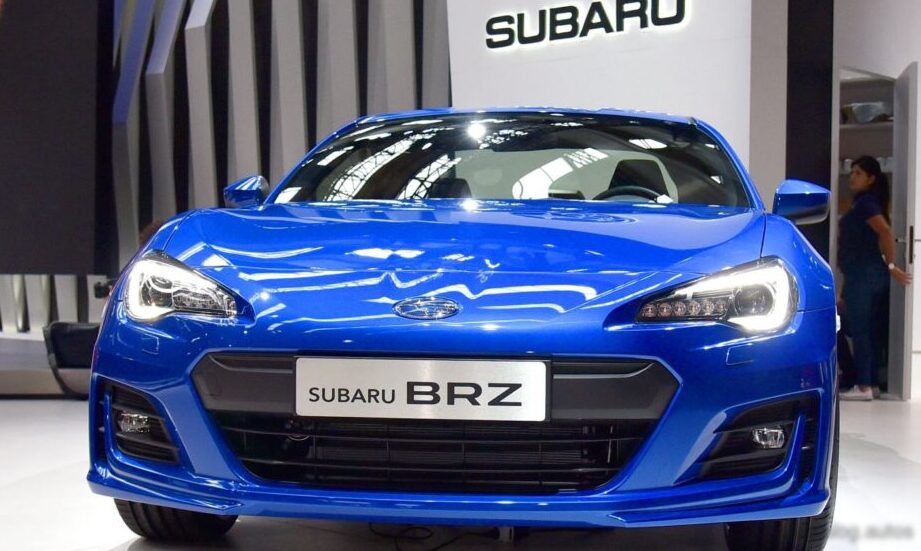
The Subaru BRZ, specifically the first generation (internally designated BRZ I) facelift model produced from 2016 to July 2020, represented Subaru’s entry into the affordable, rear-wheel-drive sports car market. Developed in collaboration with Toyota (resulting in the nearly identical Toyota 86/GT86), the BRZ aimed to recapture the spirit of classic Japanese sports coupes. The 2.0-liter (200 horsepower) automatic variant occupied a middle ground within the BRZ lineup, offering a balance between performance and ease of use, appealing to drivers who desired a sporty experience without the involvement of a manual transmission. This version was positioned as a step up from the base model, offering increased power over earlier iterations, but remained more accessible than potential performance-focused aftermarket modifications.
Technical Specifications
| Brand | Subaru |
| Model | BRZ |
| Generation | BRZ I (facelift 2016) |
| Type (Engine) | 2.0 (200 Hp) Automatic |
| Start of production | 2016 |
| End of production | July, 2020 |
| Powertrain Architecture | Internal Combustion engine |
| Body type | Coupe |
| Seats | 4 |
| Doors | 2 |
| Fuel consumption (urban) | 9.6 l/100 km (24.5 US mpg) |
| Fuel consumption (extra urban) | 5.7 l/100 km (41.3 US mpg) |
| Fuel consumption (combined) | 7.1 l/100 km (33.1 US mpg) |
| CO2 emissions | 164 g/km |
| Fuel Type | Petrol (Gasoline) |
| Acceleration 0 – 100 km/h | 8.2 sec |
| Acceleration 0 – 62 mph | 8.2 sec |
| Acceleration 0 – 60 mph | 7.8 sec |
| Maximum speed | 210 km/h (130.49 mph) |
| Emission standard | Euro 6 |
| Weight-to-power ratio | 6.3 kg/Hp |
| Weight-to-torque ratio | 6.2 kg/Nm |
| Power | 200 Hp @ 7000 rpm |
| Torque | 205 Nm @ 6400-6600 rpm (151.2 lb.-ft. @ 6400-6600 rpm) |
| Engine layout | Front, Longitudinal |
| Engine Model/Code | FA20D |
| Engine displacement | 1998 cm3 (121.93 cu. in.) |
| Number of cylinders | 4 |
| Engine configuration | Boxer |
| Cylinder Bore | 86 mm (3.39 in.) |
| Piston Stroke | 86 mm (3.39 in.) |
| Compression ratio | 12.5:1 |
| Number of valves per cylinder | 4 |
| Fuel injection system | Multi-port manifold injection |
| Engine aspiration | Naturally aspirated engine |
| Engine oil capacity | 5.4 l (5.71 US qt | 4.75 UK qt) |
| Coolant capacity | 7.5 l (7.93 US qt | 6.6 UK qt) |
| Kerb Weight | 1266 kg (2791.05 lbs.) |
| Max. weight | 1700 kg (3747.86 lbs.) |
| Max load | 434 kg (956.81 lbs.) |
| Trunk (boot) space – minimum | 243 l (8.58 cu. ft.) |
| Trunk (boot) space – maximum | 330 l (11.65 cu. ft.) |
| Fuel tank capacity | 50 l (13.21 US gal | 11 UK gal) |
| Length | 4240 mm (166.93 in.) |
| Width | 1775 mm (69.88 in.) |
| Height | 1320 mm (51.97 in.) |
| Wheelbase | 2570 mm (101.18 in.) |
| Front track | 1520 mm (59.84 in.) |
| Rear (Back) track | 1540 mm (60.63 in.) |
| Ride height (ground clearance) | 130 mm (5.12 in.) |
| Drag coefficient (Cd) | 0.28 |
| Minimum turning circle | 10.8 m (35.43 ft.) |
| Drive wheel | Rear wheel drive |
| Number of gears | 6 |
| Gearbox type | automatic transmission |
| Front brakes | Ventilated discs |
| Rear brakes | Ventilated discs |
| Tires size | 215/45 R17 87W |
| Wheel rims size | 7J x 17 |
Powertrain & Engine Architecture
The heart of the 2016-2020 BRZ facelift was the FA20D 2.0-liter naturally aspirated boxer-four engine. This engine, a hallmark of Subaru’s engineering, featured a horizontally opposed configuration, contributing to a low center of gravity and improved balance. The FA20D utilized multi-port fuel injection and a dual overhead camshaft (DOHC) valvetrain with four valves per cylinder. The 2016 facelift brought a slight increase in horsepower to 200 hp compared to earlier models, achieved through revisions to the intake and exhaust systems. Paired with this engine was a six-speed automatic transmission. This transmission wasn’t known for being particularly sporty; it prioritized smooth shifts and fuel efficiency over aggressive downshifts. The automatic featured adaptive learning, attempting to adjust shift points based on driving style, but often resulted in somewhat hesitant responses.
Driving Characteristics
The BRZ 2.0 Automatic offered a different driving experience compared to its manual counterpart. While the manual version was praised for its engaging and direct feel, the automatic prioritized ease of use. Acceleration from 0-60 mph took approximately 7.8 seconds, slightly slower than the manual version. The automatic transmission’s gear ratios were tuned for fuel economy and comfortable cruising, meaning it didn’t always select the optimal gear for spirited driving. The car felt relatively nimble due to its light weight and rear-wheel-drive layout, but the automatic transmission could sometimes detract from the overall sense of control. Paddle shifters were not available on this trim, limiting driver control over gear selection.
Equipment & Trim Levels
The 2.0-liter automatic BRZ typically came standard with features like air conditioning, power windows and locks, a basic audio system with Bluetooth connectivity, and stability control. Interior upholstery was typically cloth, though leather options were available as upgrades. The dashboard layout was straightforward and functional, prioritizing driver ergonomics. Optional extras included a premium audio system, keyless entry, and a rear spoiler. The BRZ didn’t offer a wide range of trim levels; the focus was on providing a relatively affordable and accessible sports car experience, with options allowing for some personalization.
Chassis & Braking
The BRZ’s chassis was designed to maximize handling and minimize weight. It featured a MacPherson strut front suspension and a double-wishbone rear suspension. The rear suspension geometry was specifically tuned to enhance cornering performance. Braking duties were handled by ventilated disc brakes on all four wheels, providing adequate stopping power for the car’s weight and performance. Anti-lock Braking System (ABS) was standard. The relatively low curb weight of around 2791 lbs contributed to the car’s agile handling characteristics.
Market Reception & Comparison
Critics generally praised the BRZ for its handling and affordability, but the automatic transmission received mixed reviews. Many reviewers felt that the automatic detracted from the overall driving experience, making the car feel less engaging than the manual version. Fuel economy was a strong point, with the automatic BRZ achieving around 33.1 US mpg in combined driving. Compared to the manual BRZ, the automatic offered slightly lower fuel economy. Compared to other sports cars in its price range, the BRZ stood out for its rear-wheel-drive layout and focus on handling.
Legacy
The Subaru BRZ (and its Toyota 86/GT86 counterpart) proved to be a popular choice among enthusiasts seeking an affordable and engaging sports car. The FA20D engine, while not exceptionally powerful, was known for its reliability and responsiveness. The automatic transmission, while not a performance standout, proved to be durable and relatively trouble-free. On the used car market, the 2016-2020 BRZ automatic models remain relatively affordable and represent a good value for drivers seeking a sporty and reliable coupe. The first-generation BRZ paved the way for the second-generation model, which addressed some of the criticisms leveled at the original, including improvements to the engine and transmission.