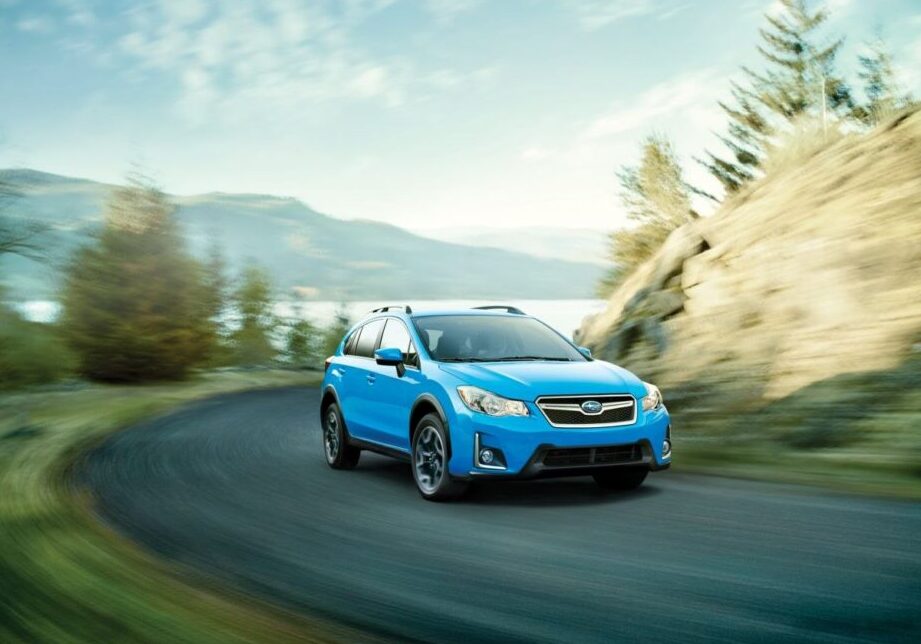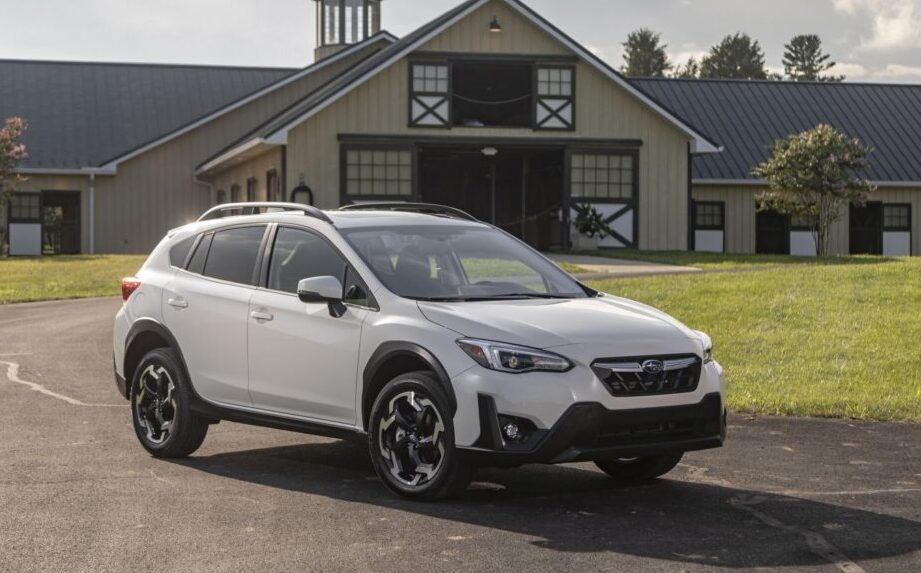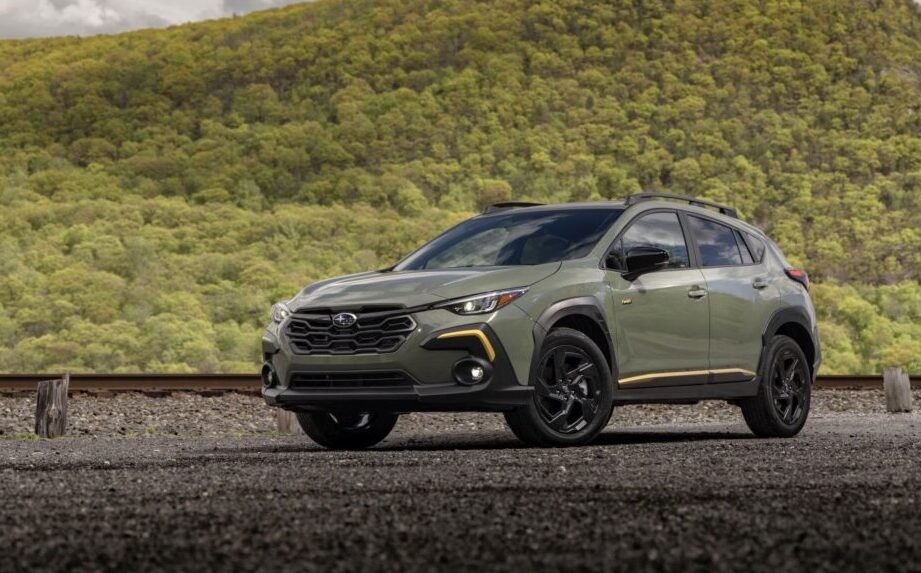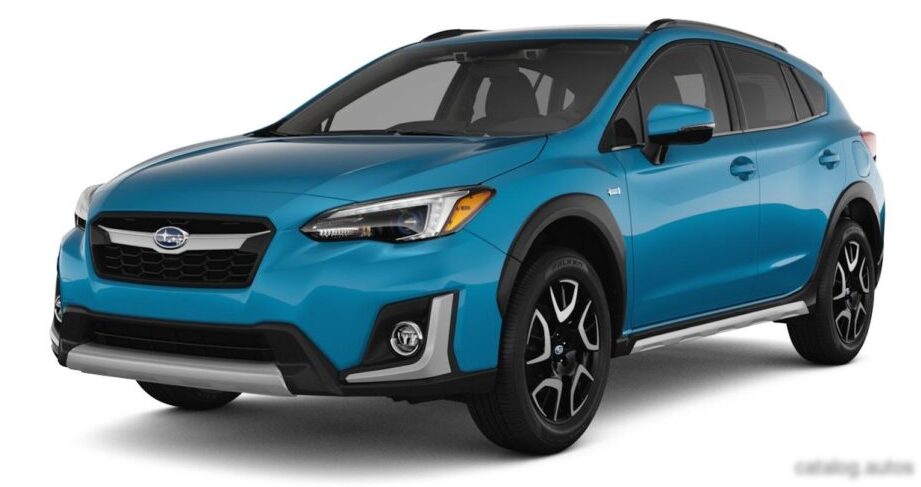
The Subaru Crosstrek II 2.0 AWD Lineartronic, produced from 2017 to 2020, represents Subaru’s entry into the increasingly popular subcompact crossover segment in the North American market. Building upon the success of the original Crosstrek (XV in many international markets), the second generation offered a more refined driving experience, improved fuel efficiency, and enhanced safety features. This particular variant, equipped with the 2.0-liter naturally aspirated boxer engine and a continuously variable transmission (CVT), served as the mainstay of the Crosstrek II lineup, appealing to buyers seeking a practical, all-weather capable vehicle with a focus on fuel economy and ease of use. It was positioned as the standard trim level, offering a balance between affordability and features, slotting below the more performance-oriented trims that would later be introduced.
Technical Specifications
| Brand | Subaru |
| Model | Crosstrek |
| Generation | Crosstrek II |
| Type (Engine) | 2.0 (152 Hp) AWD Lineartronic |
| Start of production | 2017 |
| End of production | 2020 |
| Powertrain Architecture | Internal Combustion engine |
| Body type | SUV, Crossover |
| Seats | 5 |
| Doors | 5 |
| Fuel consumption (economy) – urban (EPA) | 8.7 l/100 km (27 US mpg) |
| Fuel consumption (economy) – extra urban (EPA) | 7.1 l/100 km (33.1 US mpg) |
| Fuel consumption (economy) – combined (EPA) | 7.8-8.1 l/100 km (30.2 – 29 US mpg) |
| Fuel Type | Petrol (Gasoline) |
| Weight-to-power ratio | 9.4 kg/Hp, 106.1 Hp/tonne |
| Weight-to-torque ratio | 7.3 kg/Nm, 137.6 Nm/tonne |
| Power | 152 Hp @ 6000 rpm |
| Power per litre | 76.2 Hp/l |
| Torque | 197 Nm @ 4000 rpm (145.3 lb.-ft. @ 4000 rpm) |
| Engine layout | Front, Longitudinal |
| Engine Model/Code | FB20 |
| Engine displacement | 1995 cm3 (121.74 cu. in.) |
| Number of cylinders | 4 |
| Engine configuration | Boxer |
| Cylinder Bore | 84 mm (3.31 in.) |
| Piston Stroke | 90 mm (3.54 in.) |
| Compression ratio | 12.5:1 |
| Number of valves per cylinder | 4 |
| Fuel injection system | Direct injection |
| Engine aspiration | Naturally aspirated engine |
| Valvetrain | DOHC, DAVCS |
| Engine oil capacity | 4.4 l (4.65 US qt | 3.87 UK qt) |
| Coolant | 7.8 l (8.24 US qt | 6.86 UK qt) |
| Kerb Weight | 1432-1480 kg (3157.02 – 3262.84 lbs.) |
| Trunk (boot) space – minimum | 589 l (20.8 cu. ft.) |
| Trunk (boot) space – maximum | 1566 l (55.3 cu. ft.) |
| Fuel tank capacity | 63 l (16.64 US gal | 13.86 UK gal) |
| Length | 4465 mm (175.79 in.) |
| Width | 1800 mm (70.87 in.) |
| Width including mirrors | 2007 mm (79.02 in.) |
| Height | 1615 mm (63.58 in.) |
| Wheelbase | 2665 mm (104.92 in.) |
| Front track | 1550 mm (61.02 in.) |
| Rear (Back) track | 1555 mm (61.22 in.) |
| Ride height (ground clearance) | 220 mm (8.66 in.) |
| Minimum turning circle (turning diameter) | 10.8 m (35.43 ft.) |
| Approach angle | 18° |
| Departure angle | 29° |
| Ramp-over (brakeover) angle | 19.7° |
| Drivetrain Architecture | The Internal combustion engine (ICE) drives permanently the four wheels of the vehicle. |
| Drive wheel | All wheel drive (4×4) |
| Number of gears and type of gearbox | automatic transmission Lineartronic |
| Front suspension | Independent, type McPherson with coil spring and anti-roll bar |
| Rear suspension | Double wishbone, Transverse stabilizer, Coil spring |
| Front brakes | Ventilated discs, 294 mm |
| Rear brakes | Disc, 274 mm |
| Assisting systems | ABS (Anti-lock braking system) |
| Steering type | Steering rack and pinion |
| Power steering | Electric Steering |
| Tires size | 225/60 R17; 225/55 R18 |
| Wheel rims size | 7J x 17; 7J x 18 |
Powertrain & Engine Architecture
The heart of the Crosstrek II 2.0 is the FB20 2.0-liter naturally aspirated boxer-4 engine. This engine, a hallmark of Subaru’s engineering, features a horizontally opposed piston layout, contributing to a low center of gravity and improved balance. The FB20 utilizes direct fuel injection, enhancing combustion efficiency and power output. The engine also incorporates Subaru’s Dynamic Active Valve Control System (DAVCS) on both intake and exhaust camshafts, optimizing valve timing for improved performance and fuel economy across the rev range. The Lineartronic CVT, Subaru’s branded continuously variable transmission, is paired with the FB20. This transmission lacks traditional gears, instead using a belt and pulley system to provide a seamless and continuously variable gear ratio. The CVT is programmed with simulated “shift points” to mimic the feel of a conventional automatic transmission, addressing a common complaint about CVTs. All-wheel drive is standard, utilizing a symmetrical system that distributes power to all four wheels for enhanced traction in various conditions.
Driving Characteristics
The 2.0-liter engine and Lineartronic CVT combination delivers adequate, though not exhilarating, performance. With 152 horsepower and 145 lb-ft of torque, the Crosstrek II 2.0 achieves 0-60 mph times in the low to mid 9-second range. The CVT prioritizes fuel efficiency, resulting in a somewhat “rubber band” feel during acceleration, where engine RPMs rise quickly but don’t immediately translate into proportional speed gains. Compared to the available 2.5-liter engine option in later model years, the 2.0-liter feels less powerful, particularly when fully loaded or tackling steep inclines. However, the CVT’s ability to keep the engine in its optimal power band contributes to decent passing power. The all-wheel-drive system provides confident handling in inclement weather, making the Crosstrek a capable all-season vehicle. The steering is light and precise, and the suspension offers a comfortable ride, absorbing bumps and imperfections in the road surface effectively.
Equipment & Trim Levels
The base 2.0 trim of the Crosstrek II typically included standard features such as automatic climate control, a 6.5-inch touchscreen infotainment system with Apple CarPlay and Android Auto compatibility, rearview camera, and Subaru’s EyeSight suite of safety technologies, including adaptive cruise control, lane departure warning, and pre-collision braking. Interior upholstery was typically cloth, and the dashboard featured a straightforward design with easy-to-use controls. Optional extras included a power driver’s seat, heated front seats, a larger 8-inch touchscreen display, and a premium audio system. Higher trim levels added features like leather upholstery, a moonroof, and automatic headlights.
Chassis & Braking
The Crosstrek II utilizes a McPherson strut front suspension and a double-wishbone rear suspension, providing a comfortable and controlled ride. Stabilizer bars are fitted to both the front and rear axles to reduce body roll during cornering. Braking duties are handled by ventilated discs at the front and solid discs at the rear. The ABS (Anti-lock Braking System) is standard, enhancing braking performance and stability in emergency situations. The Crosstrek’s relatively lightweight construction contributes to its nimble handling characteristics.
Market Reception & Comparison
The Subaru Crosstrek II 2.0 AWD Lineartronic was generally well-received by automotive critics. It was praised for its standard all-wheel drive, fuel efficiency, spacious interior, and comprehensive safety features. However, some reviewers noted the engine’s lack of outright power and the CVT’s sometimes unrefined feel. Compared to competitors like the Honda HR-V and Mazda CX-3, the Crosstrek offered a more rugged aesthetic and a stronger focus on all-weather capability. Fuel economy figures were competitive, averaging around 29-31 mpg in combined driving. Reliability has been generally good, with few widespread mechanical issues reported.
Legacy
The Subaru Crosstrek II 2.0 AWD Lineartronic remains a popular choice in the used car market. The FB20 engine and Lineartronic CVT have proven to be relatively reliable powertrains, provided they are properly maintained. Regular oil changes and CVT fluid replacements are crucial for long-term durability. The Crosstrek’s reputation for safety, practicality, and all-weather capability continues to attract buyers seeking a versatile and dependable subcompact crossover. While newer models offer more power and refinement, the 2017-2020 Crosstrek II 2.0 represents a solid value proposition for those seeking a capable and affordable vehicle.