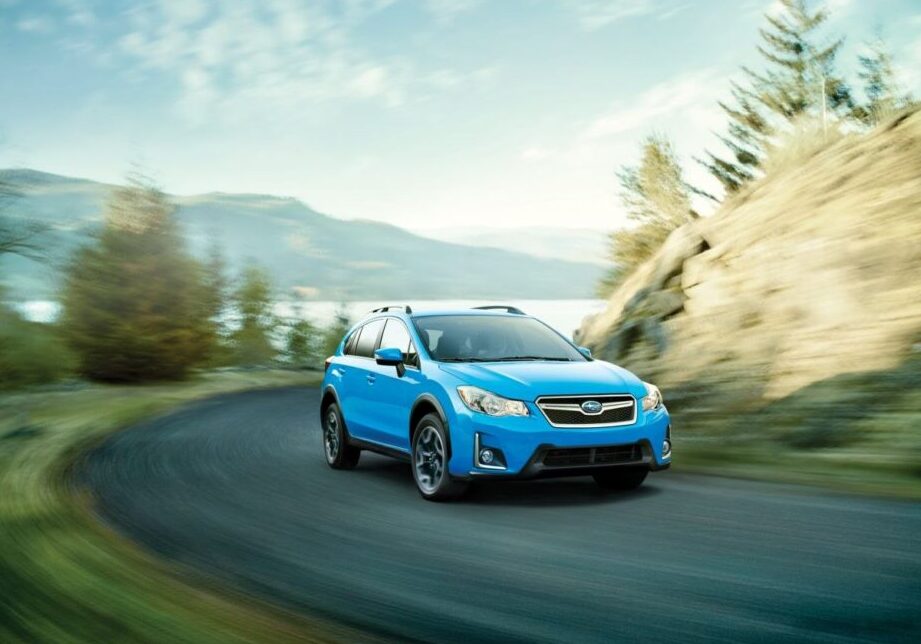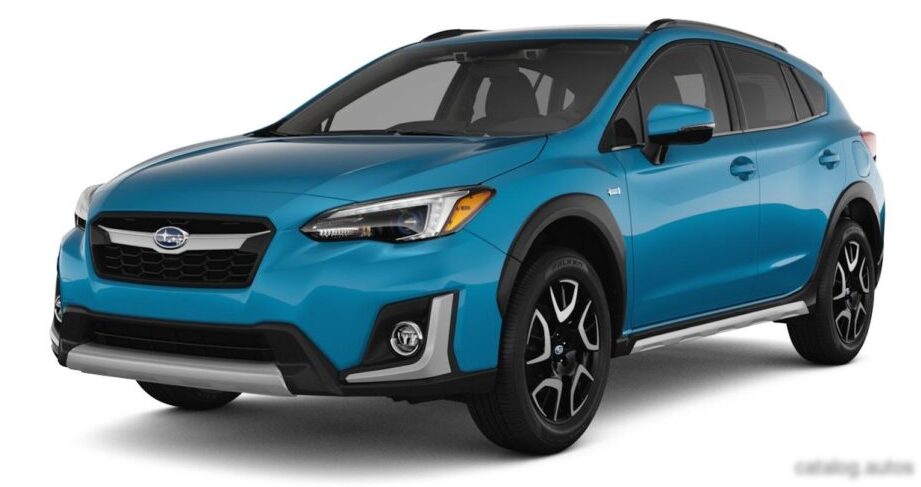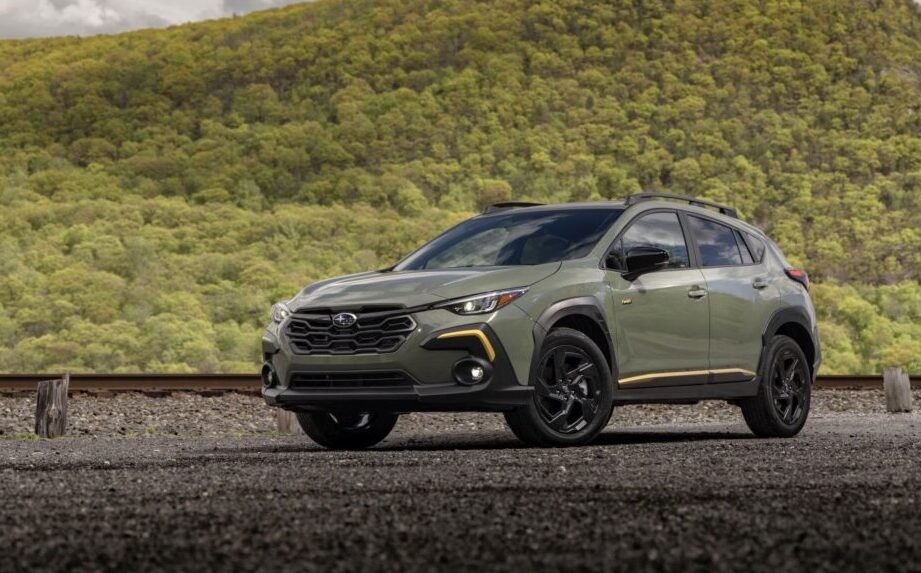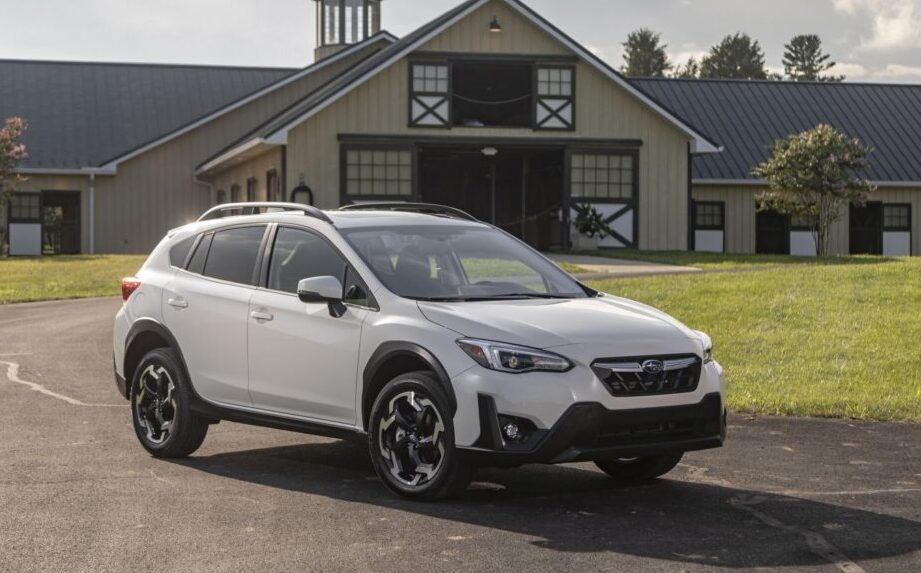
The Subaru Crosstrek II (facelift 2020) 2.0 Plug-in Hybrid, produced from June 2022 through 2023, represents Subaru’s entry into the plug-in hybrid crossover segment for the North American market. Building upon the second generation Crosstrek (introduced in 2017), this variant aimed to offer improved fuel efficiency and a degree of electric-only driving capability without sacrificing the brand’s signature symmetrical all-wheel drive system. It slots into the Crosstrek lineup as a premium offering, positioned above the standard 2.0-liter gasoline model but below potential future, more performance-oriented trims. This model is primarily targeted towards environmentally conscious consumers seeking a versatile and capable compact SUV.
Technical Specifications
| Brand | Subaru |
| Model | Crosstrek |
| Generation | Crosstrek II (facelift 2020) |
| Type (Engine) | 2.0 (148 Hp) Plug-in Hybrid AWD CVT |
| Start of production | June, 2022 |
| End of production | 2023 |
| Powertrain Architecture | PHEV (Plug-in Hybrid Electric Vehicle) |
| Body type | SUV, Crossover |
| Seats | 5 |
| Doors | 5 |
| Fuel consumption (combined) | 6.7 l/100 km (35.1 US mpg, 42.2 UK mpg, 14.9 km/l) |
| Fuel Type | Petrol / electricity |
| Weight-to-power ratio | 11.4 kg/Hp, 87.8 Hp/tonne |
| Weight-to-torque ratio | 9.3 kg/Nm, 107.9 Nm/tonne |
| Gross battery capacity | 8.8 kWh |
| Battery voltage | 351.5 V |
| Battery technology | Lithium-ion (Li-Ion) |
| Battery location | Under the trunk |
| All-electric range | 27.4 km (17.03 mi) |
| Average Energy consumption | 23.3 kWh/100 km (37.5 kWh/100 mi, 90 MPGe, 4.3 km/kWh, 2.7 mi/kWh) |
| Electric motor power | 118 Hp |
| Electric motor Torque | 202 Nm @ 0-1500 rpm (148.99 lb.-ft. @ 0-1500 rpm) |
| Electric motor location | Integrated into the transmission |
| System power | 148 Hp |
| Power | 137 Hp @ 5600 rpm (68.7 Hp/l) |
| Torque | 182 Nm @ 4400 rpm (134.24 lb.-ft. @ 4400 rpm) |
| Engine layout | Front, Longitudinal |
| Engine Model/Code | FB20D |
| Engine displacement | 1995 cm3 (121.74 cu. in.) |
| Number of cylinders | 4 |
| Engine configuration | Boxer |
| Cylinder Bore | 84.07 mm (3.31 in.) |
| Piston Stroke | 89.92 mm (3.54 in.) |
| Compression ratio | 13.5:1 |
| Number of valves per cylinder | 4 |
| Fuel injection system | Direct injection |
| Valvetrain | DOHC, DAVCS |
| Engine oil capacity | 4.2 l (4.44 US qt | 3.7 UK qt) |
| Kerb Weight | 1686 kg (3716.99 lbs.) |
| Trunk (boot) space – minimum | 450 l (15.89 cu. ft.) |
| Trunk (boot) space – maximum | 1220 l (43.08 cu. ft.) |
| Fuel tank capacity | 50 l (13.21 US gal | 11 UK gal) |
| Permitted trailer load with brakes (12%) | 454 kg (1000.9 lbs.) |
| Permitted towbar download | 45 kg (99.21 lbs.) |
| Length | 4483 mm (176.5 in.) |
| Width | 1803 mm (70.98 in.) |
| Width including mirrors | 2022 mm (79.61 in.) |
| Height | 1595 mm (62.8 in.) |
| Wheelbase | 2664 mm (104.88 in.) |
| Front track | 1549 mm (60.98 in.) |
| Rear (Back) track | 1554 mm (61.18 in.) |
| Ride height (ground clearance) | 221 mm (8.7 in.) |
| Minimum turning circle (turning diameter) | 10.8 m (35.43 ft.) |
| Front brakes | Ventilated discs, 294.64 mm |
| Rear brakes | Ventilated discs, 284.48 mm |
| Gearbox | automatic transmission Lineartronic CVT |
| Tires size | 225/55 R18 98H |
Powertrain & Engine Architecture
The 2022-2023 Subaru Crosstrek Plug-in Hybrid utilizes a 2.0-liter naturally aspirated four-cylinder Boxer engine (FB20D) paired with an electric motor integrated into the Lineartronic CVT (Continuously Variable Transmission). The engine produces 137 horsepower at 5600 rpm and 134.24 lb-ft of torque at 4400 rpm. Direct injection and Dual Active Valve Control System (DAVCS) contribute to improved efficiency and responsiveness. The electric motor adds another 118 horsepower and 148.99 lb-ft of torque, bringing the total system output to 148 horsepower. The 8.8 kWh lithium-ion battery pack, located under the trunk floor, allows for an all-electric range of approximately 17 miles. The powertrain operates in several modes, including EV, Hybrid, and Power, allowing the driver to prioritize electric driving, balance fuel efficiency, or maximize performance. The Lineartronic CVT is specifically tuned to work seamlessly with both the gasoline engine and electric motor, providing smooth and efficient power delivery.
Driving Characteristics
The Crosstrek Plug-in Hybrid offers a distinct driving experience compared to the standard gasoline model. In EV mode, the vehicle provides quiet and smooth acceleration, suitable for short commutes and city driving. The electric motor’s instant torque provides brisk initial acceleration. When the battery is depleted or during more demanding driving situations, the gasoline engine seamlessly engages, providing additional power. The CVT, while efficient, lacks the direct feel of a traditional automatic transmission. Compared to the manual transmission option available on the standard Crosstrek, the CVT prioritizes fuel economy over sporty engagement. The all-wheel drive system, a Subaru hallmark, provides confident traction in various weather conditions. The added weight of the battery pack (approximately 300 lbs more than the standard model) is noticeable, slightly impacting handling agility.
Equipment & Trim Levels
The Crosstrek Plug-in Hybrid was generally offered in a single, well-equipped trim level. Standard features typically included Subaru’s EyeSight Driver Assist Technology (including adaptive cruise control, lane departure warning, and automatic emergency braking), a touchscreen infotainment system with Apple CarPlay and Android Auto compatibility, automatic climate control, and heated front seats. Optional extras often included a power moonroof, premium audio system, and upgraded interior trim. The interior featured unique styling cues to differentiate it from the standard Crosstrek, including specific badging and upholstery.
Chassis & Braking
The Crosstrek Plug-in Hybrid utilizes a McPherson strut front suspension and a double-wishbone rear suspension, optimized for ride comfort and handling. Stabilizer bars are fitted to both axles to reduce body roll. Ventilated disc brakes are used on all four wheels, providing adequate stopping power. The added weight of the battery pack necessitated slightly stiffer spring rates and dampers compared to the standard Crosstrek. The electric motor also contributes to regenerative braking, helping to recharge the battery and reduce wear on the conventional brakes.
Market Reception & Comparison
The Subaru Crosstrek Plug-in Hybrid was generally well-received by critics, who praised its fuel efficiency, all-wheel drive capability, and standard safety features. However, some reviewers noted the relatively short all-electric range compared to competitors and the lack of a more engaging driving experience. Compared to the standard 2.0-liter Crosstrek, the Plug-in Hybrid offered significantly improved fuel economy, particularly for drivers who frequently commute short distances and can take advantage of electric-only driving. Compared to other plug-in hybrid crossovers in its class, the Crosstrek offered a competitive price point and Subaru’s reputation for reliability and durability.
Legacy
The Subaru Crosstrek Plug-in Hybrid represents an important step in Subaru’s electrification strategy. While its production run was relatively short, it demonstrated the brand’s commitment to offering more fuel-efficient and environmentally friendly vehicles. The FB20D engine, while not a groundbreaking design, proved to be a reliable and durable powerplant. The Lineartronic CVT, though not universally loved, provided smooth and efficient operation. On the used car market, the Crosstrek Plug-in Hybrid remains a desirable option for buyers seeking a versatile, capable, and fuel-efficient crossover with the added benefit of plug-in hybrid technology. Long-term reliability appears to be consistent with other Subaru models, with few widespread issues reported.