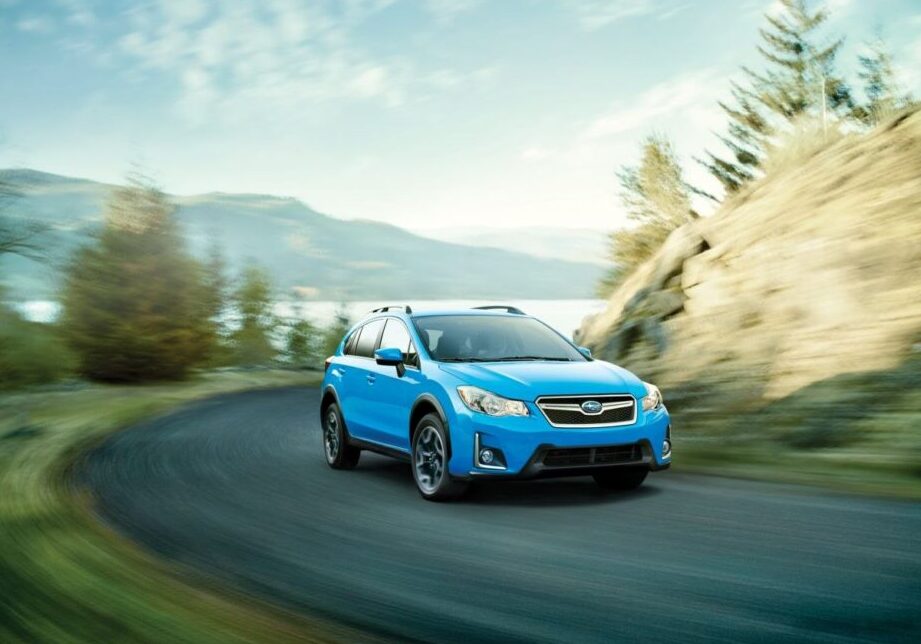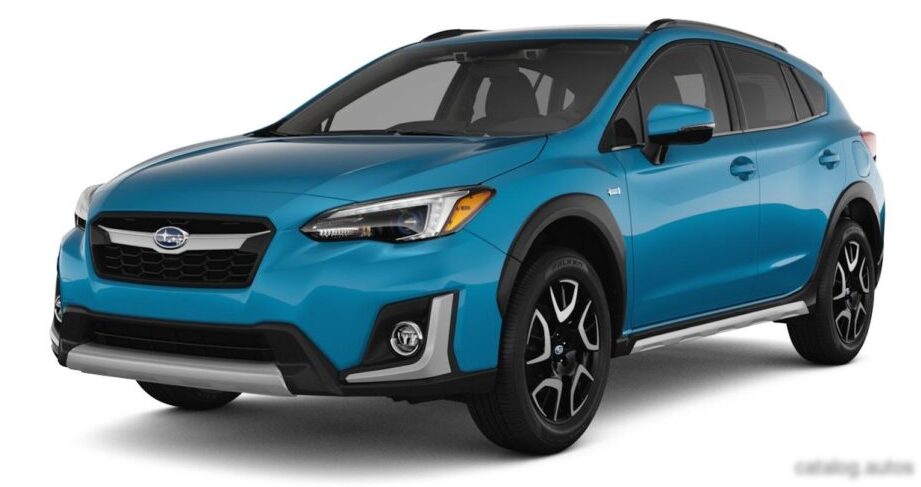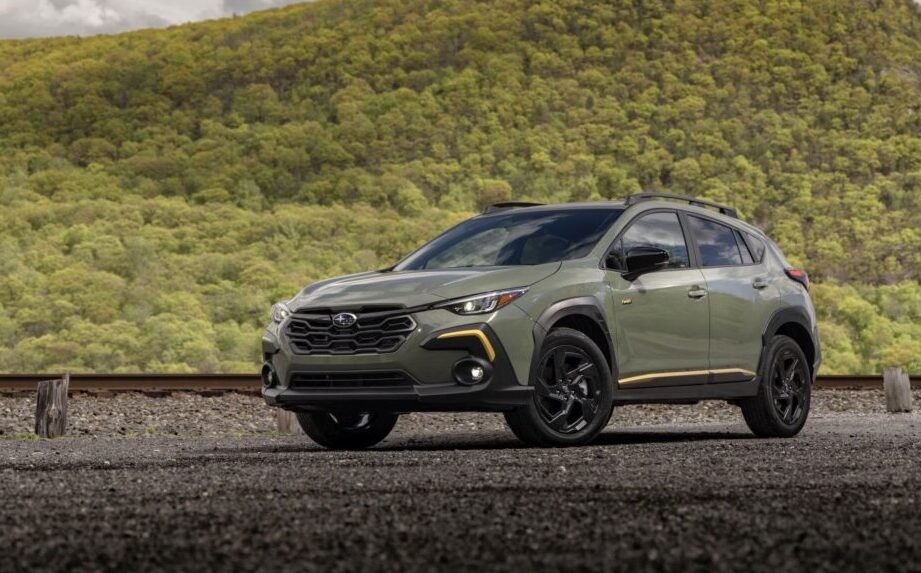
The Subaru Crosstrek II, specifically the 2.5-liter variant introduced with the 2020 facelift, represents a significant evolution of Subaru’s popular subcompact crossover. Produced from 2020 through 2023, this model aimed to address criticisms of the original Crosstrek’s underpowered engine, offering a more compelling driving experience for the North American market. Positioned as the mainstream offering within the Crosstrek lineup, it sat above the base 2.0-liter model and below any potential hybrid or performance-oriented trims. The 2.5-liter engine, paired exclusively with a continuously variable transmission (CVT) and Subaru’s symmetrical all-wheel drive system, became the most popular configuration, appealing to buyers seeking a practical, reliable, and capable small SUV.
Technical Specifications
| Brand | Subaru |
| Model | Crosstrek |
| Generation | Crosstrek II (facelift 2020) |
| Type (Engine) | 2.5 (182 Hp) AWD CVT |
| Start of production | 2020 |
| End of production | 2023 |
| Powertrain Architecture | Internal Combustion engine |
| Body type | SUV, Crossover |
| Seats | 5 |
| Doors | 5 |
| Fuel consumption (urban) | 8.7 l/100 km (27 US mpg) |
| Fuel consumption (extra urban) | 6.9 l/100 km (34.1 US mpg) |
| Fuel consumption (combined) | 8.1 l/100 km (29 US mpg) |
| Fuel Type | Petrol (Gasoline) |
| Weight-to-power ratio | 8.1 kg/Hp |
| Weight-to-torque ratio | 6.2 kg/Nm |
| Power | 182 Hp @ 5800 rpm |
| Torque | 239 Nm @ 4400 rpm (176.28 lb.-ft. @ 4400 rpm) |
| Engine layout | Front, Longitudinal |
| Engine Model/Code | FB25 |
| Engine displacement | 2498 cm3 (152.44 cu. in.) |
| Number of cylinders | 4 |
| Engine configuration | Boxer |
| Cylinder Bore | 93.98 mm (3.7 in.) |
| Piston Stroke | 89.92 mm (3.54 in.) |
| Compression ratio | 12:1 |
| Number of valves per cylinder | 4 |
| Fuel injection system | Direct injection |
| Engine aspiration | Naturally aspirated engine |
| Valvetrain | DOHC, DAVCS |
| Engine oil capacity | 4.2 l (4.44 US qt | 3.7 UK qt) |
| Coolant capacity | 8.3 l (8.77 US qt | 7.3 UK qt) |
| Kerb Weight | 1481-1496 kg (3265.05 – 3298.12 lbs.) |
| Trunk (boot) space – minimum | 589 l (20.8 cu. ft.) |
| Trunk (boot) space – maximum | 1566 l (55.3 cu. ft.) |
| Fuel tank capacity | 63 l (16.64 US gal | 13.86 UK gal) |
| Length | 4483 mm (176.5 in.) |
| Width | 1803 mm (70.98 in.) |
| Width including mirrors | 2019 mm (79.49 in.) |
| Height | 1615 mm (63.58 in.) |
| Wheelbase | 2664 mm (104.88 in.) |
| Front track | 1549 mm (60.98 in.) |
| Rear track | 1554 mm (61.18 in.) |
| Ride height (ground clearance) | 221 mm (8.7 in.) |
| Minimum turning circle | 10.8 m (35.43 ft.) |
| Front brakes | Ventilated discs, 294.64 mm |
| Rear brakes | Disc, 274.32 mm |
| Number of gears | 8 |
| Type of gearbox | automatic transmission CVT |
Powertrain & Engine Architecture
The heart of the 2020+ Crosstrek 2.5 is the FB25 2.5-liter naturally aspirated boxer-four engine. This engine, a staple in Subaru’s lineup, is known for its durability and relatively smooth operation. The boxer configuration, with its horizontally opposed pistons, contributes to a low center of gravity, enhancing stability. Direct fuel injection is employed to improve fuel efficiency and power output. The engine utilizes a dual overhead camshaft (DOHC) design with Active Valve Control System (DAVCS) on both intake and exhaust valves, optimizing valve timing for improved performance across the rev range. The FB25 produces 182 horsepower at 5800 rpm and 176 lb-ft of torque at 4400 rpm. This power is delivered to all four wheels through a continuously variable transmission (CVT). Subaru’s CVT is programmed with simulated “shift points” to mimic the feel of a traditional automatic transmission, addressing a common complaint about CVTs. The CVT is designed for fuel efficiency and smooth acceleration, prioritizing comfort over outright performance.
Driving Characteristics
Compared to the earlier 2.0-liter Crosstrek, the 2.5-liter variant offers a noticeable improvement in acceleration and overall responsiveness. While not a sporty vehicle, the 2.5L engine provides sufficient power for everyday driving situations, including highway merging and passing. The CVT, while smooth, can sometimes feel less engaging than a traditional automatic or manual transmission. The simulated shift points help mitigate this, but the engine can drone under hard acceleration. The symmetrical all-wheel drive system provides excellent traction in various weather conditions, making the Crosstrek a capable vehicle for those living in areas with snow or inclement weather. The gear ratios in the CVT are optimized for fuel economy, but this can sometimes result in a slightly sluggish feeling at lower speeds.
Equipment & Trim Levels
The 2.5-liter Crosstrek typically came standard with features such as automatic climate control, a 6.5-inch touchscreen infotainment system with Apple CarPlay and Android Auto compatibility, and Subaru’s EyeSight suite of safety features, including adaptive cruise control, lane departure warning, and automatic emergency braking. Higher trim levels, such as the Limited and Hybrid (though the Hybrid used a different powertrain), added features like leather upholstery, a larger touchscreen display, a premium audio system, and power-adjustable driver’s seat. Optional extras included a power moonroof, blind-spot monitoring, and rear cross-traffic alert.
Chassis & Braking
The Crosstrek utilizes an independent McPherson strut suspension in the front and a double-wishbone suspension in the rear. This setup provides a comfortable ride and good handling characteristics. The suspension is tuned for a balance between comfort and control, prioritizing ride quality over sporty handling. Braking duties are handled by ventilated discs in the front and solid discs in the rear. Anti-lock brakes (ABS) are standard, as is electronic brake-force distribution. The Crosstrek’s relatively light weight (around 3,265-3,298 lbs) contributes to its manageable braking performance.
Market Reception & Comparison
The introduction of the 2.5-liter engine was widely praised by automotive critics, who noted the significant improvement in performance compared to the previous 2.0-liter option. The CVT, while still a point of contention for some, was generally considered well-tuned and effective. Fuel economy figures of around 29 mpg combined were competitive for the segment. Compared to other subcompact crossovers like the Honda HR-V and Mazda CX-3, the Crosstrek offered a unique combination of standard all-wheel drive, good ground clearance, and a spacious interior. The 2.5-liter model was often seen as a more compelling alternative to the base 2.0-liter, justifying the price premium for buyers prioritizing performance.
Legacy
The FB25 engine has proven to be a reliable and durable powerplant in Subaru vehicles. The 2020+ Crosstrek 2.5, with its FB25 engine and CVT transmission, has generally maintained a good reputation for reliability. Common issues are relatively minor and often related to routine maintenance items. On the used car market, these models hold their value reasonably well, reflecting their reputation for reliability and capability. The 2020 facelift and the introduction of the 2.5-liter engine were pivotal in establishing the Crosstrek as a leading contender in the subcompact crossover segment, and this powertrain configuration remains a popular choice among used car buyers.