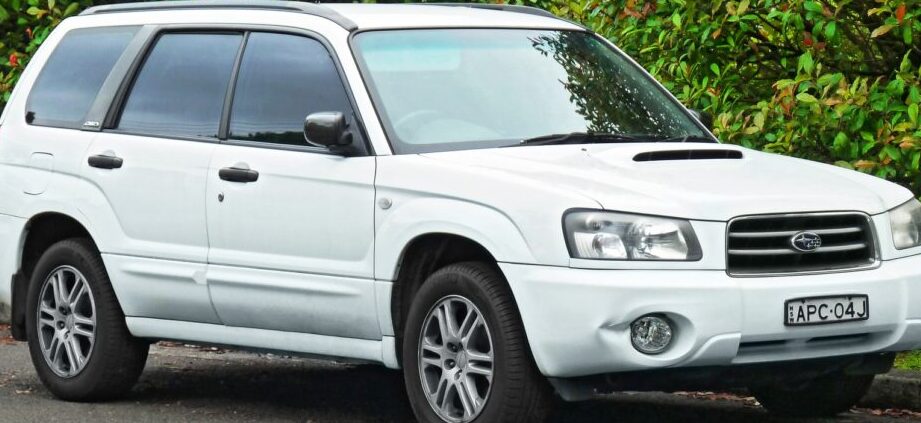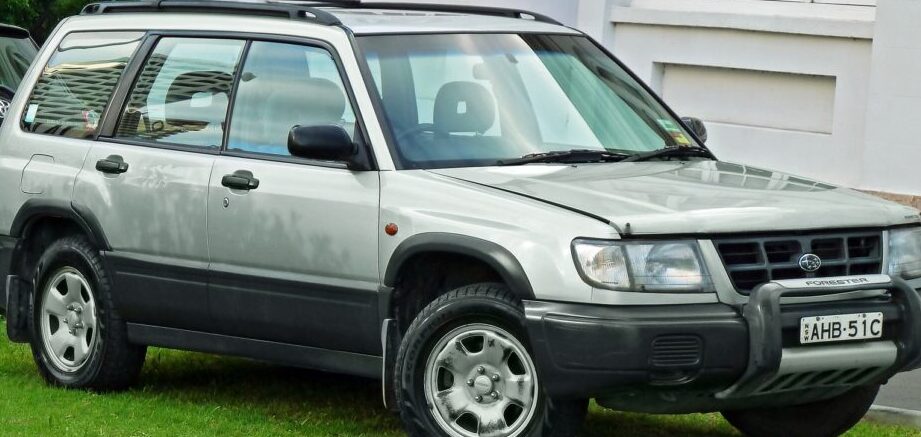
The Subaru Forester I 2.0, produced between 1998 and 2002, represented Subaru’s entry into the burgeoning compact SUV/Crossover market. Built on the Subaru S platform (shared with the Impreza), the Forester distinguished itself with its car-like handling, standard all-wheel drive, and practical, wagon-like body style. The 2.0-liter variant, generating 125 horsepower, served as the base engine option for the Forester in many markets, offering a balance of affordability and capability. It was positioned as the more economical choice within the first-generation Forester lineup, appealing to buyers prioritizing fuel efficiency and everyday usability over outright performance.
Technical Specifications
| Brand | Subaru |
| Model | Forester |
| Generation | Forester I |
| Type (Engine) | 2.0 (125 Hp) |
| Start of production | 1998 |
| End of production | 2002 |
| Powertrain Architecture | Internal Combustion engine |
| Body type | SUV, Crossover |
| Seats | 5 |
| Doors | 5 |
| Fuel consumption (urban) | 11.9 l/100 km (19.8 US mpg) |
| Fuel consumption (extra urban) | 7.4 l/100 km (31.8 US mpg) |
| Fuel consumption (combined) | 9.1 l/100 km (25.8 US mpg) |
| Fuel Type | Petrol (Gasoline) |
| Acceleration 0 – 100 km/h | 10.7 sec |
| Acceleration 0 – 62 mph | 10.7 sec |
| Acceleration 0 – 60 mph | 10.2 sec |
| Maximum speed | 178 km/h (110.6 mph) |
| Weight-to-power ratio | 11.5 kg/Hp |
| Weight-to-torque ratio | 7.8 kg/Nm |
| Power | 125 Hp @ 5600 rpm |
| Torque | 184 Nm @ 3600 rpm (135.71 lb.-ft. @ 3600 rpm) |
| Engine layout | Front, Longitudinal |
| Engine Model/Code | EJ203 |
| Engine displacement | 1994 cm3 (121.68 cu. in.) |
| Number of cylinders | 4 |
| Engine configuration | Boxer |
| Cylinder Bore | 92 mm (3.62 in.) |
| Piston Stroke | 75 mm (2.95 in.) |
| Compression ratio | 10:1 |
| Number of valves per cylinder | 4 |
| Fuel injection system | Multi-port manifold injection |
| Engine aspiration | Naturally aspirated engine |
| Valvetrain | OHC |
| Engine oil capacity | 4 l (4.23 US qt | 3.52 UK qt) |
| Kerb Weight | 1440 kg (3174.66 lbs.) |
| Max. weight | 1875 kg (4133.67 lbs.) |
| Max load | 435 kg (959.01 lbs.) |
| Trunk (boot) space – minimum | 406 l (14.34 cu. ft.) |
| Trunk (boot) space – maximum | 1525 l (53.85 cu. ft.) |
| Fuel tank capacity | 60 l (15.85 US gal | 13.2 UK gal) |
| Length | 4460 mm (175.59 in.) |
| Width | 1735 mm (68.31 in.) |
| Height | 1595 mm (62.8 in.) |
| Wheelbase | 2525 mm (99.41 in.) |
| Front track | 1475 mm (58.07 in.) |
| Rear (Back) track | 1465 mm (57.68 in.) |
| Drive wheel | All wheel drive (4×4) |
| Number of gears and type of gearbox | 5 gears, manual transmission |
| Front suspension | Spring Strut |
| Rear suspension | Double wishbone |
| Front brakes | Disc |
| Rear brakes | Drum |
| Assisting systems | ABS (Anti-lock braking system) |
| Steering type | Steering rack and pinion |
| Power steering | Hydraulic Steering |
| Tires size | 205/70 R15 |
| Wheel rims size | 6J x 15 |
Powertrain & Engine Architecture
The heart of the Forester I 2.0 was the EJ203 engine, a 1.994-liter (121.68 cubic inches) naturally aspirated, horizontally-opposed (boxer) four-cylinder gasoline engine. This engine was a staple of Subaru’s lineup during this period, known for its relatively smooth operation and compact design. The EJ203 featured a single overhead camshaft (OHC) design, operating four valves per cylinder. Fuel delivery was handled by a multi-point fuel injection system. The engine produced 125 horsepower at 5600 rpm and 184 Nm (135.71 lb-ft) of torque at 3600 rpm. The five-speed manual transmission was the standard offering, providing a direct connection to the engine’s power. The engine’s longitudinal mounting, coupled with Subaru’s symmetrical all-wheel drive system, contributed to the Forester’s balanced handling characteristics.
Driving Characteristics
The 2.0-liter Forester, with its 125 hp and manual transmission, offered adequate, but not exhilarating, performance. Acceleration from 0 to 60 mph took around 10.2 seconds, and top speed was approximately 110.6 mph. Compared to the later 2.5-liter engine options, the 2.0 felt noticeably less powerful, particularly when fully loaded or tackling steep inclines. The five-speed manual transmission was well-matched to the engine’s characteristics, offering a reasonable spread of gears for both city driving and highway cruising. The gear ratios were tuned for fuel efficiency and everyday usability rather than outright performance. The all-wheel drive system provided excellent traction in various conditions, making the Forester a capable vehicle in inclement weather.
Equipment & Trim Levels
The base 2.0-liter Forester typically came equipped with a relatively modest level of standard features. Interior appointments included cloth upholstery, a basic stereo system, and manual air conditioning. Power windows and door locks were often included, but features like alloy wheels, a sunroof, and upgraded audio systems were typically reserved for higher trim levels. Optional extras included a CD player, cruise control, and various accessory packages. The interior design was functional and practical, prioritizing space and usability over luxury.
Chassis & Braking
The Forester I utilized a MacPherson strut front suspension and a double-wishbone rear suspension, providing a comfortable ride and predictable handling. The suspension was tuned for a balance between ride comfort and handling stability. Braking duties were handled by disc brakes at the front and drum brakes at the rear. Anti-lock braking system (ABS) was standard, enhancing safety and control during emergency braking situations. The chassis was relatively lightweight for an SUV, contributing to the Forester’s nimble handling characteristics.
Market Reception & Comparison
The Subaru Forester I 2.0 was generally well-received by automotive critics as a practical and versatile compact SUV. It was praised for its standard all-wheel drive, car-like handling, and spacious interior. However, the 2.0-liter engine was often criticized for being underpowered, particularly when compared to competitors offering larger displacement engines. Fuel economy was considered average for the class, with combined figures around 25.8 US mpg. Compared to the higher-trim Forester models with the 2.5-liter engine, the 2.0 offered a more affordable entry point into the Forester lineup, but at the expense of performance.
Legacy
The EJ203 engine, while not known for being particularly high-performance, proved to be a relatively reliable and durable powerplant. With proper maintenance, these engines can last for many years and high mileage. In the used car market today, the first-generation Forester 2.0 remains a popular choice for buyers seeking an affordable and capable all-wheel drive vehicle. Its simplicity and relatively low running costs make it an attractive option for those looking for a practical and reliable SUV. However, potential buyers should be aware of the engine’s limited power output and the availability of replacement parts, which may be becoming increasingly scarce.