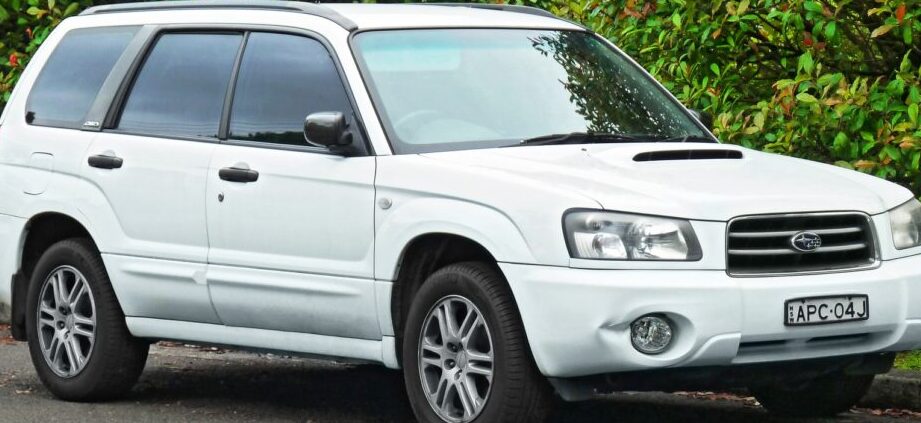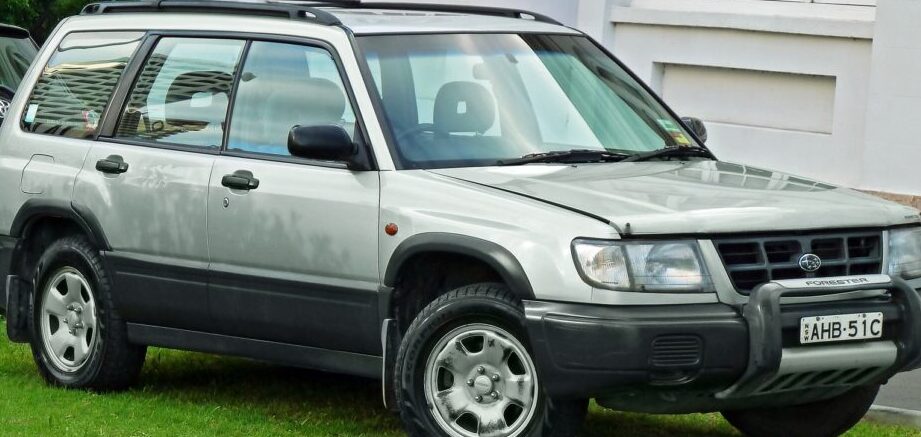
The Subaru Forester I 2.0 (125 hp) Automatic, produced between 1998 and 2002, represents the first generation of Subaru’s popular compact SUV. Positioned as a practical and capable all-weather vehicle, it was a key model in Subaru’s expansion into the burgeoning SUV market. This particular variant, combining the 2.0-liter naturally aspirated engine with a four-speed automatic transmission, aimed to provide a balance of affordability and ease of use, appealing to buyers prioritizing convenience over outright performance. It was built on the 1HX0 platform, shared with other Subaru models of the era, and played a significant role in establishing the Forester’s reputation for reliability and all-wheel-drive capability.
Technical Specifications
| Brand | Subaru |
| Model | Forester |
| Generation | Forester I |
| Type (Engine) | 2.0 (125 Hp) Automatic |
| Start of production | 1998 |
| End of production | 2002 |
| Powertrain Architecture | Internal Combustion engine |
| Body type | SUV, Crossover |
| Seats | 5 |
| Doors | 5 |
| Fuel consumption (urban) | 12.2 l/100 km (19.3 US mpg) |
| Fuel consumption (extra urban) | 7.5 l/100 km (31.4 US mpg) |
| Fuel consumption (combined) | 9.1 l/100 km (25.8 US mpg) |
| Fuel Type | Petrol (Gasoline) |
| Acceleration 0 – 100 km/h | 12.4 sec |
| Acceleration 0 – 62 mph | 12.4 sec |
| Acceleration 0 – 60 mph | 11.8 sec |
| Maximum speed | 166 km/h (103.15 mph) |
| Weight-to-power ratio | 11.5 kg/Hp |
| Weight-to-torque ratio | 7.8 kg/Nm |
| Power | 125 Hp @ 5600 rpm |
| Torque | 184 Nm @ 3600 rpm (135.71 lb.-ft. @ 3600 rpm) |
| Engine layout | Front, Longitudinal |
| Engine Model/Code | EJ203 |
| Engine displacement | 1994 cm3 (121.68 cu. in.) |
| Number of cylinders | 4 |
| Engine configuration | Boxer |
| Cylinder Bore | 92 mm (3.62 in.) |
| Piston Stroke | 75 mm (2.95 in.) |
| Compression ratio | 10:1 |
| Number of valves per cylinder | 4 |
| Fuel injection system | Multi-port manifold injection |
| Engine aspiration | Naturally aspirated engine |
| Valvetrain | OHC |
| Engine oil capacity | 4 l (4.23 US qt | 3.52 UK qt) |
| Kerb Weight | 1440 kg (3174.66 lbs.) |
| Max. weight | 1875 kg (4133.67 lbs.) |
| Max load | 435 kg (959.01 lbs.) |
| Trunk (boot) space – minimum | 406 l (14.34 cu. ft.) |
| Trunk (boot) space – maximum | 1525 l (53.85 cu. ft.) |
| Fuel tank capacity | 60 l (15.85 US gal | 13.2 UK gal) |
| Length | 4460 mm (175.59 in.) |
| Width | 1735 mm (68.31 in.) |
| Height | 1595 mm (62.8 in.) |
| Wheelbase | 2525 mm (99.41 in.) |
| Front track | 1475 mm (58.07 in.) |
| Rear (Back) track | 1465 mm (57.68 in.) |
| Drive wheel | All wheel drive (4×4) |
| Number of gears and type of gearbox | 4 gears, automatic transmission |
| Front suspension | Spring Strut |
| Rear suspension | Double wishbone |
| Front brakes | Disc |
| Rear brakes | Drum |
| Assisting systems | ABS (Anti-lock braking system) |
| Steering type | Steering rack and pinion |
| Power steering | Hydraulic Steering |
| Tires size | 205/70 R15 |
| Wheel rims size | 6J x 15 |
Powertrain & Engine Architecture
The heart of the Forester I 2.0 Automatic is the EJ203 engine, a 1.994-liter (121.68 cubic inches) naturally aspirated, horizontally-opposed (boxer) four-cylinder gasoline engine. This engine design, a Subaru hallmark, provides a low center of gravity, contributing to improved handling and stability. The EJ203 utilizes a single overhead camshaft (OHC) design with four valves per cylinder. Fuel delivery is managed by a multi-port fuel injection system, providing adequate, though not exceptional, performance. The engine produces 125 horsepower at 5600 rpm and 184 Nm (135.71 lb-ft) of torque at 3600 rpm. Paired with this engine is a four-speed automatic transmission, chosen for its ease of use and suitability for everyday driving. This transmission lacks the sophistication of modern automatics, with relatively wide gear ratios and a focus on smooth, rather than rapid, shifts.
Driving Characteristics
The 2.0-liter automatic Forester offers a comfortable, if not particularly sporty, driving experience. Acceleration from 0-60 mph takes around 11.8 to 12.4 seconds, making it slower than manual transmission versions or those equipped with larger engines. The automatic transmission prioritizes smooth operation, sometimes at the expense of responsiveness. The gear ratios are geared towards fuel efficiency and relaxed cruising, rather than aggressive acceleration. The all-wheel-drive system provides excellent traction in various weather conditions, a key selling point for Subaru. However, the relatively modest power output means that overtaking maneuvers require careful planning. Compared to the more powerful 2.5-liter engine option, the 2.0-liter automatic feels noticeably less energetic, especially when fully loaded.
Equipment & Trim Levels
The 2.0-liter automatic Forester typically came with a reasonable level of standard equipment. Interior features generally included cloth upholstery, air conditioning, power windows and locks, and a basic audio system. Optional extras included a sunroof, upgraded audio systems, and alloy wheels. Trim levels were relatively simple, with the 2.0-liter automatic often serving as the entry-level or mid-range offering. The interior design was functional and durable, prioritizing practicality over luxury. Safety features, such as ABS (Anti-lock Braking System), were standard, reflecting Subaru’s commitment to safety.
Chassis & Braking
The Forester I utilizes a MacPherson strut front suspension and a double-wishbone rear suspension, providing a comfortable ride and predictable handling. The suspension is tuned for a balance of comfort and stability, rather than outright sportiness. Braking duties are handled by disc brakes at the front and drum brakes at the rear. While adequate for normal driving conditions, the rear drum brakes are less effective than disc brakes, particularly under heavy braking. The hydraulic power steering provides light and easy steering, making it maneuverable in urban environments.
Market Reception & Comparison
The Subaru Forester I 2.0 Automatic was generally well-received by critics as a practical and capable SUV. Its all-wheel-drive system and comfortable ride were praised, but its relatively slow acceleration and basic interior were noted as drawbacks. Compared to other SUVs of the time, such as the Honda CR-V or Toyota RAV4, the Forester offered a more rugged and outdoorsy image, along with standard all-wheel drive. Fuel economy was average for its class, with combined fuel consumption around 25.8 US mpg. Reliability was generally good, although the automatic transmission could be prone to issues if not properly maintained.
Legacy
The Subaru Forester I 2.0 Automatic has proven to be a relatively reliable vehicle, with many examples still on the road today. The EJ203 engine, while not known for its blistering performance, is generally durable and relatively easy to maintain. The four-speed automatic transmission, however, can be a weak point, and regular fluid changes are crucial for longevity. In the used car market, these Foresters are often sought after by buyers looking for an affordable and capable all-wheel-drive vehicle. They represent a significant step in Subaru’s development as a mainstream SUV manufacturer, laying the foundation for the Forester’s continued success.