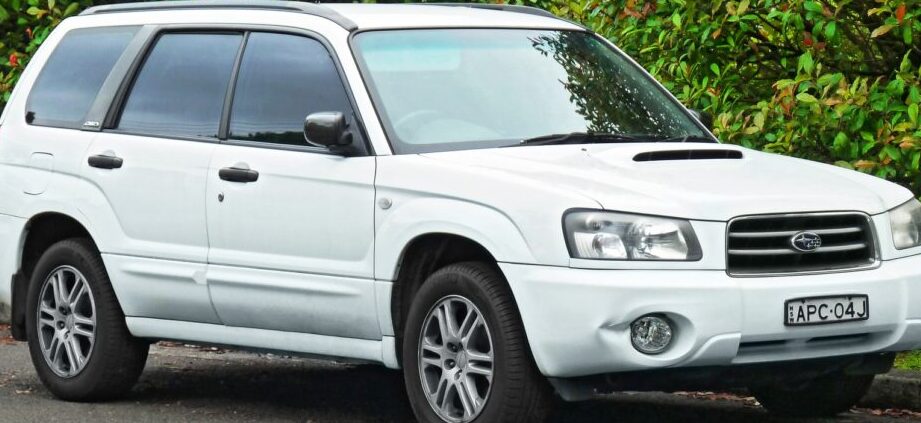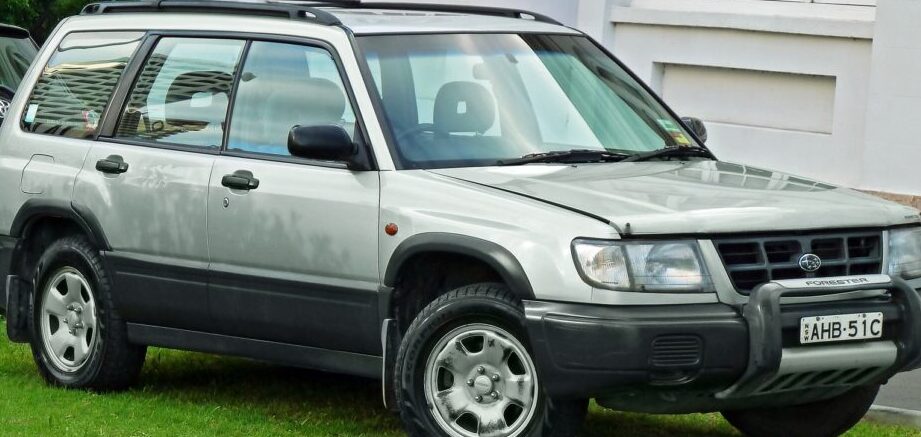
The Subaru Forester I 2.0 S-Turbo, produced between 1998 and 2002, represented a significant step forward for Subaru’s compact SUV offering. Positioned as the performance variant within the first-generation Forester (SF5) lineup, it catered to buyers seeking more than just the practicality of a small crossover. Built on Subaru’s robust platform, the Forester I aimed to blend the capability of all-wheel drive with a turbocharged engine, offering a unique package in a growing segment. This model was primarily sold in Japan, Australia, and Europe, with limited availability in the North American market, where the naturally aspirated 2.5L engine was more common.
Technical Specifications
| Brand | Subaru |
| Model | Forester |
| Generation | Forester I |
| Type (Engine) | 2.0 S -Turbo (170 Hp) |
| Start of production | 1998 |
| End of production | 2002 |
| Powertrain Architecture | Internal Combustion engine |
| Body type | SUV, Crossover |
| Seats | 5 |
| Doors | 5 |
| Fuel consumption (urban) | 12.8 l/100 km (18.4 US mpg) |
| Fuel consumption (extra urban) | 8.2 l/100 km (28.7 US mpg) |
| Fuel Type | Petrol (Gasoline) |
| Acceleration 0 – 100 km/h | 8.4 sec |
| Acceleration 0 – 62 mph | 8.4 sec |
| Acceleration 0 – 60 mph | 8 sec |
| Maximum speed | 198 km/h (123.03 mph) |
| Weight-to-power ratio | 8.5 kg/Hp |
| Weight-to-torque ratio | 6 kg/Nm |
| Power | 170 Hp @ 5600 rpm |
| Power per litre | 85.3 Hp/l |
| Torque | 240 Nm @ 3200 rpm (177.01 lb.-ft. @ 3200 rpm) |
| Engine layout | Front, Longitudinal |
| Engine Model/Code | DACT EJ205 |
| Engine displacement | 1994 cm3 (121.68 cu. in.) |
| Number of cylinders | 4 |
| Engine configuration | Boxer |
| Cylinder Bore | 92 mm (3.62 in.) |
| Piston Stroke | 75 mm (2.95 in.) |
| Compression ratio | 8.5:1 |
| Number of valves per cylinder | 4 |
| Fuel injection system | Multi-port manifold injection |
| Engine aspiration | Turbocharger |
| Valvetrain | DOHC |
| Engine oil capacity | 5 l (5.28 US qt | 4.4 UK qt) |
| Kerb Weight | 1445 kg (3185.68 lbs.) |
| Max. weight | 1935 kg (4265.94 lbs.) |
| Max load | 490 kg (1080.27 lbs.) |
| Trunk (boot) space – minimum | 406 l (14.34 cu. ft.) |
| Trunk (boot) space – maximum | 1525 l (53.85 cu. ft.) |
| Fuel tank capacity | 60 l (15.85 US gal | 13.2 UK gal) |
| Length | 4460 mm (175.59 in.) |
| Width | 1735 mm (68.31 in.) |
| Height | 1580 mm (62.2 in.) |
| Wheelbase | 2525 mm (99.41 in.) |
| Front track | 1480 mm (58.27 in.) |
| Rear (Back) track | 1470 mm (57.87 in.) |
| Drive wheel | All wheel drive (4×4) |
| Number of gears and type of gearbox | 5 gears, manual transmission |
| Front suspension | Spring Strut |
| Rear suspension | Double wishbone |
| Front brakes | Ventilated discs |
| Rear brakes | Disc |
| Assisting systems | ABS (Anti-lock braking system) |
| Steering type | Steering rack and pinion |
| Power steering | Hydraulic Steering |
| Tires size | 215/60 R16 |
Powertrain & Engine Architecture
The heart of the Forester I 2.0 S-Turbo was the DACT EJ205 engine, a 1994cc, horizontally-opposed (boxer) four-cylinder. This engine was a derivative of the EJ20 series, specifically tuned for turbocharging. The “DACT” designation refers to the Dual Active Camshaft Technology, which allowed for variable valve timing on both the intake and exhaust camshafts, optimizing performance across the rev range. The EJ205 featured a single turbocharger, typically an IHI RHB5, and a multi-point fuel injection system. The 8.5:1 compression ratio was a compromise between performance and reliability when running boosted. The engine was mated to a five-speed manual transmission, delivering power to all four wheels via Subaru’s symmetrical all-wheel-drive system. This drivetrain configuration was a hallmark of Subaru’s engineering, providing excellent traction and stability in various conditions.
Driving Characteristics
The 2.0 S-Turbo offered a noticeable performance upgrade over the naturally aspirated Forester variants. The 170 horsepower and 240 Nm (177 lb-ft) of torque provided brisk acceleration, with a 0-60 mph time of around 8 seconds and a top speed of 198 km/h (123 mph). The turbocharger did introduce some lag, particularly at lower engine speeds, but once spooled up, it delivered a strong surge of power. The five-speed manual transmission was well-matched to the engine’s characteristics, allowing drivers to keep the engine in its optimal power band. Compared to the base models, the S-Turbo felt significantly more responsive and capable, making it a more engaging driving experience. However, the turbo lag and the need to frequently shift gears to maintain optimal boost could be tiring on long journeys.
Equipment & Trim Levels
The Forester I 2.0 S-Turbo typically came with a higher level of standard equipment than the base models. This included features like alloy wheels, power windows and locks, air conditioning, and an upgraded audio system. Interior upholstery was often a combination of cloth and leather, with a sporty design. Optional extras included a sunroof, upgraded sound system, and various cosmetic enhancements. The dashboard layout was functional and straightforward, prioritizing usability over luxury. The S-Turbo trim was aimed at buyers who wanted a more refined and well-equipped vehicle without sacrificing the Forester’s practicality.
Chassis & Braking
The Forester I utilized a MacPherson strut front suspension and a double-wishbone rear suspension, providing a comfortable ride and good handling characteristics. The S-Turbo variant often featured slightly stiffer springs and dampers compared to the base models, improving body control and reducing roll during cornering. Braking duties were handled by ventilated discs at the front and solid discs at the rear, with ABS (Anti-lock Braking System) as standard equipment. The braking system was adequate for the vehicle’s performance, but it wasn’t particularly powerful compared to some contemporary sports SUVs.
Market Reception & Comparison
The Forester I 2.0 S-Turbo was generally well-received by automotive critics, who praised its performance, handling, and all-wheel-drive capability. However, some reviewers noted the turbo lag and the relatively high fuel consumption. Compared to the naturally aspirated Forester models, the S-Turbo offered a significant performance boost but came at a higher price and with slightly increased running costs. Against competitors like the Honda CR-V and Toyota RAV4, the Forester S-Turbo stood out with its turbocharged engine and standard all-wheel drive, offering a more engaging and capable driving experience.
Legacy
The EJ205 engine, while robust, is known to require diligent maintenance, particularly regarding oil changes and turbocharger health. The turbocharger itself can be a point of failure if not properly cared for. Today, well-maintained examples of the Forester I 2.0 S-Turbo are becoming increasingly sought after by enthusiasts, particularly those who appreciate Subaru’s engineering and the unique driving experience offered by the turbocharged boxer engine. Finding parts can be challenging, but a dedicated aftermarket exists to support these vehicles. The Forester I 2.0 S-Turbo remains a testament to Subaru’s commitment to performance and all-wheel-drive technology, and it continues to hold a special place in the hearts of many Subaru fans.