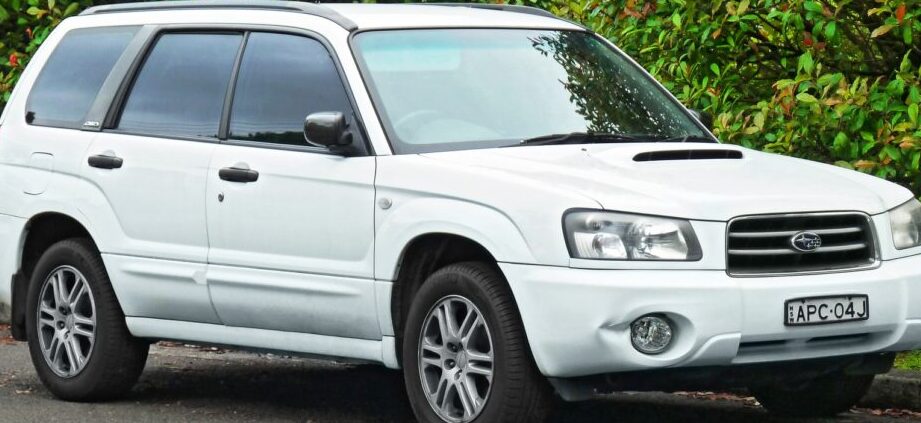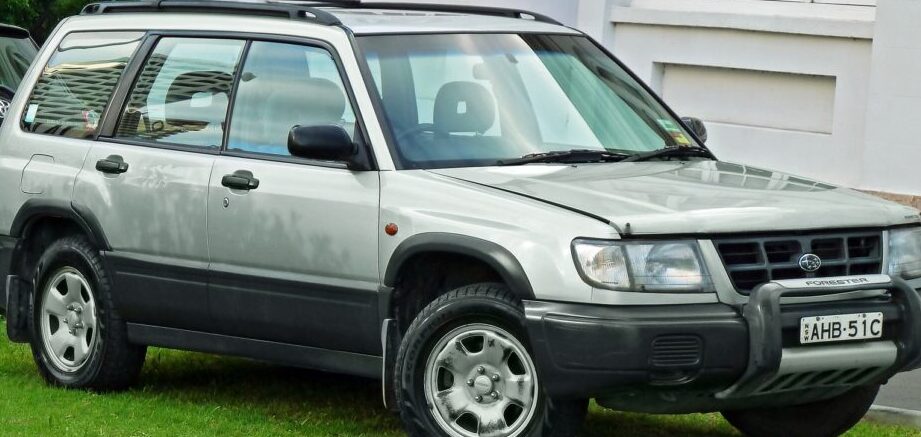
The Subaru Forester I 2.0 S-Turbo Automatic, produced between 1998 and 2002, represented a significant step forward for Subaru’s burgeoning crossover SUV lineup. Positioned as the performance-oriented variant within the first-generation Forester (SF5 chassis), this model combined a turbocharged 2.0-liter boxer engine with a four-speed automatic transmission, offering a blend of practicality and spirited driving. It was primarily marketed in Japan and Europe, offering a more engaging alternative to the naturally aspirated models while still providing the all-weather capability Subaru was becoming known for. The Forester I, launched in 1997, was Subaru’s first attempt at a compact SUV, aiming to bridge the gap between traditional station wagons and larger, more truck-based SUVs.
Technical Specifications
| Brand | Subaru |
| Model | Forester |
| Generation | Forester I |
| Type (Engine) | 2.0 S -Turbo (170 Hp) Automatic |
| Start of production | 1998 |
| End of production | 2002 |
| Powertrain Architecture | Internal Combustion engine |
| Body type | SUV, Crossover |
| Seats | 5 |
| Doors | 5 |
| Fuel consumption (urban) | 12.8 l/100 km (18.4 US mpg) |
| Fuel consumption (extra urban) | 8.2 l/100 km (28.7 US mpg) |
| Fuel Type | Petrol (Gasoline) |
| Acceleration 0 – 100 km/h | 8.4 sec |
| Acceleration 0 – 62 mph | 8.4 sec |
| Acceleration 0 – 60 mph | 8 sec |
| Maximum speed | 198 km/h (123.03 mph) |
| Weight-to-power ratio | 8.5 kg/Hp |
| Weight-to-torque ratio | 6 kg/Nm |
| Power | 170 Hp @ 5600 rpm |
| Power per litre | 85.3 Hp/l |
| Torque | 240 Nm @ 3200 rpm (177.01 lb.-ft. @ 3200 rpm) |
| Engine layout | Front, Longitudinal |
| Engine Model/Code | DACT EJ205 |
| Engine displacement | 1994 cm3 (121.68 cu. in.) |
| Number of cylinders | 4 |
| Engine configuration | Boxer |
| Cylinder Bore | 92 mm (3.62 in.) |
| Piston Stroke | 75 mm (2.95 in.) |
| Compression ratio | 8.5:1 |
| Number of valves per cylinder | 4 |
| Fuel injection system | Multi-port manifold injection |
| Engine aspiration | Turbocharger |
| Valvetrain | DOHC |
| Engine oil capacity | 5 l (5.28 US qt | 4.4 UK qt) |
| Kerb Weight | 1445 kg (3185.68 lbs.) |
| Max. weight | 1935 kg (4265.94 lbs.) |
| Max load | 490 kg (1080.27 lbs.) |
| Trunk (boot) space – minimum | 406 l (14.34 cu. ft.) |
| Trunk (boot) space – maximum | 1525 l (53.85 cu. ft.) |
| Fuel tank capacity | 60 l (15.85 US gal | 13.2 UK gal) |
| Length | 4460 mm (175.59 in.) |
| Width | 1735 mm (68.31 in.) |
| Height | 1580 mm (62.2 in.) |
| Wheelbase | 2525 mm (99.41 in.) |
| Front track | 1480 mm (58.27 in.) |
| Rear (Back) track | 1470 mm (57.87 in.) |
| Drive wheel | All wheel drive (4×4) |
| Number of gears and type of gearbox | 4 gears, automatic transmission |
| Front suspension | Spring Strut |
| Rear suspension | Double wishbone |
| Front brakes | Ventilated discs |
| Rear brakes | Disc |
| Assisting systems | ABS (Anti-lock braking system) |
| Steering type | Steering rack and pinion |
| Power steering | Hydraulic Steering |
| Tires size | 215/60 R16 |
Powertrain & Engine Architecture
The heart of the 2.0 S-Turbo was the DACT EJ205 engine, a 1994cc 16-valve, horizontally-opposed (boxer) four-cylinder. The “DACT” designation refers to the Dual Active Camshaft Technology, which allowed for variable valve timing on both the intake and exhaust camshafts, optimizing performance and fuel efficiency. A single turbocharger, typically an IHI RHB5, provided forced induction, boosting power output to 170 horsepower and 240 Nm (177 lb-ft) of torque. The engine utilized multi-port fuel injection and a compression ratio of 8.5:1. The four-speed automatic transmission, while providing convenience, was a traditional torque converter type and not known for its particularly quick shifts or fuel efficiency compared to the available five-speed manual. The engine was mounted longitudinally, a hallmark of Subaru’s all-wheel-drive system.
Driving Characteristics
The 2.0 S-Turbo Automatic offered a noticeable performance upgrade over the base Forester models. Acceleration to 60 mph was achieved in around 8 seconds, and the car felt responsive in everyday driving situations. However, the automatic transmission did detract somewhat from the engine’s potential. The gear ratios were geared more towards comfort and fuel economy than outright performance, resulting in a less engaging driving experience compared to the manual transmission version. Turbo lag was present, but manageable, delivering a surge of power once the boost came on. The all-wheel-drive system provided excellent traction in various conditions, making it a capable vehicle for inclement weather and light off-road use.
Equipment & Trim Levels
The 2.0 S-Turbo Automatic typically came with a higher level of standard equipment than the base Forester models. This included features like air conditioning, power windows and locks, alloy wheels, and a more premium interior trim. Optional extras included a sunroof, upgraded audio system, and leather upholstery. The interior design was functional and straightforward, prioritizing practicality over luxury. The dashboard layout was typical of late 1990s Japanese cars, with a focus on ease of use.
Chassis & Braking
The Forester I utilized a MacPherson strut front suspension and a double-wishbone rear suspension. The S-Turbo variant often featured slightly stiffer springs and dampers compared to the base models, improving handling and reducing body roll. Braking duties were handled by ventilated discs at the front and solid discs at the rear. Anti-lock brakes (ABS) were standard equipment. The steering was a rack-and-pinion system with hydraulic power assistance, providing a reasonably direct and responsive feel.
Market Reception & Comparison
The 2.0 S-Turbo Automatic was generally well-received by automotive critics, who praised its performance and all-weather capability. However, the automatic transmission was often criticized for being somewhat sluggish and detracting from the engine’s potential. Compared to the naturally aspirated 2.0-liter Forester, the S-Turbo offered a significant performance boost, but at the cost of slightly lower fuel economy. Compared to the 2.0L Turbo with a manual transmission, the automatic version was considered less desirable by enthusiasts. The 2.0 S-Turbo occupied a middle ground in the Forester lineup, offering a balance between performance, practicality, and price.
Legacy
The EJ205 engine, while generally reliable, is known to require regular maintenance, particularly regarding oil changes. The turbocharger can be a potential point of failure, especially if the engine has been subjected to hard use or neglected maintenance. The four-speed automatic transmission, while durable, is not known for its efficiency or refinement. Today, the Subaru Forester I 2.0 S-Turbo Automatic is a relatively rare and sought-after vehicle among Subaru enthusiasts. Well-maintained examples command a premium in the used car market, appealing to those who appreciate its unique combination of performance, practicality, and all-wheel-drive capability. It represents a pivotal moment in Subaru’s history, showcasing the brand’s commitment to building capable and engaging vehicles.