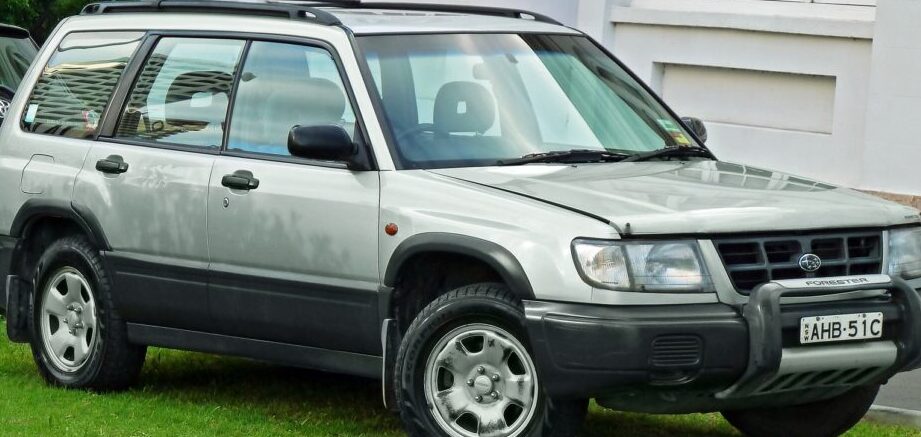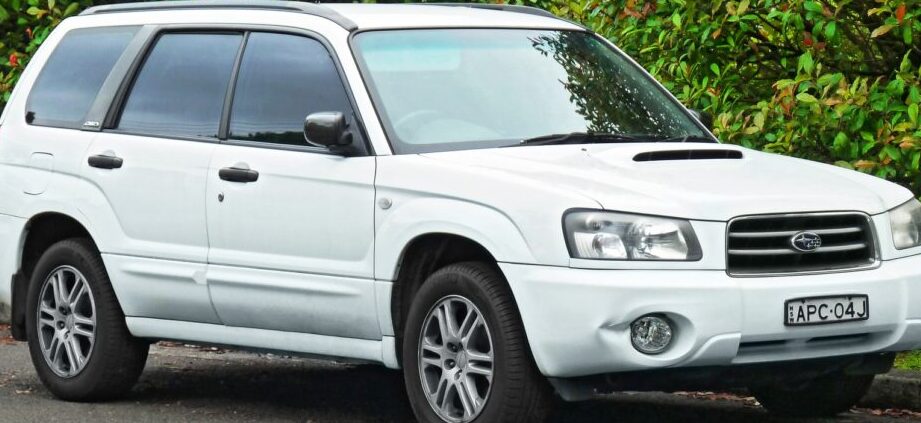
The Subaru Forester II 2.0 XT, produced between 2002 and 2008, represented a significant step forward for Subaru’s popular compact SUV. Positioned as the performance variant within the second-generation Forester (SF5 chassis), the 2.0 XT offered a turbocharged engine and all-wheel drive, appealing to buyers seeking a more engaging driving experience than the base naturally aspirated models. It was primarily marketed in Japan, Europe, and Australia, with limited availability in North America. This model played a key role in establishing the Forester’s reputation as a capable and versatile vehicle, blending practicality with a sporty character.
Technical Specifications
| Brand | Subaru |
| Model | Forester |
| Generation | Forester II |
| Type (Engine) | 2.0 XT (177 Hp) |
| Start of production | 2002 |
| End of production | 2008 |
| Powertrain Architecture | Internal Combustion engine |
| Body type | SUV, Crossover |
| Seats | 5 |
| Doors | 5 |
| Fuel consumption (urban) | 13.3 l/100 km (17.7 US mpg, 21.2 UK mpg, 7.5 km/l) |
| Fuel consumption (extra urban) | 7.8 l/100 km (30.2 US mpg, 36.2 UK mpg, 12.8 km/l) |
| Fuel consumption (combined) | 9.8 l/100 km (24 US mpg, 28.8 UK mpg, 10.2 km/l) |
| Fuel Type | Petrol (Gasoline) |
| Acceleration 0 – 100 km/h | 8.3 sec |
| Acceleration 0 – 62 mph | 8.3 sec |
| Acceleration 0 – 60 mph | 7.9 sec |
| Maximum speed | 202 km/h (125.52 mph) |
| Weight-to-power ratio | 8 kg/Hp, 125.5 Hp/tonne |
| Weight-to-torque ratio | 5.8 kg/Nm, 173.8 Nm/tonne |
| Power | 177 Hp @ 5600 rpm |
| Power per litre | 88.8 Hp/l |
| Torque | 245 Nm @ 3200 rpm (180.7 lb.-ft. @ 3200 rpm) |
| Engine layout | Front, Longitudinal |
| Engine displacement | 1994 cm3 (121.68 cu. in.) |
| Number of cylinders | 4 |
| Engine configuration | Boxer |
| Cylinder Bore | 92 mm (3.62 in.) |
| Piston Stroke | 75 mm (2.95 in.) |
| Compression ratio | 8:1 |
| Number of valves per cylinder | 4 |
| Fuel injection system | Multi-port manifold injection |
| Engine aspiration | Turbocharger, Intercooler |
| Valvetrain | DOHC |
| Engine oil capacity | 4.2 l (4.44 US qt | 3.7 UK qt) |
| Kerb Weight | 1410 kg (3108.52 lbs.) |
| Trunk (boot) space – minimum | 406 l (14.34 cu. ft.) |
| Trunk (boot) space – maximum | 1525 l (53.85 cu. ft.) |
| Fuel tank capacity | 60 l (15.85 US gal | 13.2 UK gal) |
| Length | 4450 mm (175.2 in.) |
| Width | 1735 mm (68.31 in.) |
| Height | 1585 mm (62.4 in.) |
| Wheelbase | 2525 mm (99.41 in.) |
| Front track | 1495 mm (58.86 in.) |
| Rear (Back) track | 1485 mm (58.46 in.) |
| Drive wheel | All wheel drive (4×4) |
| Number of gears and type of gearbox | 5 gears, manual transmission |
| Front suspension | Spring Strut |
| Rear suspension | Double wishbone |
| Front brakes | Ventilated discs |
| Rear brakes | Disc |
| Assisting systems | ABS (Anti-lock braking system) |
| Steering type | Steering rack and pinion |
| Power steering | Hydraulic Steering |
| Tires size | 215/60 R16 |
Powertrain & Engine Architecture
The heart of the Forester II 2.0 XT was the EJ205 engine, a 1994cc (121.68 cu. in.) turbocharged boxer-four. This engine, a staple of Subaru’s performance models, featured a single scroll turbocharger with an intercooler to mitigate turbo lag and improve efficiency. The EJ205 utilized multi-point fuel injection and a dual overhead camshaft (DOHC) valvetrain with four valves per cylinder. The 8:1 compression ratio was a compromise between performance and reliability when running on readily available fuel grades. The 5-speed manual transmission was the only gearbox option available with this engine, providing direct control over the engine’s power delivery. The engine’s longitudinal mounting and all-wheel-drive system contributed to the Forester’s balanced handling characteristics.
Driving Characteristics
The 2.0 XT offered a noticeable performance upgrade over the naturally aspirated Forester models. The 177 horsepower and 180.7 lb.-ft. of torque provided brisk acceleration, with a 0-60 mph time of around 7.9 seconds. While not a sports car, the turbocharger provided a surge of power in the mid-range, making overtaking and highway cruising effortless. The five-speed manual transmission allowed drivers to fully exploit the engine’s capabilities. Compared to the later, more powerful turbocharged Foresters, the 2.0 XT’s power delivery was more linear and predictable. The all-wheel-drive system provided excellent traction in various conditions, enhancing stability and confidence. The gear ratios were tuned for a balance between acceleration and fuel economy, though the turbo engine still demanded premium fuel for optimal performance.
Equipment & Trim Levels
The 2.0 XT typically came with a higher level of standard equipment than the base Forester models. Features included air conditioning, power windows and locks, and a basic audio system. Interior upholstery was typically cloth, though leather options were sometimes available. The dashboard layout was functional and straightforward, prioritizing usability over luxury. Optional extras included a sunroof, upgraded audio systems, and alloy wheels. The 2.0 XT was often identified by its unique badging and sometimes featured subtle exterior styling differences, such as a rear spoiler.
Chassis & Braking
The Forester II 2.0 XT utilized a MacPherson strut front suspension and a double wishbone rear suspension, providing a comfortable ride and predictable handling. The suspension was tuned to balance ride comfort with body control. Braking duties were handled by ventilated discs at the front and solid discs at the rear, equipped with an Anti-lock Braking System (ABS) as standard. The chassis was reinforced to handle the increased power output of the turbocharged engine. The steering was a rack-and-pinion system with hydraulic power assistance, providing precise and responsive steering feel.
Market Reception & Comparison
The Forester II 2.0 XT was generally well-received by automotive critics. It was praised for its combination of practicality, performance, and all-weather capability. However, some reviewers noted that the engine, while capable, wasn’t as refined or powerful as some of its competitors. Compared to the naturally aspirated Forester models, the 2.0 XT offered a significant performance boost but came with a higher price tag and slightly lower fuel economy. Compared to other turbocharged SUVs of the time, the Forester 2.0 XT offered a unique blend of affordability and capability. Reliability was generally good, though the turbocharger and associated components required regular maintenance.
Legacy
The Subaru Forester II 2.0 XT remains a popular choice among enthusiasts seeking a capable and affordable all-wheel-drive SUV. The EJ205 engine, while not without its quirks, is known for its durability and potential for modification. The 2.0 XT’s combination of performance, practicality, and reliability has ensured its continued presence on the used car market. Parts availability is generally good, and the Forester’s relatively simple mechanical design makes it a relatively easy vehicle to maintain. Today, it’s often seen as a gateway into the world of Subaru performance, offering a taste of the brand’s rally-inspired heritage at a reasonable price.