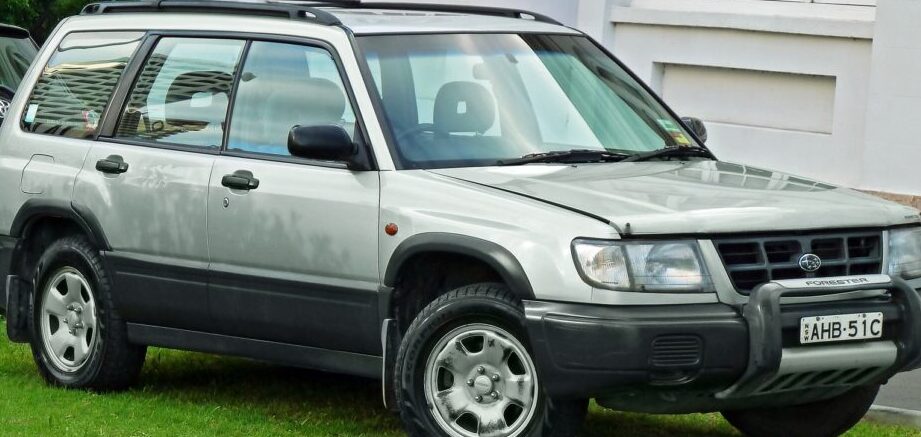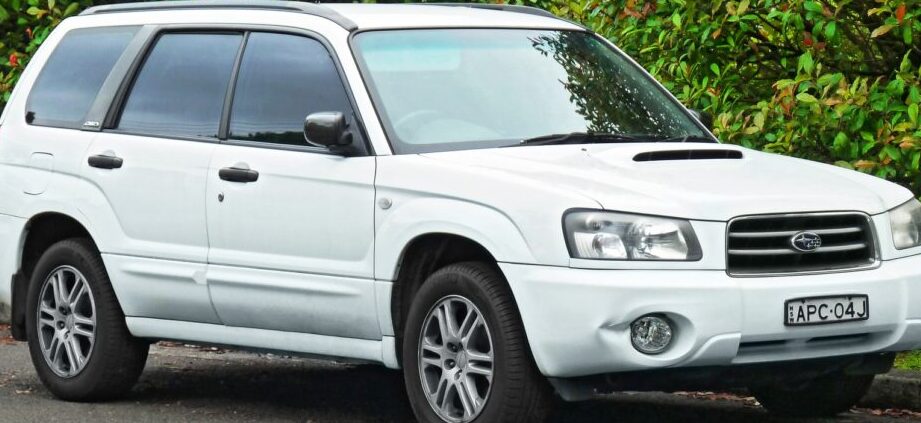
The Subaru Forester II 2.5i Automatic, produced between 2005 and 2008, represented a significant evolution of Subaru’s popular compact SUV. Falling within the second generation of the Forester (designated the SG platform), this variant occupied a middle ground in the lineup, offering a balance between affordability and capability. It aimed to provide a comfortable and practical all-wheel-drive experience for families and individuals seeking a versatile vehicle. The 2.5i Automatic was a key model for Subaru in North America and other markets where automatic transmissions were highly preferred, offering a more accessible entry point into the Forester range compared to the more performance-oriented turbocharged models.
Technical Specifications
| Brand | Subaru |
| Model | Forester |
| Generation | Forester II |
| Type (Engine) | 2.5 i (158 Hp) Automatic |
| Start of production | 2005 |
| End of production | 2008 |
| Powertrain Architecture | Internal Combustion engine |
| Body type | SUV, Crossover |
| Seats | 5 |
| Doors | 5 |
| Fuel consumption (urban) | 12.3 l/100 km (19.1 US mpg, 23 UK mpg, 8.1 km/l) |
| Fuel consumption (extra urban) | 7.5 l/100 km (31.4 US mpg, 37.7 UK mpg, 13.3 km/l) |
| Fuel consumption (combined) | 9.3 l/100 km (25.3 US mpg, 30.4 UK mpg, 10.8 km/l) |
| Fuel Type | Petrol (Gasoline) |
| Acceleration 0 – 100 km/h | 9.7 sec |
| Acceleration 0 – 62 mph | 9.7 sec |
| Acceleration 0 – 60 mph | 9.2 sec |
| Maximum speed | 197 km/h (122.41 mph) |
| Weight-to-power ratio | 8.6 kg/Hp, 116.2 Hp/tonne |
| Weight-to-torque ratio | 7.3 kg/Nm, 136.8 Nm/tonne |
| Power | 158 Hp @ 6400 rpm |
| Power per litre | 79.2 Hp/l |
| Torque | 186 Nm @ 3200 rpm (137.19 lb.-ft. @ 3200 rpm) |
| Engine layout | Front, Longitudinal |
| Engine displacement | 1994 cm3 (121.68 cu. in.) |
| Number of cylinders | 4 |
| Engine configuration | Boxer |
| Cylinder Bore | 92 mm (3.62 in.) |
| Piston Stroke | 75 mm (2.95 in.) |
| Compression ratio | 11:1 |
| Number of valves per cylinder | 4 |
| Fuel injection system | Multi-port manifold injection |
| Engine aspiration | Naturally aspirated engine |
| Valvetrain | DOHC |
| Engine oil capacity | 4 l (4.23 US qt | 3.52 UK qt) |
| Coolant capacity | 6.8 l (7.19 US qt | 5.98 UK qt) |
| Kerb Weight | 1360 kg (2998.29 lbs.) |
| Trunk (boot) space – minimum | 406 l (14.34 cu. ft.) |
| Trunk (boot) space – maximum | 1525 l (53.85 cu. ft.) |
| Fuel tank capacity | 60 l (15.85 US gal | 13.2 UK gal) |
| Length | 4450 mm (175.2 in.) |
| Width | 1735 mm (68.31 in.) |
| Height | 1590 mm (62.6 in.) |
| Wheelbase | 2525 mm (99.41 in.) |
| Front track | 1495 mm (58.86 in.) |
| Rear track | 1485 mm (58.46 in.) |
| Drive wheel | All wheel drive (4×4) |
| Number of gears | 4 |
| Gearbox type | Automatic transmission |
| Front suspension | Spring Strut |
| Rear suspension | Wishbone |
| Front brakes | Ventilated discs |
| Rear brakes | Drum |
| Assisting systems | ABS (Anti-lock braking system) |
| Steering type | Steering rack and pinion |
| Power steering | Hydraulic Steering |
| Tires size | 205/70R15 |
Powertrain & Engine Architecture
The heart of the 2.5i Automatic Forester is the Subaru EJ251 2.5-liter naturally aspirated boxer engine. This engine, a hallmark of Subaru engineering, features a horizontally opposed configuration, which contributes to a lower center of gravity and improved balance. The EJ251 utilizes a single overhead camshaft (SOHC) design per cylinder bank, operating with four valves per cylinder. Fuel delivery is managed by a multi-point fuel injection system, providing precise fuel metering for optimal combustion. The engine produces 158 horsepower at 6,400 rpm and 186 Nm (137 lb-ft) of torque at 3,200 rpm. This power is then channeled through a four-speed automatic transmission, delivering power to all four wheels via Subaru’s symmetrical all-wheel-drive system. The transmission was chosen for its ease of use and suitability for drivers prioritizing comfort over sporty performance.
Driving Characteristics
The 2.5i Automatic Forester offered a comfortable and predictable driving experience. While not particularly quick, with a 0-60 mph time of around 9.2 seconds, it provided adequate power for everyday driving situations. The automatic transmission, while smooth, lacked the responsiveness of a manual gearbox, resulting in a slightly less engaging driving experience. The gear ratios were tuned for fuel efficiency and relaxed cruising, rather than aggressive acceleration. The symmetrical all-wheel-drive system provided excellent traction in various weather conditions, making it a capable vehicle for those living in areas with snow or inclement weather. Compared to the turbocharged Forester XT, the 2.5i Automatic was noticeably slower, but it offered significantly better fuel economy and lower maintenance costs.
Equipment & Trim Levels
The 2.5i Automatic trim typically included standard features such as air conditioning, power windows and locks, a CD player, and cloth upholstery. Safety features like anti-lock brakes (ABS) were also standard. Optional extras included a sunroof, upgraded audio systems, and alloy wheels. The interior design was functional and practical, prioritizing usability over luxury. The dashboard layout was straightforward, with easy-to-read gauges and intuitive controls. Higher trim levels, if selected, might have added features like leather upholstery and automatic climate control.
Chassis & Braking
The Forester II utilized a MacPherson strut front suspension and a double-wishbone rear suspension, providing a comfortable ride and predictable handling. The suspension was tuned for a balance between comfort and stability, making it suitable for both on-road and light off-road driving. The braking system consisted of ventilated discs on the front wheels and drum brakes on the rear. While adequate for most driving situations, the rear drum brakes were a cost-saving measure and didn’t offer the same stopping power as disc brakes. The steering was hydraulically assisted, providing a responsive and precise feel.
Market Reception & Comparison
The Subaru Forester II 2.5i Automatic was generally well-received by critics and consumers alike. It was praised for its practicality, safety, and all-weather capability. However, some reviewers noted that the automatic transmission could feel sluggish and that the engine lacked the punch of the turbocharged models. Fuel economy was considered average for its class, with combined figures around 25.3 US mpg. Compared to competitors like the Honda CR-V and Toyota RAV4, the Forester offered a unique combination of standard all-wheel drive and a boxer engine, appealing to buyers seeking a different driving experience.
Legacy
The EJ251 engine, while generally reliable, is known to be susceptible to head gasket failures, particularly in earlier iterations. Regular maintenance, including timely coolant changes, is crucial to prevent this issue. The four-speed automatic transmission, while durable, is not as refined as more modern transmissions. Today, the 2005-2008 Forester 2.5i Automatic remains a popular choice in the used car market, offering a practical and affordable all-wheel-drive option. Its reputation for reliability and capability, combined with Subaru’s strong brand loyalty, ensures that these vehicles continue to find homes with buyers seeking a versatile and dependable SUV.