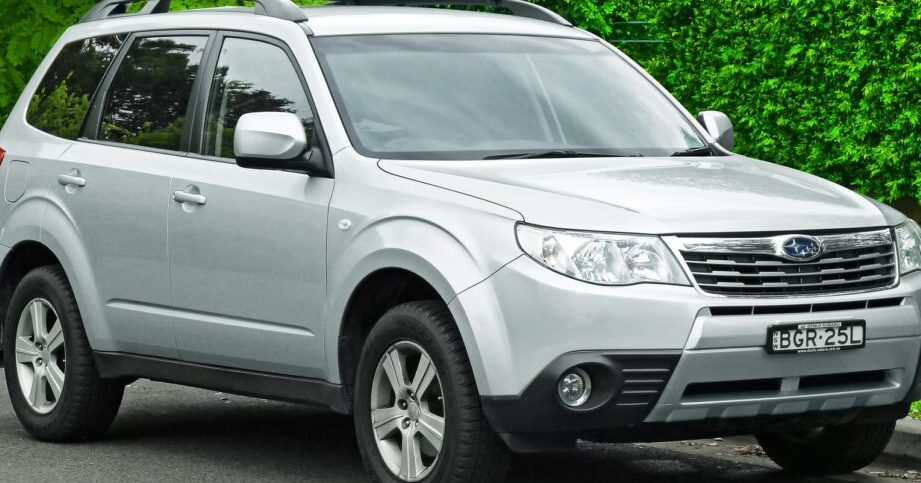
The Subaru Forester III 2.0 TD XS EC-VQ, produced between 2007 and 2010, represents a significant iteration of Subaru’s popular compact SUV. This variant, powered by a 2.0-liter turbocharged diesel engine producing 149 horsepower, was primarily aimed at the European market where diesel engines held a strong preference. It occupied a mid-range position within the Forester III lineup, offering a balance between fuel efficiency, performance, and equipment levels. The Forester III itself, built on the Subaru Impreza platform (G platform), aimed to provide a practical and capable all-wheel-drive vehicle for families and outdoor enthusiasts.
Technical Specifications
| Brand | Subaru |
| Model | Forester |
| Generation | Forester III |
| Type (Engine) | 2.0 TD XS EC-VQ (149 Hp) |
| Start of production | 2007 |
| End of production | 2010 |
| Powertrain Architecture | Internal Combustion engine |
| Body type | SUV, Crossover |
| Seats | 5 |
| Doors | 5 |
| Fuel consumption (urban) | 7.6 l/100 km (30.9 US mpg) |
| Fuel consumption (extra urban) | 5.2 l/100 km (45.2 US mpg) |
| Fuel consumption (combined) | 6.3 l/100 km (37.3 US mpg) |
| Fuel Type | Diesel |
| Acceleration 0 – 100 km/h | 10.4 sec |
| Acceleration 0 – 62 mph | 10.4 sec |
| Acceleration 0 – 60 mph | 9.9 sec |
| Maximum speed | 194 km/h (120.55 mph) |
| Emission standard | EURO 5 |
| Weight-to-power ratio | 10.5 kg/Hp |
| Weight-to-torque ratio | 4.5 kg/Nm |
| Power | 149 Hp |
| Power per litre | 74.7 Hp/l |
| Torque | 350 Nm (258.15 lb.-ft.) |
| Engine Model/Code | EE20Z |
| Engine displacement | 1994 cm3 (121.68 cu. in.) |
| Number of cylinders | 4 |
| Engine configuration | Boxer |
| Number of valves per cylinder | 4 |
| Fuel injection system | Diesel Commonrail |
| Engine aspiration | Turbocharger, Intercooler |
| Valvetrain | DOHC |
| Engine oil capacity | 5.9 l (6.23 US qt | 5.19 UK qt) |
| Coolant capacity | 8.6 l (9.09 US qt | 7.57 UK qt) |
| Kerb Weight | 1570 kg (3461.26 lbs.) |
| Fuel tank capacity | 64 l (16.91 US gal | 14.08 UK gal) |
| Length | 4560 mm (179.53 in.) |
| Width | 1780 mm (70.08 in.) |
| Height | 1700 mm (66.93 in.) |
| Wheelbase | 2616 mm (102.99 in.) |
| Drive wheel | All wheel drive (4×4) |
| Number of gears and type of gearbox | 6 gears, manual transmission |
| Front brakes | Ventilated discs |
| Rear brakes | Disc |
| Tires size | 225/55 R17 |
| Wheel rims size | 7J x 17 |
Powertrain & Engine Architecture
The heart of the 2.0 TD XS EC-VQ is the EE20Z engine, a 2.0-liter horizontally-opposed (Boxer) four-cylinder diesel. Subaru’s Boxer engine design, known for its low center of gravity, contributes to the Forester’s stable handling. The EE20Z utilizes a common rail direct injection system, delivering fuel directly into the cylinders at extremely high pressure for improved combustion efficiency and reduced emissions. A turbocharger with an intercooler is employed to boost power output, providing 149 horsepower and a substantial 350 Nm (258 lb-ft) of torque. The engine features a double overhead camshaft (DOHC) valvetrain with four valves per cylinder. This configuration optimizes airflow for enhanced performance. The 6-speed manual transmission was standard, providing precise gear changes and allowing drivers to fully utilize the engine’s torque band.
Driving Characteristics
The 2.0 TD XS EC-VQ Forester offered a compelling driving experience, particularly for those accustomed to gasoline engines. The diesel engine’s abundant low-end torque made it feel surprisingly responsive, even when fully loaded. While not as outright quick as the gasoline-powered variants, the diesel Forester provided ample power for everyday driving and highway cruising. The 6-speed manual transmission allowed for good control over the engine’s power delivery. The gear ratios were well-matched to the engine’s characteristics, providing strong acceleration in each gear. Compared to the 2.5L naturally aspirated gasoline engine available in some markets, the diesel offered superior fuel economy and a more relaxed driving experience at highway speeds. However, it lacked the higher-revving character of the gasoline engine.
Equipment & Trim Levels
The XS trim level, as featured in the 2.0 TD XS EC-VQ, represented a well-equipped version of the Forester III. Standard features typically included air conditioning, power windows and mirrors, a CD player with auxiliary input, and alloy wheels. Safety features such as ABS brakes, electronic brakeforce distribution, and multiple airbags were also standard. Optional extras could include a sunroof, leather upholstery, and a premium audio system. The interior featured a functional and durable design, with comfortable seating and ample storage space. The dashboard layout was straightforward and easy to use.
Chassis & Braking
The Forester III utilized a MacPherson strut front suspension and a double-wishbone rear suspension, providing a comfortable ride and good handling characteristics. The all-wheel-drive system, a hallmark of Subaru vehicles, provided excellent traction in various weather conditions. The 2.0 TD XS EC-VQ typically featured ventilated front disc brakes and solid rear disc brakes. The braking system was effective and provided good stopping power. Electric power steering was standard, offering a light and precise steering feel.
Market Reception & Comparison
The Subaru Forester III 2.0 TD XS EC-VQ was generally well-received by automotive critics in Europe. It was praised for its fuel efficiency, spacious interior, and capable all-wheel-drive system. The diesel engine was considered a good compromise between performance and economy. Compared to other compact SUVs in its class, the Forester offered a unique combination of features and capabilities. The diesel variant was often seen as a more practical choice than the gasoline-powered models, particularly for drivers who covered long distances. However, some critics noted that the diesel engine was slightly noisier than the gasoline engine.
Legacy
The EE20Z engine, while generally reliable, is known to require diligent maintenance, particularly regarding oil changes and the diesel particulate filter (DPF). Properly maintained examples of the 2.0 TD XS EC-VQ Forester III have proven to be durable and long-lasting. On the used car market, these models are often sought after for their fuel efficiency and all-weather capability. The Forester III, in general, established a strong reputation for reliability and practicality, contributing to the Forester’s continued success as a popular compact SUV. The 2.0 TD XS EC-VQ remains a viable option for buyers seeking a capable and economical all-wheel-drive vehicle.