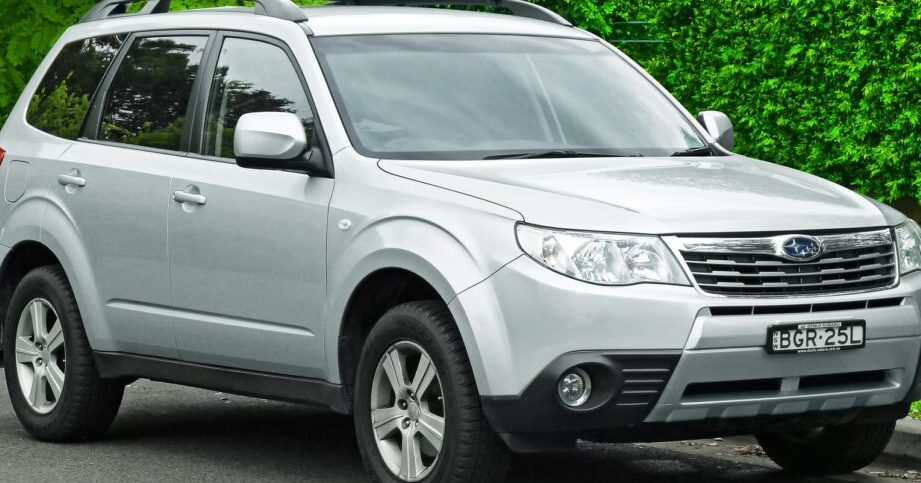
The Subaru Forester III, produced between 2007 and 2010, represented a significant evolution in Subaru’s popular compact SUV. Within the Forester III lineup, the 2.0 X variant, equipped with a 150 horsepower engine and a dual-range automatic transmission, occupied a middle ground, offering a balance between affordability, practicality, and Subaru’s signature all-wheel-drive capability. This model aimed to appeal to buyers seeking a versatile vehicle for daily commuting and weekend adventures, without the higher price tag of the more powerful options.
Technical Specifications
| Brand | Subaru |
| Model | Forester |
| Generation | Forester III |
| Type (Engine) | 2.0 X (150 Hp) Dual-range Automatic |
| Start of production | 2007 |
| End of production | 2010 |
| Powertrain Architecture | Internal Combustion engine |
| Body type | SUV, Crossover |
| Seats | 5 |
| Doors | 5 |
| Fuel consumption (urban) | 12.3 l/100 km (19.1 US mpg, 23 UK mpg, 8.1 km/l) |
| Fuel consumption (extra urban) | 7.5 l/100 km (31.4 US mpg, 37.7 UK mpg, 13.3 km/l) |
| Fuel consumption (combined) | 9.3 l/100 km (25.3 US mpg, 30.4 UK mpg, 10.8 km/l) |
| Fuel Type | Petrol (Gasoline) |
| Acceleration 0 – 100 km/h | 9.7 sec |
| Acceleration 0 – 62 mph | 9.7 sec |
| Acceleration 0 – 60 mph | 9.2 sec |
| Maximum speed | 197 km/h (122.41 mph) |
| Emission standard | Euro 4 |
| Weight-to-power ratio | 9.3 kg/Hp, 107.9 Hp/tonne |
| Weight-to-torque ratio | 7.1 kg/Nm, 141 Nm/tonne |
| Power | 150 Hp @ 6000 rpm |
| Power per litre | 75.2 Hp/l |
| Torque | 196 Nm @ 3200 rpm (144.56 lb.-ft. @ 3200 rpm) |
| Engine layout | Front, Longitudinal |
| Engine displacement | 1994 cm3 (121.68 cu. in.) |
| Number of cylinders | 4 |
| Engine configuration | Boxer |
| Cylinder Bore | 92 mm (3.62 in.) |
| Piston Stroke | 75 mm (2.95 in.) |
| Compression ratio | 11:1 |
| Number of valves per cylinder | 4 |
| Fuel injection system | Multi-port manifold injection |
| Engine aspiration | Naturally aspirated engine |
| Valvetrain | DOHC |
| Engine oil capacity | 4.2 l (4.44 US qt | 3.7 UK qt) |
| Kerb Weight | 1390 kg (3064.43 lbs.) |
| Max. weight | 1880 kg (4144.69 lbs.) |
| Max load | 490 kg (1080.27 lbs.) |
| Trunk (boot) space – minimum | 387 l (13.67 cu. ft.) |
| Fuel tank capacity | 60 l (15.85 US gal | 13.2 UK gal) |
| Length | 4485 mm (176.57 in.) |
| Width | 1735 mm (68.31 in.) |
| Height | 1590 mm (62.6 in.) |
| Wheelbase | 2525 mm (99.41 in.) |
| Front track | 1495 mm (58.86 in.) |
| Rear (Back) track | 1485 mm (58.46 in.) |
| Minimum turning circle | 10.6 m (34.78 ft.) |
| Drive wheel | All wheel drive (4×4) |
| Number of gears | 4 |
| Gearbox type | automatic transmission |
| Front suspension | Spring-loaded rack |
| Rear suspension | Suspension De-Dion |
| Front brakes | Ventilated discs |
| Rear brakes | Disc |
| Assisting systems | ABS (Anti-lock braking system) |
| Steering type | Steering rack and pinion |
| Power steering | Electric Steering |
| Tires size | 215/60R16 |
Overview and Market Positioning
The Forester III, launched in 2007, continued Subaru’s tradition of offering a practical and capable all-wheel-drive vehicle. It represented a move towards a more car-like crossover SUV, with improved ride quality and interior refinement compared to its predecessor. In the European market, where the Forester faced competition from vehicles like the Honda CR-V and Toyota RAV4, it distinguished itself with its standard symmetrical all-wheel drive and available diesel engine options. The 2.0 X trim, with its naturally aspirated 2.0-liter boxer engine and four-speed automatic transmission, was positioned as an entry-level offering, providing a more accessible price point for buyers prioritizing fuel efficiency and ease of use over outright performance.
Engine and Transmission Details
The heart of the 2.0 X Forester is the Subaru EJ20 engine, a 1994cc naturally aspirated four-cylinder boxer engine. This engine produces 150 horsepower at 6000 rpm and 196 Nm (144.56 lb-ft) of torque at 3200 rpm. The boxer configuration, with horizontally opposed pistons, contributes to a low center of gravity, enhancing stability and handling. Paired with this engine is a four-speed automatic transmission. While not as sophisticated as the continuously variable transmissions (CVTs) that would become common in later Subaru models, this automatic offered smooth shifts and convenient operation, particularly for urban driving. The dual-range functionality of the transmission provided enhanced low-speed crawling ability, useful for off-road situations or challenging weather conditions.
Comparison with Other Forester III Variants
The Forester III was offered with a range of engine and transmission options. The 2.5 X, with its larger 2.5-liter engine, delivered significantly more power and quicker acceleration. This variant appealed to drivers who prioritized performance. In Europe, the 2.0D models, powered by a turbocharged diesel engine, were popular due to their superior fuel economy and torque. The diesel variants were often chosen by those who frequently undertook long journeys. Compared to these alternatives, the 2.0 X offered a more affordable entry point into the Forester range. However, it lacked the punch of the 2.5 X and the fuel efficiency of the diesel models. Maintenance costs for the 2.0 X were generally lower than those of the turbocharged engines, as there were fewer complex components to fail. The target audience for the 2.0 X was typically families or individuals seeking a reliable, practical, and safe SUV for everyday use, rather than enthusiasts looking for a sporty driving experience.
Technology and Features
The 2007-2010 Subaru Forester III 2.0 X, while not brimming with cutting-edge technology by today’s standards, offered a respectable level of features for its time. Standard equipment typically included air conditioning, power windows and locks, and an audio system. Safety features were a strong point, with ABS brakes and multiple airbags as standard. The symmetrical all-wheel-drive system, a hallmark of Subaru, provided excellent traction and stability in all weather conditions. The interior was functional and reasonably well-appointed, with comfortable seating and a spacious cargo area. The Forester’s relatively high ground clearance and robust suspension made it capable of handling unpaved roads and light off-road trails.
Reliability and Common Issues
The Subaru Forester III, in general, enjoys a reputation for reliability. The 2.0 X variant, with its simpler engine and transmission, tends to be particularly robust. However, like any vehicle, it is not without its potential issues. Common concerns include oil consumption, particularly in earlier models, and potential for head gasket failure, a known issue with some Subaru engines. Regular maintenance, including oil changes and coolant flushes, is crucial for preventing these problems. The automatic transmission, while generally reliable, may exhibit occasional harsh shifting if not properly maintained. Overall, the 2.0 X Forester is considered a dependable vehicle that can provide many years of service with proper care.