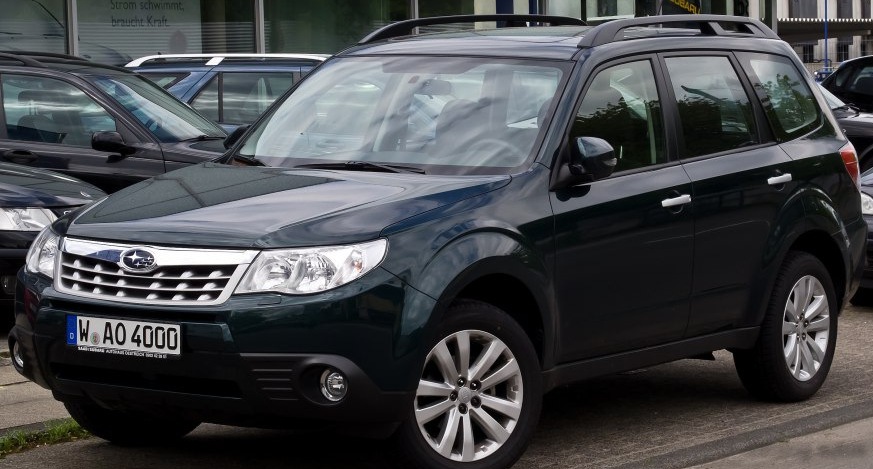
The Subaru Forester III, specifically the facelifted model produced from 2010 to 2013, represented a significant evolution of Subaru’s popular compact SUV. Within this generation, the 2.0i variant equipped with a 150 horsepower engine and an automatic transmission occupied a crucial middle ground in the Forester lineup. Positioned between the more basic trims and the higher-performance turbocharged options, the 2.0i Automatic catered to buyers seeking a blend of practicality, fuel efficiency, and Subaru’s renowned symmetrical all-wheel drive system. This version was primarily marketed in Europe, Australia, and other international markets, with the US market favoring different engine configurations.
Technical Specifications
| Brand | Subaru |
| Model | Forester |
| Generation | Forester III (facelift 2010) |
| Type (Engine) | 2.0 i (150 Hp) Automatic |
| Start of production | 2010 |
| End of production | 2013 |
| Powertrain Architecture | Internal Combustion engine |
| Body type | SUV, Crossover |
| Seats | 5 |
| Doors | 5 |
| Fuel consumption (combined) | 7.5 l/100 km (31.4 US mpg, 37.7 UK mpg, 13.3 km/l) |
| Fuel Type | Petrol (Gasoline) |
| Acceleration 0 – 100 km/h | 12.4 sec |
| Acceleration 0 – 62 mph | 12.4 sec |
| Acceleration 0 – 60 mph | 11.8 sec |
| Maximum speed | 185 km/h (114.95 mph) |
| Weight-to-power ratio | 10 kg/Hp, 100.3 Hp/tonne |
| Weight-to-torque ratio | 7.6 kg/Nm, 132.4 Nm/tonne |
| Power | 150 Hp @ 6000 rpm |
| Power per litre | 75.2 Hp/l |
| Torque | 198 Nm @ 4200 rpm (146.04 lb.-ft. @ 4200 rpm) |
| Engine layout | Front, Longitudinal |
| Engine displacement | 1995 cm3 (121.74 cu. in.) |
| Number of cylinders | 4 |
| Engine configuration | Boxer |
| Number of valves per cylinder | 4 |
| Fuel injection system | Multi-port manifold injection |
| Engine aspiration | Naturally aspirated engine |
| Valvetrain | DOHC |
| Engine oil capacity | 4.2 l (4.44 US qt | 3.7 UK qt) |
| Kerb Weight | 1495 kg (3295.91 lbs.) |
| Trunk (boot) space – minimum | 450 l (15.89 cu. ft.) |
| Length | 4560 mm (179.53 in.) |
| Width | 1780 mm (70.08 in.) |
| Height | 1700 mm (66.93 in.) |
| Drive wheel | All wheel drive (4×4) |
| Number of gears and type of gearbox | 4 gears, automatic transmission |
| Assisting systems | ABS (Anti-lock braking system) |
| Steering type | Steering rack and pinion |
Powertrain & Engine Architecture
The heart of the 2010-2013 Subaru Forester 2.0i Automatic is the EJ205 engine, a 1995cc naturally aspirated 2.0-liter horizontally opposed (Boxer) four-cylinder. Subaru’s Boxer engine design, with its pistons moving horizontally, contributes to a lower center of gravity, enhancing stability and handling. The EJ205 utilizes a multi-point fuel injection system and a double overhead camshaft (DOHC) valvetrain with four valves per cylinder. This configuration allows for efficient combustion and a respectable power output for its displacement. The engine produces 150 horsepower at 6000 rpm and 198 Nm (146 lb-ft) of torque at 4200 rpm. Paired with this engine is a four-speed automatic transmission, a common choice for drivers prioritizing ease of use over ultimate performance. While not as sophisticated as newer transmissions with more gears, the four-speed automatic provided smooth shifts and adequate performance for everyday driving.
Driving Characteristics
The 2.0i Automatic Forester delivers a comfortable and predictable driving experience. Acceleration from 0-60 mph takes around 11.8 seconds, which is adequate for most daily driving situations but noticeably slower than the turbocharged variants. The automatic transmission, while smooth, can sometimes feel hesitant during quick acceleration or when attempting to overtake. The gear ratios are tuned for fuel efficiency rather than outright performance. The symmetrical all-wheel drive system, a hallmark of Subaru vehicles, provides excellent traction in various weather conditions. The Forester’s suspension is tuned for comfort, absorbing bumps and irregularities in the road well. However, this does result in some body roll during cornering. Compared to the six-speed manual transmission available on some Forester models, the automatic version sacrifices some driver engagement and responsiveness.
Equipment & Trim Levels
The 2.0i Automatic trim typically included standard features such as air conditioning, power windows and locks, a basic audio system with CD player, and alloy wheels. Safety features like ABS brakes, front and side airbags, and electronic stability control were also standard. Higher trim levels offered optional extras such as a sunroof, upgraded audio system with Bluetooth connectivity, leather upholstery, and heated front seats. The interior generally featured durable, practical materials, prioritizing functionality over luxury. The dashboard layout was straightforward and easy to use, with clearly labeled controls.
Chassis & Braking
The Forester III utilizes a MacPherson strut front suspension and a double-wishbone rear suspension. This setup provides a good balance between ride comfort and handling. The 2.0i Automatic models typically featured disc brakes on all four wheels, providing adequate stopping power. However, some base models in certain markets may have used rear drum brakes. The steering is a rack-and-pinion system, offering precise and responsive steering feel. Stabilizer bars were fitted to both the front and rear axles to reduce body roll during cornering.
Market Reception & Comparison
The Subaru Forester 2.0i Automatic was generally well-received by automotive critics as a practical and reliable family SUV. It was praised for its spacious interior, comfortable ride, and standard all-wheel drive system. However, some critics noted that the engine felt underpowered, especially when fully loaded or driving uphill. Compared to the 2.5-liter turbocharged Forester XT, the 2.0i Automatic offered significantly less performance but better fuel economy. The 2.0-liter diesel variants, available in some European markets, provided a good balance of power and efficiency but were often more expensive. The 2.0i Automatic appealed to buyers who prioritized affordability, fuel efficiency, and all-weather capability over sporty performance.
Legacy
The EJ205 engine, while not known for being particularly exciting, is generally considered a reliable and durable powerplant when properly maintained. The four-speed automatic transmission is also relatively robust. Common maintenance items include regular oil changes, timing belt replacement (typically every 100,000 miles), and inspection of the cooling system. On the used car market, the 2010-2013 Subaru Forester 2.0i Automatic represents a good value proposition for buyers seeking a practical and dependable SUV. These models are often available at affordable prices and offer a good level of equipment for the money. However, potential buyers should be aware of the engine’s relatively modest power output and the age-related wear and tear that may be present on older vehicles. Overall, the Forester 2.0i Automatic remains a popular choice for those seeking a safe, reliable, and capable all-wheel drive SUV.