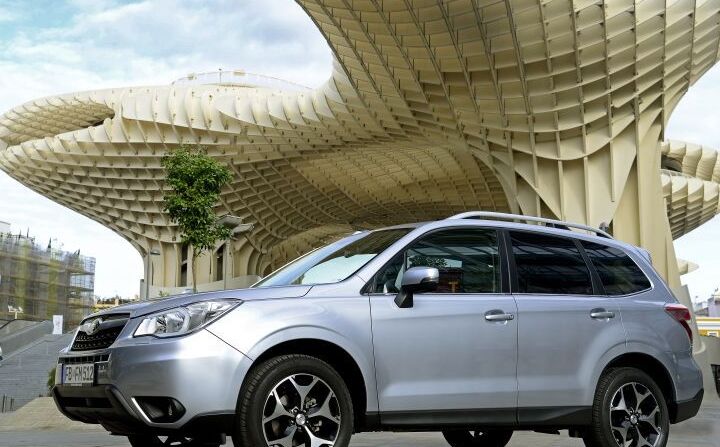
The Subaru Forester IV 2.0, produced between 2012 and 2015, represented a significant evolution in Subaru’s popular compact SUV lineup. This variant, equipped with the naturally aspirated 2.0-liter FB20 engine producing 150 horsepower and paired with a six-speed manual transmission, occupied a key position within the fourth-generation Forester (SJ platform) range. It served as a balance point between affordability and capability, appealing to buyers seeking a practical, all-wheel-drive vehicle for everyday use and light adventure. This model was primarily sold in markets outside of North America, where Subaru focused on larger engine options for the Forester.
Technical Specifications
| Brand | Subaru |
| Model | Forester |
| Generation | Forester IV |
| Type (Engine) | 2.0 (150 Hp) 4WD |
| Start of production | 2012 |
| End of production | 2015 |
| Powertrain Architecture | Internal Combustion engine |
| Body type | SUV, Crossover |
| Seats | 5 |
| Doors | 5 |
| Fuel consumption (urban) | 10.4 l/100 km (22.6 US mpg) |
| Fuel consumption (extra urban) | 6.7 l/100 km (35.1 US mpg) |
| Fuel consumption (combined) | 8 l/100 km (29.4 US mpg) |
| Fuel Type | Petrol (Gasoline) |
| Acceleration 0 – 100 km/h | 10.6 sec |
| Acceleration 0 – 62 mph | 10.6 sec |
| Acceleration 0 – 60 mph | 10.1 sec |
| Maximum speed | 190 km/h (118.06 mph) |
| Weight-to-power ratio | 9.8 kg/Hp |
| Weight-to-torque ratio | 7.4 kg/Nm |
| Power | 150 Hp @ 6200 rpm |
| Torque | 198 Nm @ 4200 rpm (146.04 lb.-ft. @ 4200 rpm) |
| Engine layout | Front, Longitudinal |
| Engine Model/Code | FB20 |
| Engine displacement | 1995 cm3 (121.74 cu. in.) |
| Number of cylinders | 4 |
| Engine configuration | Boxer |
| Cylinder Bore | 84 mm (3.31 in.) |
| Piston Stroke | 90 mm (3.54 in.) |
| Compression ratio | 10.5:1 |
| Number of valves per cylinder | 4 |
| Fuel injection system | Multi-port manifold injection |
| Engine aspiration | Naturally aspirated engine |
| Valvetrain | DOHC |
| Engine oil capacity | 4.8 l (5.07 US qt | 4.22 UK qt) |
| Kerb Weight | 1469 kg (3238.59 lbs.) |
| Max. weight | 1850 kg (4078.55 lbs.) |
| Max load | 381 kg (839.96 lbs.) |
| Trunk (boot) space – minimum | 488 l (17.23 cu. ft.) |
| Trunk (boot) space – maximum | 1577 l (55.69 cu. ft.) |
| Fuel tank capacity | 60 l (15.85 US gal | 13.2 UK gal) |
| Length | 4595 mm (180.91 in.) |
| Width | 1795 mm (70.67 in.) |
| Height | 1735 mm (68.31 in.) |
| Wheelbase | 2640 mm (103.94 in.) |
| Front track | 1545 mm (60.83 in.) |
| Rear (Back) track | 1550 mm (61.02 in.) |
| Ride height (ground clearance) | 220 mm (8.66 in.) |
| Minimum turning circle | 10.6 m (34.78 ft.) |
| Drive wheel | All wheel drive (4×4) |
| Number of gears | 6 gears, manual transmission |
| Front suspension | Independent coil spring |
| Rear suspension | Semi-independent, coil spring |
| Front brakes | Ventilated discs |
| Rear brakes | Disc |
| Assisting systems | ABS (Anti-lock braking system) |
| Steering type | Steering rack and pinion |
| Power steering | Electric Steering |
| Tires size | 225/60 R17 |
| Wheel rims size | 17 |
Powertrain & Engine Architecture
The heart of the Forester IV 2.0 is the FB20 2.0-liter horizontally-opposed (boxer) four-cylinder engine. This engine was a key component of Subaru’s efforts to improve fuel efficiency and reduce emissions. The FB series engines replaced the older EJ series, offering improvements in thermal efficiency and reduced internal friction. The FB20 utilizes a multi-point fuel injection system, delivering fuel directly into the intake ports. The engine features a double overhead camshaft (DOHC) valvetrain with four valves per cylinder, optimizing airflow for improved performance. The six-speed manual transmission provided a direct and engaging driving experience, with gear ratios tuned for a balance of acceleration and fuel economy. The transmission’s shift linkage was precise, contributing to a more connected feel behind the wheel.
Driving Characteristics
The 150 hp and 198 Nm (146 lb-ft) of torque delivered by the FB20 engine, coupled with the manual transmission, provided adequate performance for everyday driving. Acceleration from 0-60 mph took approximately 10.1 seconds, and top speed was around 118 mph. While not a particularly sporty setup, the engine offered a usable powerband, with peak torque available at 4200 rpm. Compared to higher-output Forester variants (like those with larger engines), this 2.0L model felt less eager to accelerate, particularly when fully loaded. However, the manual transmission allowed drivers to maintain control and extract the most from the engine’s capabilities. The symmetrical all-wheel-drive system provided excellent traction in various conditions, making it a capable vehicle for inclement weather and light off-road use.
Equipment & Trim Levels
The 2.0-liter Forester typically came with a respectable level of standard equipment. This included air conditioning, power windows and locks, a basic audio system, and alloy wheels. Safety features such as ABS, electronic brakeforce distribution, and multiple airbags were standard. Higher trim levels offered options like a sunroof, upgraded audio systems, leather upholstery, and automatic climate control. Interior materials were generally durable and practical, reflecting the Forester’s focus on functionality. The dashboard layout was straightforward and user-friendly, with logically placed controls.
Chassis & Braking
The Forester IV utilized a MacPherson strut front suspension and a semi-independent double-wishbone rear suspension. This setup provided a comfortable ride quality while maintaining reasonable handling characteristics. The chassis was designed to prioritize stability and predictability, rather than outright sportiness. Braking duties were handled by ventilated discs at the front and solid discs at the rear. The ABS system helped to maintain control during hard braking maneuvers. The Forester’s relatively high ground clearance (220mm) contributed to its off-road capability.
Market Reception & Comparison
The 2.0-liter Forester was generally well-received by automotive critics as a practical and affordable all-wheel-drive SUV. It was praised for its fuel efficiency, spacious interior, and standard safety features. However, some reviewers noted that the engine lacked the power and refinement of larger engine options. Compared to other compact SUVs in its class, the Forester offered a unique combination of all-wheel-drive capability and fuel economy. In terms of reliability, the FB20 engine proved to be generally dependable, although some owners reported issues with oil consumption over time.
Legacy
The Subaru Forester IV 2.0 remains a popular choice in the used car market, particularly for buyers seeking a reliable and affordable all-wheel-drive vehicle. The FB20 engine, while not known for its blistering performance, has proven to be relatively durable with proper maintenance. The Forester’s reputation for practicality, safety, and all-weather capability continues to make it a desirable option for those seeking a versatile and dependable SUV. Its blend of affordability and functionality ensures its continued presence on roads today.