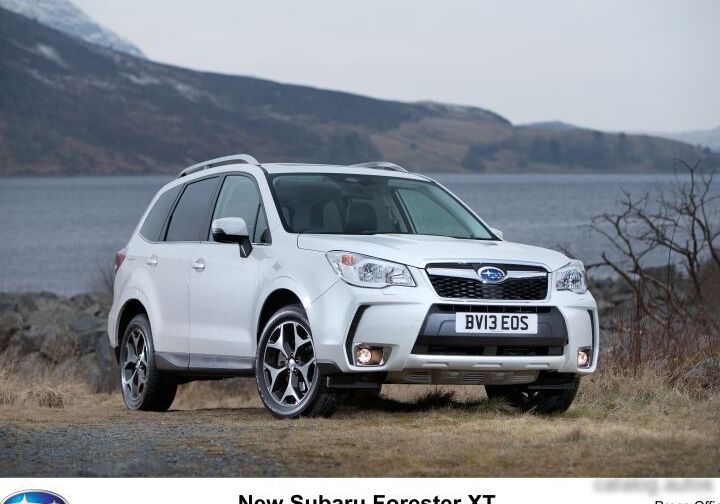
The Subaru Forester IV facelift, specifically the Sport 2.0 T variant with 240 horsepower and a Lineartronic continuously variable transmission (CVT), was produced from 2016 to 2018. This model represented a mid-cycle refresh of the fourth-generation Forester (SJ platform), introduced in 2013. The Sport 2.0 T aimed to offer a more engaging driving experience and a sportier aesthetic compared to the base Forester models, while still retaining the practicality and all-weather capability Subaru is known for. It occupied the upper-mid range of the Forester lineup, positioned below the limited trim but above the naturally aspirated 2.5-liter variants.
Technical Specifications
| Brand | Subaru |
| Model | Forester |
| Generation | Forester IV (facelift 2016) |
| Type | Sport 2.0 T (240 Hp) AWD Lineartronic |
| Start of production | 2016 |
| End of production | 2018 |
| Powertrain Architecture | Internal Combustion engine |
| Body type | SUV, Crossover |
| Seats | 5 |
| Doors | 5 |
| Fuel consumption (urban) | 11.2 l/100 km (21 US mpg, 25.2 UK mpg, 8.9 km/l) |
| Fuel consumption (extra urban) | 7 l/100 km (33.6 US mpg, 40.4 UK mpg, 14.3 km/l) |
| Fuel consumption (combined) | 8.5 l/100 km (27.7 US mpg, 33.2 UK mpg, 11.8 km/l) |
| CO2 emissions | 197 g/km |
| Fuel Type | Petrol (Gasoline) |
| Acceleration 0 – 100 km/h | 7.5 sec |
| Acceleration 0 – 62 mph | 7.5 sec |
| Acceleration 0 – 60 mph | 7.1 sec |
| Maximum speed | 221 km/h (137.32 mph) |
| Emission standard | Euro 6 |
| Weight-to-power ratio | 6.8 kg/Hp, 147.8 Hp/tonne |
| Weight-to-torque ratio | 4.6 kg/Nm, 215.5 Nm/tonne |
| Power | 240 Hp @ 5600 rpm |
| Power per litre | 120.1 Hp/l |
| Torque | 350 Nm @ 2400-3600 rpm (258.15 lb.-ft. @ 2400-3600 rpm) |
| Engine layout | Front, Longitudinal |
| Engine Model/Code | FA20F |
| Engine displacement | 1998 cm3 (121.93 cu. in.) |
| Number of cylinders | 4 |
| Engine configuration | Boxer |
| Cylinder Bore | 86 mm (3.39 in.) |
| Piston Stroke | 86 mm (3.39 in.) |
| Compression ratio | 10.6:1 |
| Number of valves per cylinder | 4 |
| Fuel injection system | Direct injection |
| Engine aspiration | Turbocharger, Intercooler |
| Valvetrain | DOHC |
| Engine oil capacity | 5.1 l (5.39 US qt | 4.49 UK qt) |
| Kerb Weight | 1624 kg (3580.31 lbs.) |
| Max. weight | 2110 kg (4651.75 lbs.) |
| Max load | 486 kg (1071.45 lbs.) |
| Trunk (boot) space – minimum | 505 l (17.83 cu. ft.) |
| Trunk (boot) space – maximum | 1557 l (54.98 cu. ft.) |
| Fuel tank capacity | 60 l (15.85 US gal | 13.2 UK gal) |
| Max. roof load | 80 kg (176.37 lbs.) |
| Permitted trailer load with brakes (12%) | 2000 kg (4409.25 lbs.) |
| Permitted trailer load without brakes | 750 kg (1653.47 lbs.) |
| Length | 4595 mm (180.91 in.) |
| Width | 1795 mm (70.67 in.) |
| Height | 1735 mm (68.31 in.) |
| Wheelbase | 2640 mm (103.94 in.) |
| Front track | 1545 mm (60.83 in.) |
| Rear (Back) track | 1555 mm (61.22 in.) |
| Ride height (ground clearance) | 220 mm (8.66 in.) |
| Minimum turning circle | 11.4 m (37.4 ft.) |
| Approach angle | 23° |
| Departure angle | 25° |
| Ramp-over angle | 22° |
| Drive wheel | All wheel drive (4×4) |
| Number of gears and type of gearbox | automatic transmission Lineartronic |
| Front suspension | Independent type McPherson |
| Rear suspension | Double wishbone |
| Front brakes | Ventilated discs |
| Rear brakes | Ventilated discs |
| Assisting systems | ABS (Anti-lock braking system) |
| Steering type | Steering rack and pinion |
| Tires size | 225/55 R18 |
| Wheel rims size | 7J x 18 |
INTRODUCTION
The 2016-2018 Subaru Forester Sport 2.0 T represented a significant step up in performance for the Forester line. It was designed to appeal to buyers who wanted the practicality of a compact SUV but desired more spirited acceleration and a more refined driving experience. The facelift brought subtle styling changes, including a revised front grille, headlights, and bumper, along with interior enhancements. The core of the Sport model was its FA20F 2.0-liter turbocharged Boxer engine, paired exclusively with Subaru’s Lineartronic CVT. This combination aimed to balance performance with fuel efficiency, a key consideration for the target market.
Powertrain & Engine Architecture
The heart of the Forester Sport 2.0 T is the FA20F 2.0-liter direct-injection turbocharged Boxer engine. This engine is a key component of Subaru’s modern powertrain strategy, known for its compact size, lightweight construction, and efficient operation. The direct injection system precisely meters fuel into the cylinders, improving combustion efficiency and reducing emissions. The turbocharger, coupled with an intercooler, provides a significant boost in power and torque. The engine utilizes a dual overhead camshaft (DOHC) valvetrain with four valves per cylinder, optimizing airflow for enhanced performance. The Lineartronic CVT, while not a traditional geared transmission, simulates gear changes through a system of pulleys and a steel belt. It’s programmed to provide smooth acceleration and efficient operation, and in the Sport model, it features paddle shifters for more driver control. The FA20F engine code is known for its relative reliability, though regular maintenance, particularly oil changes, is crucial.
Driving Characteristics
The Forester Sport 2.0 T delivers a noticeably more responsive driving experience compared to the naturally aspirated Forester models. The 240 horsepower and 350 Nm (258 lb-ft) of torque provide brisk acceleration, with a 0-60 mph time of around 7.1 seconds. The Lineartronic CVT, while smooth, can sometimes feel less engaging than a traditional automatic transmission. However, the paddle shifters allow drivers to manually select “gear” ratios, providing a greater sense of control. The all-wheel-drive system, standard on all Foresters, provides excellent traction in various weather conditions. The suspension is tuned for a balance between comfort and handling, offering a reasonably composed ride without being overly soft. Compared to the 2.5i models, the Sport 2.0 T feels significantly more powerful, especially during highway merging and overtaking maneuvers.
Equipment & Trim Levels
The Sport 2.0 T trim came standard with a number of features designed to enhance both comfort and convenience. These included automatic climate control, a touchscreen infotainment system with Apple CarPlay and Android Auto compatibility, and a rearview camera. Interior upholstery typically consisted of a combination of cloth and synthetic leather, with unique stitching and accents to differentiate it from other Forester trims. Optional extras included a power sunroof, premium audio system, and advanced safety features like blind-spot monitoring and rear cross-traffic alert. The exterior styling was also enhanced with unique alloy wheel designs and sporty body cladding.
Chassis & Braking
The Forester Sport 2.0 T utilizes a MacPherson strut front suspension and a double-wishbone rear suspension, providing a comfortable and controlled ride. Ventilated disc brakes are used on all four wheels, offering ample stopping power. The anti-lock braking system (ABS) is standard, enhancing safety during emergency braking situations. The chassis is reinforced to handle the increased power output of the turbocharged engine. The all-wheel-drive system employs a variable torque distribution, automatically adjusting power delivery to the front and rear wheels based on driving conditions.
Market Reception & Comparison
The Forester Sport 2.0 T was generally well-received by automotive critics, who praised its improved performance and sporty styling. However, some reviewers noted that the CVT transmission could feel somewhat detached, and the fuel economy, while reasonable, wasn’t class-leading. Compared to the base 2.5i models, the Sport 2.0 T offered a significant performance upgrade, but at a higher price point. Compared to competitors like the Honda CR-V and Toyota RAV4, the Forester Sport 2.0 T stood out with its standard all-wheel drive and unique Boxer engine configuration.
Legacy
The FA20F engine, used in the Forester Sport 2.0 T, has proven to be a relatively reliable powertrain when properly maintained. Common issues, such as oil consumption, can be mitigated with regular oil changes and adherence to Subaru’s recommended maintenance schedule. On the used car market, the Forester Sport 2.0 T holds its value reasonably well, due to its combination of practicality, performance, and all-weather capability. It remains a popular choice for buyers seeking a compact SUV with a bit more personality and driving enjoyment.