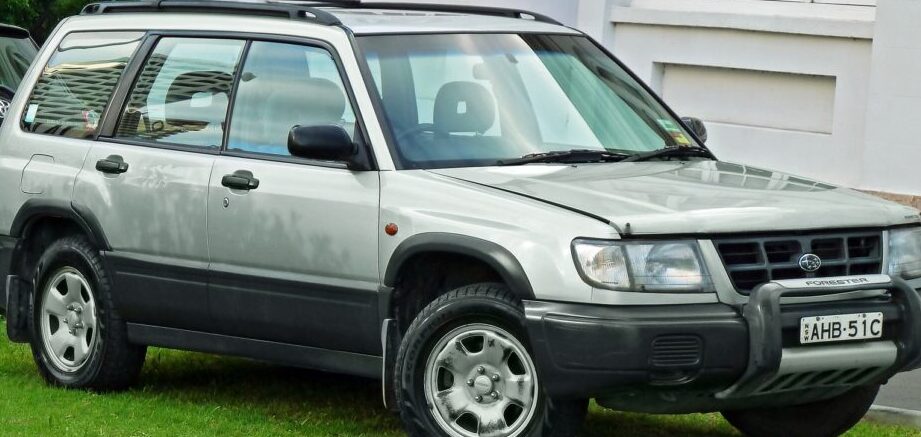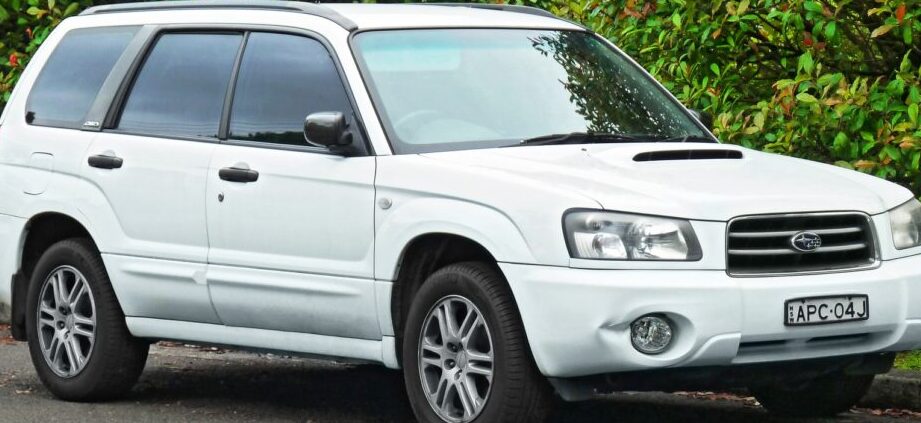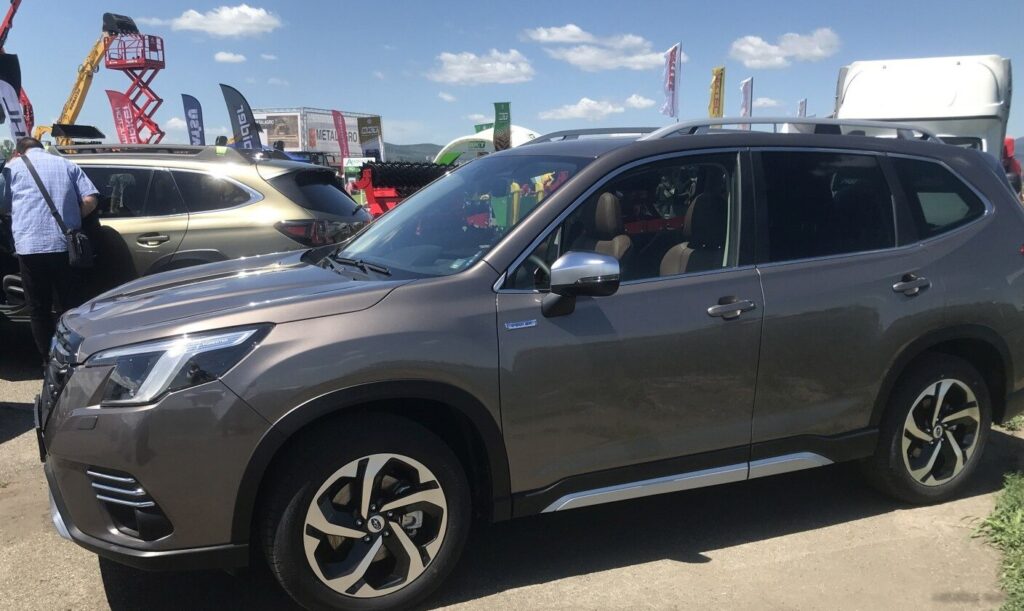
The Subaru Forester V, specifically the facelift model introduced in August 2021 and continuing through 2024, represents a significant evolution of Subaru’s popular compact SUV. This variant, powered by the 2.0 e-BOXER engine producing 145 horsepower and paired with a Lineartronic continuously variable transmission (CVT) and all-wheel drive, was positioned as a mainstream offering within the Forester lineup, balancing fuel efficiency, capability, and affordability. It builds upon the foundation of the fifth-generation Forester (introduced in 2018), incorporating mild-hybrid technology to enhance fuel economy and responsiveness. This model played a key role in Subaru’s North American market, where the Forester consistently ranks as one of their best-selling vehicles.
Technical Specifications
| Brand | Subaru |
| Model | Forester |
| Generation | Forester V (facelift 2021) |
| Type (Engine) | 2.0 e-BOXER (145 Hp) AWD Lineartronic |
| Start of production | August, 2021 |
| End of production | 2024 |
| Powertrain Architecture | MHEV (Mild Hybrid Electric Vehicle) |
| Body type | SUV, Crossover |
| Seats | 5 |
| Doors | 5 |
| Fuel consumption (urban) | 8.9 l/100 km (26.4 US mpg) |
| Fuel consumption (extra urban) | 6.2 l/100 km (37.9 US mpg) |
| Fuel Type | Petrol (Gasoline) |
| Weight-to-power ratio | 11.2 kg/Hp |
| Weight-to-torque ratio | 8.6 kg/Nm |
| Electric motor power | 14 Hp |
| Electric motor Torque | 65 Nm (47.94 lb.-ft.) |
| Electric motor location | Integrated into the transmission |
| Power | 145 Hp @ 6000 rpm |
| Torque | 188 Nm @ 4000 rpm (138.66 lb.-ft. @ 4000 rpm) |
| Engine layout | Front, Longitudinal |
| Engine Model/Code | FB20 |
| Engine displacement | 1995 cm3 (121.74 cu. in.) |
| Number of cylinders | 4 |
| Engine configuration | Boxer |
| Cylinder Bore | 84 mm (3.31 in.) |
| Piston Stroke | 90 mm (3.54 in.) |
| Compression ratio | 12.5:1 |
| Number of valves per cylinder | 4 |
| Fuel injection system | Direct injection |
| Valvetrain | DOHC, AVCS |
| Engine oil capacity | 4.2 l (4.44 US qt | 3.7 UK qt) |
| Coolant capacity | 8 l (8.45 US qt | 7.04 UK qt) |
| Kerb Weight | 1620-1660 kg (3571.49 – 3659.67 lbs.) |
| Max. weight | 1935 kg (4265.94 lbs.) |
| Max load | 275-315 kg (606.27 – 694.46 lbs.) |
| Fuel tank capacity | 48 l (12.68 US gal | 10.56 UK gal) |
| Length | 4640 mm (182.68 in.) |
| Width | 1815 mm (71.46 in.) |
| Height | 1715-1730 mm (67.52 – 68.11 in.) |
| Wheelbase | 2670 mm (105.12 in.) |
| Front track | 1565 mm (61.61 in.) |
| Rear track | 1570 mm (61.81 in.) |
| Ride height (ground clearance) | 220 mm (8.66 in.) |
| Minimum turning circle | 10.8 m (35.43 ft.) |
| Number of gears | Continuously Variable (Lineartronic) |
Powertrain & Engine Architecture
At the heart of the 2021-2024 Subaru Forester 2.0 e-BOXER lies the FB20 2.0-liter horizontally-opposed (Boxer) four-cylinder engine. This engine benefits from Subaru’s symmetrical all-wheel drive system and incorporates direct fuel injection for improved efficiency and power delivery. The ‘e-BOXER’ designation signifies the integration of a mild-hybrid system. This system utilizes a compact electric motor integrated directly into the Lineartronic CVT, providing supplemental power during acceleration and enabling a smoother start-stop system. The electric motor contributes 14 horsepower and 65 Nm (47.94 lb-ft) of torque. The FB20 engine features dual overhead camshafts (DOHC) and Active Valve Control System (AVCS) on both intake and exhaust valves, optimizing valve timing for enhanced performance across the rev range. The Lineartronic CVT is programmed to simulate gear changes, offering a more engaging driving experience than traditional CVTs.
Driving Characteristics
The 2.0 e-BOXER with Lineartronic offers a comfortable and predictable driving experience. While not a performance-oriented setup, the 145 horsepower and 138.66 lb-ft of torque provide adequate power for everyday driving situations. The CVT effectively manages the engine’s powerband, delivering smooth acceleration. Compared to the higher-output 2.5-liter engine option available in some markets, this variant offers slightly less spirited performance, particularly during highway merging or overtaking. However, the mild-hybrid system provides a noticeable boost during initial acceleration, mitigating some of the performance difference. The CVT’s simulated gear ratios are tuned for fuel efficiency, prioritizing economy over outright acceleration. The all-wheel drive system provides excellent traction in various weather conditions, a hallmark of Subaru vehicles.
Equipment & Trim Levels
The 2.0 e-BOXER Lineartronic Forester typically came standard with a comprehensive suite of features, including Subaru’s EyeSight driver-assist technology (adaptive cruise control, lane departure warning, automatic emergency braking), a touchscreen infotainment system with Apple CarPlay and Android Auto compatibility, automatic climate control, and power windows/locks. Interior upholstery was typically cloth, with options for leather upgrades on higher trim levels. Available options included a premium audio system, a power sunroof, and heated front seats. The specific trim levels and available options varied slightly depending on the market.
Chassis & Braking
The Forester V utilizes a robust chassis with independent coil spring suspension at the front and a double-wishbone suspension at the rear, providing a comfortable ride and predictable handling. The suspension is tuned to balance ride comfort with body control. Braking duties are handled by ventilated discs on all four wheels, providing ample stopping power. The vehicle is equipped with an Anti-lock Braking System (ABS) and Electronic Brake-force Distribution (EBD) for enhanced safety. Steering is provided by an electric power steering system, offering light and precise control.
Market Reception & Comparison
The 2021-2024 Subaru Forester 2.0 e-BOXER Lineartronic was generally well-received by automotive critics. It was praised for its fuel efficiency, standard safety features, spacious interior, and all-weather capability. Some reviewers noted that the engine could feel underpowered in certain situations, particularly when fully loaded or driving uphill. Compared to the 2.5-liter engine option, the 2.0 e-BOXER offered better fuel economy but slightly less performance. Its reliability was generally considered good, consistent with Subaru’s reputation for building durable vehicles.
Legacy
The Subaru Forester V 2.0 e-BOXER Lineartronic represents a key step in Subaru’s electrification strategy. The integration of mild-hybrid technology demonstrated Subaru’s commitment to improving fuel efficiency and reducing emissions. The FB20 engine, while not the most powerful in the Forester lineup, proved to be a reliable and durable powerplant. In the used car market, these models are generally sought after for their fuel economy, safety features, and all-wheel drive capability. Proper maintenance, including regular oil changes and CVT fluid replacements, is crucial for ensuring the long-term reliability of this powertrain.