
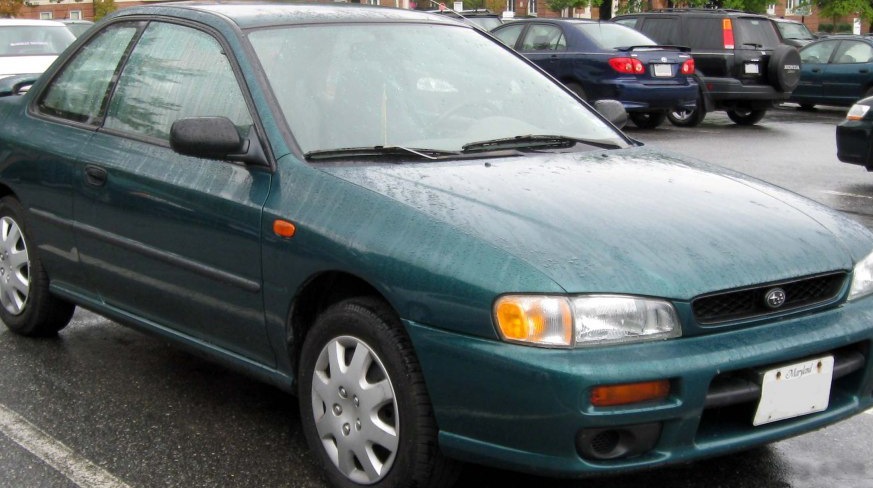
The Subaru Impreza I Coupe (GFC) 2.2i 16V, produced between 1993 and 1996, represented a significant entry for Subaru into the increasingly popular compact coupe market. Positioned as a more practical and all-weather alternative to traditional sports coupes, the 2.2i variant offered a blend of Subaru’s signature all-wheel drive system with a comfortable, albeit not overtly sporty, driving experience. This model was part of the first generation Impreza (GC/GF chassis), which aimed to replace the aging Leone and RX models, offering a more modern and refined package. The GFC designation specifically denotes the coupe body style within the first generation Impreza range.
Technical Specifications
| Brand | Subaru |
| Model | Impreza |
| Generation | Impreza I Coupe (GFC) |
| Type | 2.2i 16V (135 Hp) 4WD Automatic |
| Start of production | 1993 |
| End of production | 1996 |
| Powertrain Architecture | Internal Combustion engine |
| Body type | Coupe |
| Seats | 5 |
| Doors | 2 |
| Fuel consumption (combined) | 9.5 l/100 km (24.8 US mpg, 29.7 UK mpg, 10.5 km/l) |
| Fuel Type | Petrol (Gasoline) |
| Weight-to-power ratio | 8.8 kg/Hp, 114.1 Hp/tonne |
| Weight-to-torque ratio | 6.2 kg/Nm, 160.6 Nm/tonne |
| Power | 135 Hp @ 5400 rpm |
| Power per litre | 61 Hp/l |
| Torque | 190 Nm @ 4400 rpm (140.14 lb.-ft. @ 4400 rpm) |
| Engine layout | Front, Longitudinal |
| Engine Model/Code | EJ22E |
| Engine displacement | 2212 cm3 (134.98 cu. in.) |
| Number of cylinders | 4 |
| Engine configuration | Boxer |
| Cylinder Bore | 96.9 mm (3.81 in.) |
| Piston Stroke | 75 mm (2.95 in.) |
| Compression ratio | 9.5:1 |
| Number of valves per cylinder | 4 |
| Fuel injection system | Multi-port manifold injection |
| Engine aspiration | Naturally aspirated engine |
| Valvetrain | OHC |
| Engine oil capacity | 4.5 l (4.76 US qt | 3.96 UK qt) |
| Kerb Weight | 1183 kg (2608.07 lbs.) |
| Trunk (boot) space – minimum | 203 l (7.17 cu. ft.) |
| Fuel tank capacity | 50 l (13.21 US gal | 11 UK gal) |
| Length | 4374 mm (172.2 in.) |
| Width | 1704 mm (67.09 in.) |
| Height | 1410 mm (55.51 in.) |
| Wheelbase | 2520 mm (99.21 in.) |
| Front track | 1460 mm (57.48 in.) |
| Rear (Back) track | 1455 mm (57.28 in.) |
| Drive wheel | All wheel drive (4×4) |
| Number of gears and type of gearbox | 4 gears, automatic transmission |
| Front suspension | Transverse stabilizer |
| Rear suspension | Transverse stabilizer |
| Front brakes | Ventilated discs |
| Rear brakes | Drum |
| Assisting systems | ABS (Anti-lock braking system) |
| Steering type | Steering rack and pinion |
| Power steering | Hydraulic Steering |
| Tires size | 195/60 R15 |
| Wheel rims size | 15 |
Powertrain & Engine Architecture
The heart of the Impreza 2.2i was the EJ22E engine, a 2.2-liter horizontally-opposed (boxer) four-cylinder. This engine was a key feature of Subaru’s engineering philosophy, known for its inherent balance and smooth operation. The EJ22E utilized a single overhead camshaft (SOHC) design with four valves per cylinder, and a multi-port fuel injection system. The engine produced 135 horsepower at 5400 rpm and 190 Nm (140 lb-ft) of torque at 4400 rpm. Paired with this engine was a four-speed automatic transmission, designed to provide convenient and relatively smooth shifting. This automatic was not known for its sportiness, prioritizing comfort and ease of use over aggressive gear changes.
Driving Characteristics
The 2.2i automatic Impreza Coupe offered a comfortable and predictable driving experience. The automatic transmission, while not particularly quick to respond, provided smooth shifts and made the car easy to drive in everyday traffic. The all-wheel drive system provided excellent traction in various weather conditions, a significant advantage over many rear-wheel or front-wheel drive competitors. However, the 135 hp output and the weight of the vehicle (1183 kg) meant that acceleration was modest. Compared to the later, more powerful Impreza WRX models, or even the manual transmission versions of the 2.2i, this variant felt noticeably slower. The gear ratios in the four-speed automatic were geared towards fuel efficiency and cruising comfort rather than spirited driving.
Equipment & Trim Levels
The Impreza 2.2i Automatic typically came with a reasonable level of standard equipment for its time. This included power steering, air conditioning, and an AM/FM radio. Interior upholstery was typically cloth, with a relatively simple dashboard layout. Optional extras could include power windows, power locks, and a sunroof. The trim level was generally considered mid-range within the Impreza lineup, offering a step up from the base models but lacking the sporty enhancements found in the WRX or even some of the higher-spec 2.2i manual variants.
Chassis & Braking
The Impreza Coupe featured a MacPherson strut front suspension and a double-wishbone rear suspension, both incorporating a transverse stabilizer bar to reduce body roll. The front brakes were ventilated discs, providing adequate stopping power, while the rear brakes were drums. This combination was typical for vehicles in this class during the early 1990s. The all-wheel drive system added to the vehicle’s weight but also contributed to its stability and handling, particularly on slippery surfaces.
Market Reception & Comparison
The Impreza 2.2i Automatic was generally well-received as a practical and reliable all-weather coupe. Critics praised its all-wheel drive system and comfortable ride, but some found the engine performance to be underwhelming. Compared to the manual transmission versions of the 2.2i, the automatic suffered from a noticeable performance deficit. Fuel economy was reasonable for the time, averaging around 24.8 US mpg. The 2.2i was often seen as a sensible choice for buyers who prioritized practicality and safety over outright performance, contrasting with the more enthusiast-focused WRX models.
Legacy
The Subaru Impreza I Coupe 2.2i Automatic, while not the most exciting variant in the Impreza lineup, proved to be a durable and reliable vehicle. The EJ22E engine, when properly maintained, is known for its longevity. Today, these cars are relatively rare and are gaining a following among Subaru enthusiasts and collectors. The automatic transmission, while not highly sought after, offers a comfortable and easy-to-drive experience. Finding well-maintained examples can be challenging, but the Impreza 2.2i Automatic represents a unique and interesting chapter in Subaru’s history, showcasing the brand’s commitment to all-wheel drive and practical design.
