
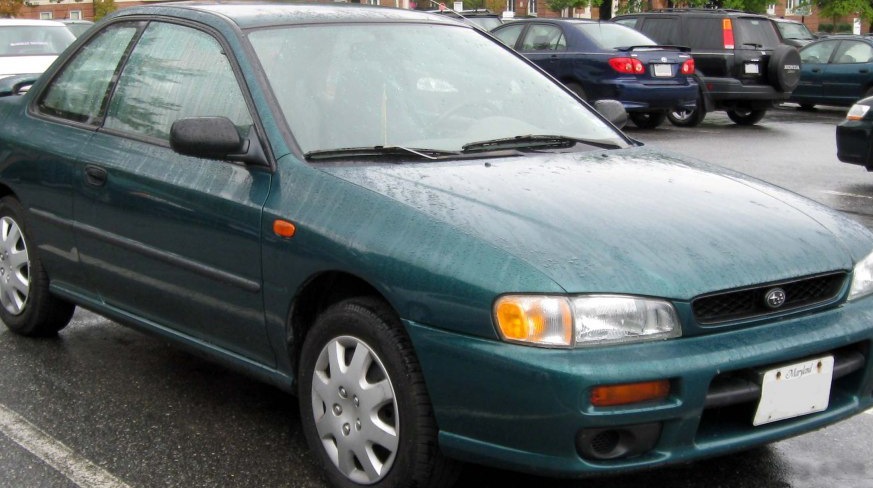
The Subaru Impreza I Coupe (GFC) 2.5, produced between 1998 and 2000, represented a compelling entry into the sporty coupe market, particularly for those seeking all-wheel-drive capability. Positioned as a slightly more accessible alternative to the more performance-focused turbocharged models, the 2.5-liter naturally aspirated engine paired with a four-speed automatic transmission offered a balance of usability and Subaru’s renowned symmetrical all-wheel-drive system. This variant was part of the first generation Impreza (1995-2000), known internally as the GFC chassis code, and aimed to broaden the Impreza’s appeal beyond dedicated rally enthusiasts.
Technical Specifications
| Brand | Subaru |
| Model | Impreza |
| Generation | Impreza I Coupe (GFC) |
| Type | 2.5 (167 Hp) 4WD Automatic |
| Start of production | 1998 |
| End of production | 2000 |
| Powertrain Architecture | Internal Combustion engine |
| Body type | Coupe |
| Seats | 4 |
| Doors | 2 |
| Fuel consumption (urban) | 10.7 l/100 km (22 US mpg, 26.4 UK mpg, 9.3 km/l) |
| Fuel consumption (extra urban) | 8.4 l/100 km (28 US mpg, 33.6 UK mpg, 11.9 km/l) |
| Fuel consumption (combined) | 9.3 l/100 km (25.3 US mpg, 30.4 UK mpg, 10.8 km/l) |
| Fuel Type | Petrol (Gasoline) |
| Acceleration 0 – 100 km/h | 8.3 sec |
| Acceleration 0 – 62 mph | 8.3 sec |
| Acceleration 0 – 60 mph | 7.9 sec |
| Maximum speed | 200 km/h (124.27 mph) |
| Weight-to-power ratio | 7.8 kg/Hp, 129 Hp/tonne |
| Weight-to-torque ratio | 5.8 kg/Nm, 173.7 Nm/tonne |
| Power | 167 Hp @ 5600 rpm |
| Power per litre | 68 Hp/l |
| Torque | 225 Nm @ 4000 rpm (165.95 lb.-ft. @ 4000 rpm) |
| Engine layout | Front, Longitudinal |
| Engine Model/Code | EJ25 |
| Engine displacement | 2457 cm3 (149.94 cu. in.) |
| Number of cylinders | 4 |
| Engine configuration | Boxer |
| Cylinder Bore | 99.5 mm (3.92 in.) |
| Piston Stroke | 79 mm (3.11 in.) |
| Compression ratio | 9.7:1 |
| Number of valves per cylinder | 4 |
| Fuel injection system | Multi-port manifold injection |
| Engine aspiration | Naturally aspirated engine |
| Valvetrain | OHC |
| Engine oil capacity | 4 l (4.23 US qt | 3.52 UK qt) |
| Kerb Weight | 1295 kg (2854.99 lbs.) |
| Max. weight | 1700 kg (3747.86 lbs.) |
| Max load | 405 kg (892.87 lbs.) |
| Trunk (boot) space – minimum | 314 l (11.09 cu. ft.) |
| Fuel tank capacity | 50 l (13.21 US gal | 11 UK gal) |
| Length | 4374 mm (172.2 in.) |
| Width | 1704 mm (67.09 in.) |
| Height | 1410 mm (55.51 in.) |
| Wheelbase | 2520 mm (99.21 in.) |
| Front track | 1470 mm (57.87 in.) |
| Rear (Back) track | 1450 mm (57.09 in.) |
| Drive wheel | All wheel drive (4×4) |
| Number of gears and type of gearbox | 4 gears, automatic transmission |
| Front suspension | Transverse stabilizer |
| Rear suspension | Transverse stabilizer |
| Front brakes | Ventilated discs |
| Rear brakes | Drum |
| Assisting systems | ABS (Anti-lock braking system) |
| Steering type | Steering rack and pinion |
| Power steering | Hydraulic Steering |
| Tires size | 205/55 R16 |
| Wheel rims size | 7J x 16 |
Powertrain & Engine Architecture
The heart of the Impreza 2.5 Coupe was the EJ25 2.5-liter horizontally-opposed (Boxer) four-cylinder engine. This engine, a hallmark of Subaru engineering, was chosen for its inherent balance and smooth power delivery. The EJ25 featured a single overhead camshaft (SOHC) design, operating four valves per cylinder. Fuel delivery was managed by a multi-port fuel injection system, providing adequate atomization for efficient combustion. The engine produced 167 horsepower at 5600 rpm and 225 Nm (165.95 lb-ft) of torque at 4000 rpm. The four-speed automatic transmission was a conventional hydraulic unit, chosen for its ease of use and suitability for everyday driving. While not offering the quickest shifts, it provided smooth transitions and contributed to the car’s overall comfortable driving experience.
Driving Characteristics
The 2.5-liter automatic Impreza Coupe offered a distinctly different driving experience compared to its turbocharged siblings or even the manual transmission versions. Acceleration to 60 mph took approximately 7.9 seconds, respectable for the era, but noticeably slower than the more potent Impreza models. The automatic transmission’s gear ratios were geared towards fuel efficiency and comfortable cruising rather than outright performance. The all-wheel-drive system, however, provided excellent traction in various conditions, making it a capable vehicle in inclement weather. The Boxer engine’s low center of gravity contributed to stable handling, but the automatic transmission diminished the driver’s control compared to a manual gearbox.
Equipment & Trim Levels
The 2.5 Coupe typically came with a reasonable level of standard equipment. Interior features generally included cloth upholstery, power windows and locks, and an AM/FM stereo. Air conditioning was often standard, though some base models might have offered it as an option. Optional extras could include a sunroof, upgraded audio systems, and alloy wheels. The interior design was functional and straightforward, prioritizing usability over luxury. The dashboard layout was typical of Japanese cars of the period, with clearly labeled controls and a focus on ergonomics.
Chassis & Braking
The Impreza Coupe’s chassis featured independent suspension all around, utilizing MacPherson struts at the front and a double-wishbone setup at the rear. Stabilizer bars were fitted to both axles to reduce body roll during cornering. The braking system consisted of ventilated discs at the front and drum brakes at the rear. Anti-lock braking system (ABS) was standard, enhancing safety by preventing wheel lockup during hard braking. The suspension tuning was geared towards providing a comfortable ride, with a bias towards understeer. The relatively modest weight of the vehicle, around 1295 kg (2855 lbs), helped to mitigate the effects of the less powerful engine and automatic transmission.
Market Reception & Comparison
The 1998-2000 Subaru Impreza 2.5 Coupe with the automatic transmission received mixed reviews. Critics generally praised the car’s all-wheel-drive system and comfortable ride, but noted that the automatic transmission detracted from the driving experience and the engine lacked the punch of the turbocharged models. Compared to the 2.0-liter naturally aspirated Impreza, the 2.5 offered a noticeable increase in power and torque. However, the turbocharged versions, such as the WRX, were the clear performance leaders. Fuel economy was reasonable for the time, averaging around 25.3 US mpg in combined driving. Reliability was generally good, typical of Subaru’s reputation, although the automatic transmission could be prone to wear and tear with high mileage.
Legacy
The Subaru Impreza I Coupe 2.5 Automatic, while not the most sought-after variant, holds a place in the Impreza lineage as an accessible and practical all-wheel-drive coupe. Today, these cars are becoming increasingly rare and are appreciated by enthusiasts who value their simplicity and reliability. The EJ25 engine, while not as revered as the EJ20 turbo engines, is known for its durability. Well-maintained examples can still provide years of reliable service. The car represents a unique blend of Subaru’s rally-inspired engineering and everyday usability, making it a compelling choice for those seeking a classic Japanese coupe with all-weather capability.
