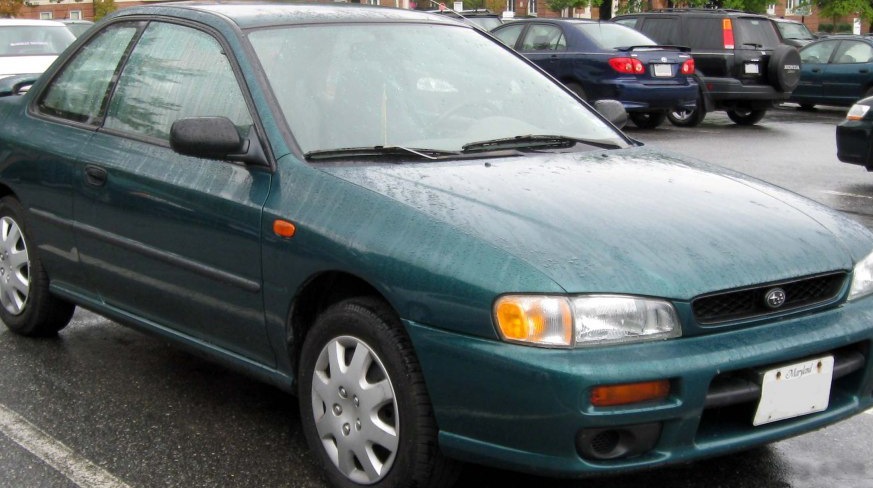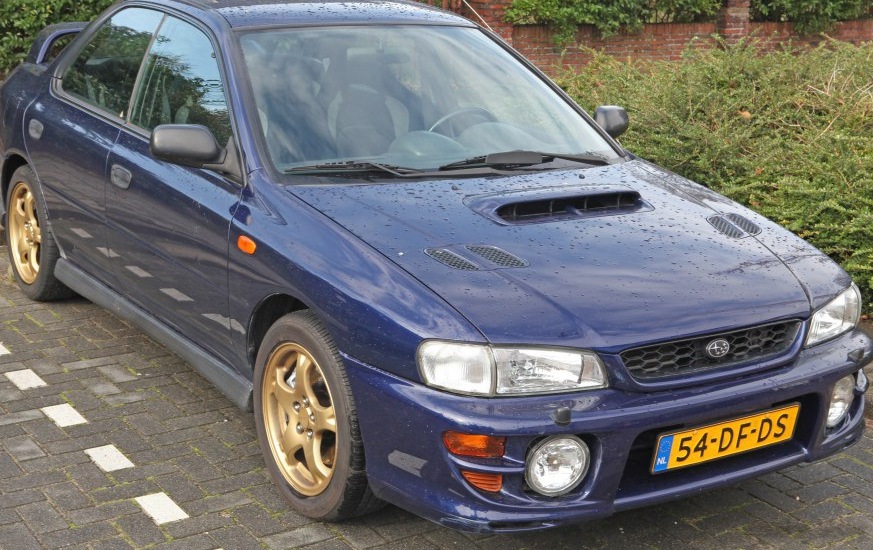
The Subaru Impreza I (GC) 1.6i, produced between 1998 and 2000, represented the entry point into the first generation of Subaru’s popular compact car. Positioned within the GC chassis series – which also included more potent turbocharged variants – the 1.6i offered a more economical and accessible option for buyers seeking Subaru’s renowned all-wheel drive system. This model was primarily aimed at the European and Japanese markets, where fuel efficiency and practicality were highly valued. It served as a stepping stone for customers wanting to experience the Impreza’s capabilities without the higher price tag of the WRX or other performance-oriented trims. The 1.6i was a four-door sedan, offering seating for five passengers.
Technical Specifications
| Brand | Subaru |
| Model | Impreza |
| Generation | Impreza I (GC) |
| Type | 1.6i (95 Hp) 4WD |
| Start of production | 1998 |
| End of production | 2000 |
| Powertrain Architecture | Internal Combustion engine |
| Body type | Sedan |
| Seats | 5 |
| Doors | 4 |
| Fuel consumption (urban) | 10.9 l/100 km (21.6 US mpg) |
| Fuel consumption (extra urban) | 6.8 l/100 km (34.6 US mpg) |
| Fuel Type | Petrol (Gasoline) |
| Acceleration 0 – 100 km/h | 12.3 sec |
| Acceleration 0 – 62 mph | 12.3 sec |
| Acceleration 0 – 60 mph | 11.7 sec |
| Maximum speed | 175 km/h (108.74 mph) |
| Weight-to-power ratio | 10.6 kg/Hp |
| Weight-to-torque ratio | 7 kg/Nm |
| Power | 95 Hp @ 5600 rpm |
| Torque | 143 Nm @ 3600 rpm (105.47 lb.-ft. @ 3600 rpm) |
| Engine layout | Front, Longitudinal |
| Engine Model/Code | EJ16S |
| Engine displacement | 1597 cm3 (97.45 cu. in.) |
| Number of cylinders | 4 |
| Engine configuration | Boxer |
| Cylinder Bore | 87.9 mm (3.46 in.) |
| Piston Stroke | 65.8 mm (2.59 in.) |
| Compression ratio | 10:1 |
| Number of valves per cylinder | 4 |
| Fuel injection system | Multi-port manifold injection |
| Engine aspiration | Naturally aspirated |
| Valvetrain | OHC |
| Engine oil capacity | 4 l (4.23 US qt | 3.52 UK qt) |
| Kerb Weight | 1005 kg (2215.65 lbs.) |
| Max. weight | 1680 kg (3703.77 lbs.) |
| Max load | 675 kg (1488.12 lbs.) |
| Trunk (boot) space | 353 l (12.47 cu. ft.) |
| Fuel tank capacity | 50 l (13.21 US gal | 11 UK gal) |
| Length | 4350 mm (171.26 in.) |
| Width | 1690 mm (66.54 in.) |
| Height | 1415 mm (55.71 in.) |
| Wheelbase | 2520 mm (99.21 in.) |
| Front track | 1460 mm (57.48 in.) |
| Rear track | 1455 mm (57.28 in.) |
| Drivetrain Architecture | All wheel drive (4×4) |
| Number of gears | 5 |
| Gearbox type | Manual transmission |
| Front suspension | Wishbone |
| Rear suspension | Several levers and rods |
| Front brakes | Disc |
| Rear brakes | Drum |
| Assisting systems | ABS (Anti-lock braking system) |
| Steering type | Steering rack and pinion |
| Power steering | Hydraulic |
| Tires size | 175/70 R14 |
| Wheel rims size | 14 |
Powertrain & Engine Architecture
The heart of the Impreza 1.6i was the EJ16S engine, a 1.6-liter naturally aspirated, horizontally-opposed (Boxer) four-cylinder. This engine configuration, a Subaru hallmark, provided a low center of gravity, contributing to the car’s balanced handling. The EJ16S featured a single overhead camshaft (OHC) design and multi-point fuel injection. Its 95 horsepower output at 5600 rpm and 143 Nm (105 lb-ft) of torque at 3600 rpm were modest, but adequate for everyday driving. The engine’s longitudinal mounting allowed for a more efficient drivetrain layout, feeding power to all four wheels via a standard five-speed manual transmission. The transmission was chosen for its durability and relatively simple design, prioritizing reliability over outright performance.
Driving Characteristics
The 1.6i’s driving experience was characterized by its predictable handling and surefootedness thanks to the symmetrical all-wheel drive system. Acceleration was not its strong suit, taking around 12.3 seconds to reach 62 mph. Compared to the turbocharged Impreza WRX, the 1.6i felt significantly slower, but it offered a smoother, more linear power delivery. The five-speed manual transmission had relatively long gearing, prioritizing fuel economy over rapid acceleration. The all-wheel drive system provided excellent traction in various weather conditions, making it a practical choice for regions with inclement weather. The suspension, while comfortable, was not particularly sporty, leaning towards a softer setup for everyday usability.
Equipment & Trim Levels
The Impreza 1.6i typically came with a fairly basic level of equipment. Standard features generally included power steering, central locking, electric windows, and an AM/FM radio. Interior upholstery was typically cloth, and the dashboard featured a simple, functional design. Optional extras could include air conditioning, alloy wheels, and a sunroof. The trim level was generally considered the entry-level offering in the Impreza range, focusing on affordability and practicality. It was designed to appeal to buyers who prioritized reliability and all-weather capability over performance and luxury.
Chassis & Braking
The Impreza 1.6i utilized a MacPherson strut front suspension and a multi-link rear suspension. The front brakes were ventilated discs, while the rear brakes were drums. This configuration was typical for cars in this weight class during the late 1990s. Anti-lock brakes (ABS) were standard, enhancing safety by preventing wheel lockup during hard braking. The chassis was relatively lightweight, contributing to the car’s nimble handling. Stabilizer bars were present, but were relatively thin compared to those found on higher-performance Impreza models.
Market Reception & Comparison
The Impreza 1.6i was generally well-received as a practical and reliable family car. Critics praised its all-wheel drive system and its ability to handle challenging road conditions. However, its modest performance was often noted, and it was frequently compared to the more powerful Impreza WRX. Fuel economy was a strong point, with combined fuel consumption figures around 8.6 l/100km (27.4 US mpg). Compared to other cars in its class, such as the Ford Focus or Volkswagen Golf, the Impreza 1.6i offered a unique combination of all-wheel drive capability and affordability.
Legacy
The EJ16S engine, while not known for its high performance, proved to be a durable and reliable unit. The Impreza 1.6i has developed a reputation as a dependable used car, and well-maintained examples can still be found on the road today. The symmetrical all-wheel drive system remains a key selling point, and the car’s simple mechanical design makes it relatively easy to maintain. While it may not be a collector’s item like the WRX variants, the 1.6i represents an important part of the Impreza’s history, offering a more accessible entry point into the Subaru brand.