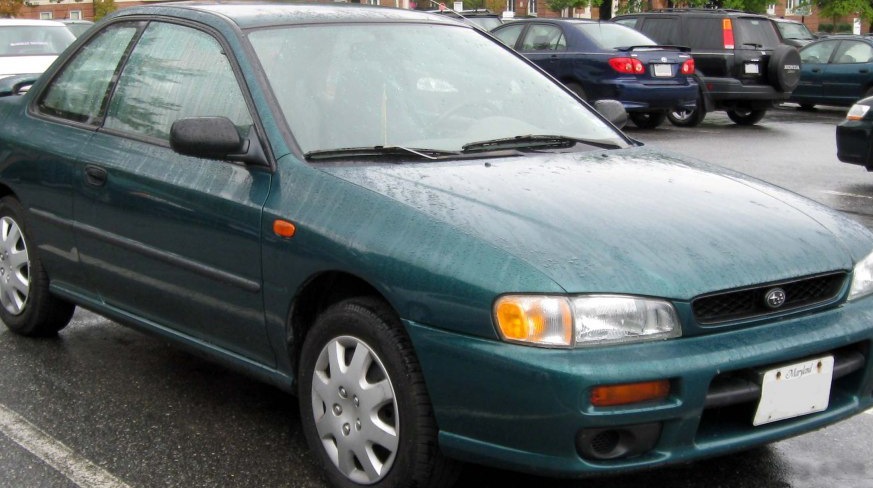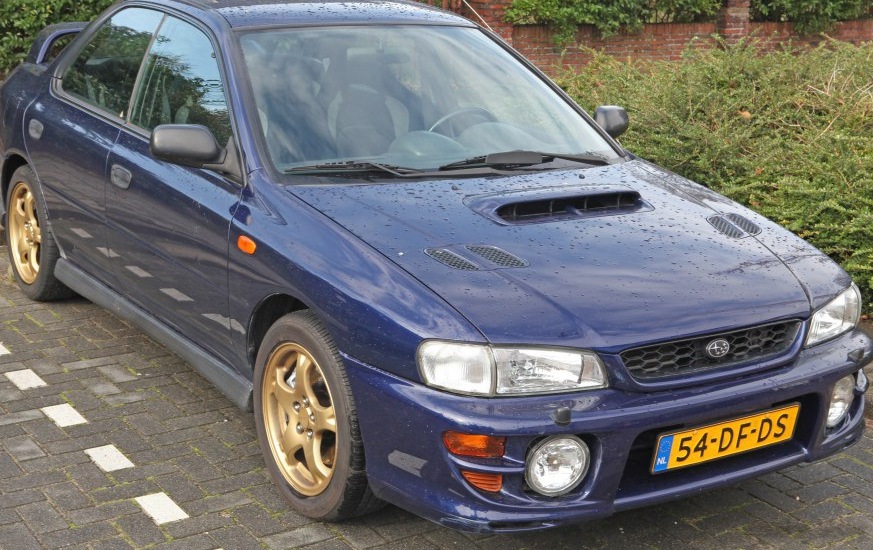
The Subaru Impreza I (GC) 2.0i, produced between 1995 and 2000, represented Subaru’s entry into the increasingly competitive compact car segment. This variant, equipped with a 2.0-liter naturally aspirated engine producing 115 horsepower and paired with a four-speed automatic transmission, offered a blend of practicality, all-wheel-drive capability, and relative affordability. It occupied a middle ground within the first-generation Impreza lineup, positioned below the more potent turbocharged models and above the base-level, lower-displacement options. The GC chassis code designates the first generation Impreza, and this model played a significant role in establishing Subaru’s reputation for durable, all-weather performance in markets like the United States and Europe.
Technical Specifications
| Brand | Subaru |
| Model | Impreza |
| Generation | Impreza I (GC) |
| Type | 2.0i (115 Hp) 4WD Automatic |
| Start of production | 1995 |
| End of production | 2000 |
| Powertrain Architecture | Internal Combustion engine |
| Body type | Sedan |
| Seats | 5 |
| Doors | 4 |
| Fuel consumption (urban) | 13.2 l/100 km (17.8 US mpg) |
| Fuel consumption (extra urban) | 9.1 l/100 km (25.8 US mpg) |
| Fuel Type | Petrol (Gasoline) |
| Acceleration 0 – 100 km/h | 9.7 sec |
| Acceleration 0 – 62 mph | 9.7 sec |
| Acceleration 0 – 60 mph | 9.2 sec |
| Maximum speed | 189 km/h (117.44 mph) |
| Weight-to-power ratio | 9.8 kg/Hp |
| Weight-to-torque ratio | 6.6 kg/Nm |
| Power | 115 Hp @ 5600 rpm |
| Torque | 170 Nm @ 4400 rpm (125.39 lb.-ft. @ 4400 rpm) |
| Engine layout | Front, Longitudinal |
| Engine Model/Code | EJ20G |
| Engine displacement | 1994 cm3 (121.68 cu. in.) |
| Number of cylinders | 4 |
| Engine configuration | Boxer |
| Cylinder Bore | 92 mm (3.62 in.) |
| Piston Stroke | 75 mm (2.95 in.) |
| Compression ratio | 9.5:1 |
| Number of valves per cylinder | 4 |
| Fuel injection system | Multi-port manifold injection |
| Engine aspiration | Naturally aspirated |
| Valvetrain | OHC |
| Engine oil capacity | 4 l (4.23 US qt | 3.52 UK qt) |
| Kerb Weight | 1130 kg (2491.22 lbs.) |
| Max. weight | 1680 kg (3703.77 lbs.) |
| Max load | 550 kg (1212.54 lbs.) |
| Trunk (boot) space | 353 l (12.47 cu. ft.) |
| Fuel tank capacity | 50 l (13.21 US gal | 11 UK gal) |
| Length | 4350 mm (171.26 in.) |
| Width | 1690 mm (66.54 in.) |
| Height | 1415 mm (55.71 in.) |
| Wheelbase | 2520 mm (99.21 in.) |
| Front track | 1460 mm (57.48 in.) |
| Rear track | 1455 mm (57.28 in.) |
| Drive wheel | All wheel drive (4×4) |
| Number of gears | 4 |
| Gearbox type | automatic transmission |
| Front suspension | Wishbone |
| Rear suspension | Several levers and rods |
| Front brakes | Ventilated discs |
| Rear brakes | Drum |
| Assisting systems | ABS (Anti-lock braking system) |
| Steering type | Steering rack and pinion |
| Power steering | Hydraulic |
| Tires size | 185/70 R14 |
| Wheel rims size | 14 |
Powertrain & Engine Architecture
The heart of the Impreza 2.0i was the EJ20G engine, a 1994cc (121.68 cubic inches) naturally aspirated, horizontally-opposed (boxer) four-cylinder. This engine configuration, a Subaru hallmark, offered inherent balance and a lower center of gravity, contributing to the car’s handling characteristics. The EJ20G utilized a single overhead camshaft (OHC) design and multi-port fuel injection. The 9.5:1 compression ratio was a compromise between performance and fuel efficiency. The four-speed automatic transmission was a conventional hydraulic unit, chosen for its smoothness and ease of use, appealing to buyers prioritizing comfort over outright performance. While not known for its sportiness, the transmission was generally reliable.
Driving Characteristics
The 115 horsepower and 125 lb-ft of torque delivered by the 2.0i powertrain resulted in respectable, though not exhilarating, performance. Acceleration from 0-60 mph took around 9.2 seconds, and top speed was approximately 117 mph. The automatic transmission’s gear ratios were geared towards fuel economy and smooth cruising rather than aggressive acceleration. Compared to the five-speed manual version, the automatic felt noticeably slower, particularly during overtaking maneuvers. The all-wheel-drive system provided excellent traction in various weather conditions, a key selling point for Subaru. However, the added weight of the automatic transmission and AWD system did impact fuel economy.
Equipment & Trim Levels
The 2.0i Automatic trim typically included features such as power windows, power locks, and an AM/FM radio with cassette player. Air conditioning was often standard, though sometimes offered as an option. Interior upholstery was typically cloth, with a relatively simple dashboard layout. Optional extras included a sunroof, upgraded audio systems, and alloy wheels. The trim level aimed for a balance between affordability and comfort, making it a popular choice for families and commuters.
Chassis & Braking
The Impreza I (GC) utilized a MacPherson strut front suspension and a multi-link rear suspension, providing a comfortable ride and predictable handling. The front brakes were ventilated discs, offering adequate stopping power, while the rear brakes were drums, a cost-saving measure common in this class of vehicle. Anti-lock brakes (ABS) were often included as standard equipment, enhancing safety. The chassis was relatively lightweight, contributing to the car’s agility, but the suspension tuning was biased towards comfort rather than sporty handling.
Market Reception & Comparison
The Impreza 2.0i Automatic received generally positive reviews for its practicality, reliability, and all-weather capability. Critics noted that the automatic transmission dulled the driving experience compared to the manual version, and the engine lacked the punch of the turbocharged models. However, it was praised for its fuel efficiency (around 22 mpg combined) and comfortable ride. Compared to competitors like the Honda Civic and Toyota Corolla, the Impreza offered the advantage of standard all-wheel drive, making it a compelling choice for buyers in regions with inclement weather. The 1.8L models were often seen as a more economical alternative, but lacked the refinement and power of the 2.0i.
Legacy
The Subaru Impreza I (GC) 2.0i Automatic has proven to be a remarkably durable vehicle. Many examples are still on the road today, a testament to Subaru’s engineering and build quality. The EJ20G engine, while not without its quirks, is generally considered reliable with proper maintenance. Common issues include oil leaks and occasional head gasket failures, but these are typically manageable. In the used car market, these Imprezas are appreciated for their affordability, practicality, and all-wheel-drive capability. They represent a solid, dependable choice for buyers seeking a budget-friendly and capable compact car, and a gateway into the Subaru brand.