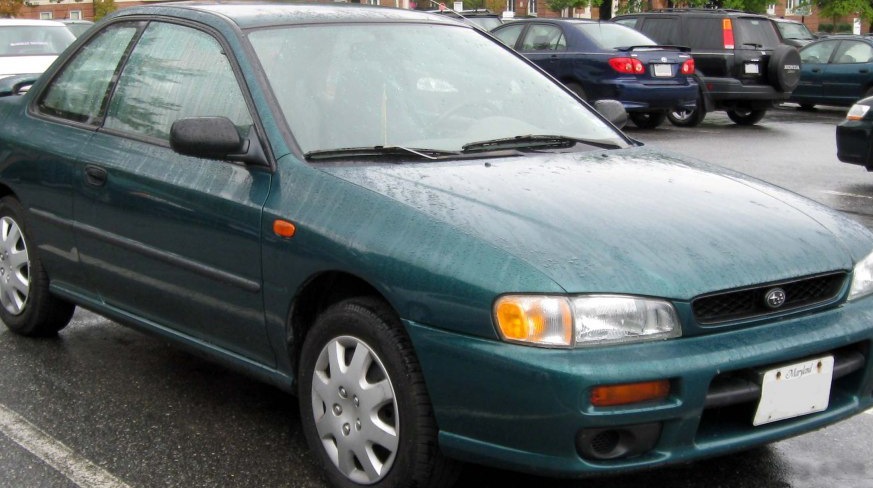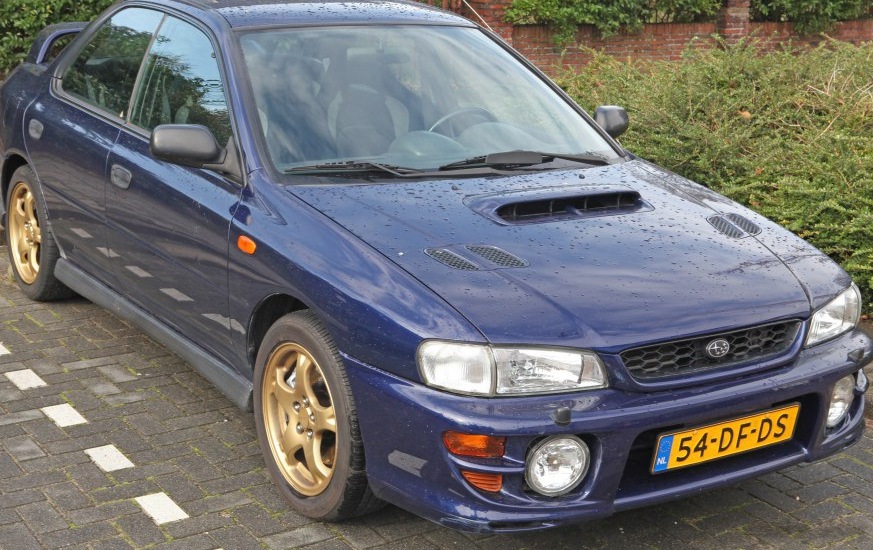
The Subaru Impreza GT 2.0 Turbo, produced between 1994 and 2000 as part of the first-generation Impreza (GC/GM chassis), represented a significant step forward for Subaru’s performance aspirations. Positioned as the top-tier trim level within the Impreza range, it offered a turbocharged engine and all-wheel drive, appealing to enthusiasts seeking a capable and engaging driving experience. This variant was primarily sold in markets like Japan, Europe, and Australia, with limited official imports to the United States during this period. The GC Impreza, in general, aimed to blend practicality with rally-inspired performance, capitalizing on Subaru’s success in the World Rally Championship (WRC).
Technical Specifications
| Brand | Subaru |
| Model | Impreza |
| Generation | Impreza I (GC) |
| Type | GT 2.0 Turbo (211 Hp) 4WD |
| Start of production | 1994 |
| End of production | 2000 |
| Powertrain Architecture | Internal Combustion engine |
| Body type | Sedan |
| Seats | 5 |
| Doors | 4 |
| Fuel consumption (urban) | 13.7 l/100 km (17.2 US mpg) |
| Fuel consumption (extra urban) | 8 l/100 km (29.4 US mpg) |
| Fuel Type | Petrol (Gasoline) |
| Acceleration 0 – 100 km/h | 6.3 sec |
| Acceleration 0 – 62 mph | 6.3 sec |
| Acceleration 0 – 60 mph | 6 sec |
| Maximum speed | 231 km/h (143.54 mph) |
| Weight-to-power ratio | 5.9 kg/Hp |
| Weight-to-torque ratio | 4.3 kg/Nm |
| Power | 211 Hp @ 5600 rpm |
| Torque | 290 Nm @ 4000 rpm (213.89 lb.-ft. @ 4000 rpm) |
| Engine layout | Front, Longitudinal |
| Engine Model/Code | EJ20 T |
| Engine displacement | 1994 cm3 (121.68 cu. in.) |
| Number of cylinders | 4 |
| Engine configuration | Boxer |
| Cylinder Bore | 92 mm (3.62 in.) |
| Piston Stroke | 75 mm (2.95 in.) |
| Compression ratio | 8:1 |
| Number of valves per cylinder | 4 |
| Fuel injection system | Multi-port manifold injection |
| Engine aspiration | Turbocharger |
| Valvetrain | DOHC |
| Engine oil capacity | 4.5 l (4.76 US qt | 3.96 UK qt) |
| Kerb Weight | 1255 kg (2766.8 lbs.) |
| Max. weight | 1750 kg (3858.09 lbs.) |
| Max load | 495 kg (1091.29 lbs.) |
| Trunk (boot) space – minimum | 353 l (12.47 cu. ft.) |
| Fuel tank capacity | 50 l (13.21 US gal | 11 UK gal) |
| Length | 4350 mm (171.26 in.) |
| Width | 1690 mm (66.54 in.) |
| Height | 1415 mm (55.71 in.) |
| Wheelbase | 2520 mm (99.21 in.) |
| Front track | 1460 mm (57.48 in.) |
| Rear (Back) track | 1455 mm (57.28 in.) |
| Drive wheel | All wheel drive (4×4) |
| Number of gears and type of gearbox | 5 gears, manual transmission |
| Front suspension | Wishbone |
| Rear suspension | Several levers and rods |
| Front brakes | Ventilated discs |
| Rear brakes | Disc |
| Assisting systems | ABS (Anti-lock braking system) |
| Steering type | Steering rack and pinion |
| Power steering | Hydraulic Steering |
| Tires size | 205/50 R16 |
| Wheel rims size | 6J x 16 |
Powertrain & Engine Architecture
The heart of the Impreza GT 2.0 Turbo was the EJ20T engine, a 1994cc, horizontally-opposed (boxer) four-cylinder. This engine utilized a single turbocharger with an intercooler to boost power output to 211 horsepower and 290 Nm (213.89 lb-ft) of torque. The EJ20T featured multi-port fuel injection and a dual overhead camshaft (DOHC) valvetrain. The boxer configuration, a Subaru hallmark, provided a low center of gravity, contributing to improved handling. The engine’s 8:1 compression ratio was a compromise between performance and reliability when running boosted. The standard transmission was a robust 5-speed manual, designed to handle the engine’s output. The longitudinally mounted engine and symmetrical all-wheel-drive system were key components of Subaru’s engineering philosophy.
Driving Characteristics
The Impreza GT 2.0 Turbo offered a distinctly sporty driving experience. The turbocharger provided a noticeable surge of power in the mid-range, making overtaking and spirited driving enjoyable. While not as raw or visceral as some contemporary performance cars, the Impreza’s all-wheel-drive system provided excellent traction and stability, particularly on loose surfaces. The 5-speed manual transmission offered precise shifts, and the gear ratios were well-matched to the engine’s powerband. Compared to the naturally aspirated Impreza models, the GT Turbo delivered significantly quicker acceleration – a 0-60 mph time of around 6 seconds was typical. However, the turbo lag was noticeable at lower engine speeds, requiring drivers to anticipate and plan their acceleration.
Equipment & Trim Levels
The GT 2.0 Turbo was the best-equipped Impreza variant. Standard features typically included power windows, power locks, air conditioning, and a decent audio system. Interior upholstery was usually cloth, though leather options were sometimes available. The dashboard featured a sporty design with clear instrumentation, including a boost gauge to monitor turbocharger performance. Optional extras could include a sunroof, upgraded audio systems, and alloy wheels. The overall interior ambiance was functional and driver-focused, reflecting the car’s performance aspirations.
Chassis & Braking
The Impreza GT 2.0 Turbo featured a MacPherson strut front suspension and a multi-link rear suspension, providing a good balance of ride comfort and handling precision. Stabilizer bars were fitted front and rear to reduce body roll during cornering. The braking system consisted of ventilated discs at the front and solid discs at the rear, with ABS (Anti-lock Braking System) as standard. The chassis was reinforced compared to the standard Impreza models to handle the increased power and torque. The all-wheel-drive system utilized a viscous limited-slip center differential, distributing power between the front and rear axles as needed.
Market Reception & Comparison
The Impreza GT 2.0 Turbo was generally well-received by automotive critics. It was praised for its performance, handling, and all-weather capability. However, some reviewers noted the turbo lag and the relatively basic interior compared to some European competitors. Compared to the naturally aspirated Impreza models, the GT Turbo offered a significant performance upgrade, but it also came with a higher price tag and slightly lower fuel economy. Against rivals like the Mitsubishi Lancer Evolution (which wasn’t widely available in all markets during this period) and the Honda Integra Type R, the Impreza GT Turbo offered a different blend of performance and practicality, emphasizing all-wheel-drive traction and everyday usability.
Legacy
The EJ20T engine, in its various iterations, became a cornerstone of Subaru’s performance lineup for many years. While the first-generation Impreza GT 2.0 Turbo is now a classic car, it remains a popular choice among enthusiasts. The EJ20T engine is known for its durability and tunability, although regular maintenance is essential to prevent issues. Finding well-maintained examples can be challenging, and parts availability can be limited in some regions. Today, the Impreza GT 2.0 Turbo is appreciated for its rally-inspired heritage, its engaging driving experience, and its status as a significant milestone in Subaru’s performance history. The car’s enduring appeal lies in its ability to offer a unique and rewarding driving experience that blends performance, practicality, and all-weather capability.