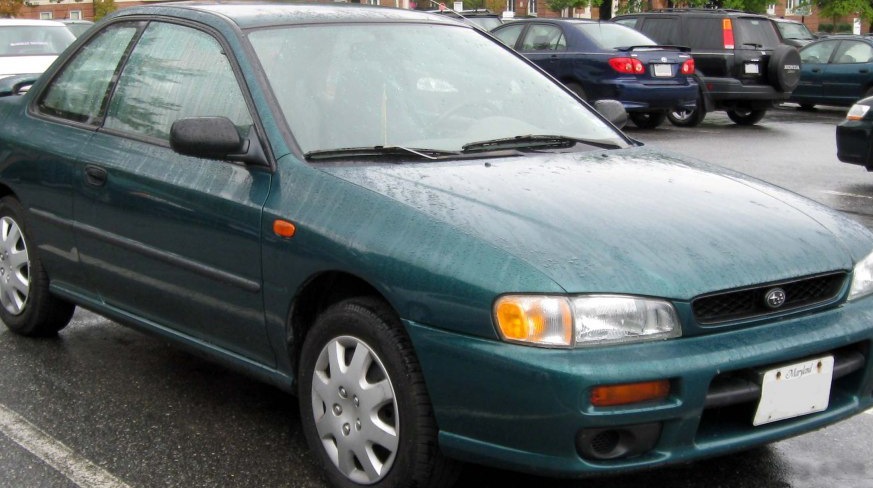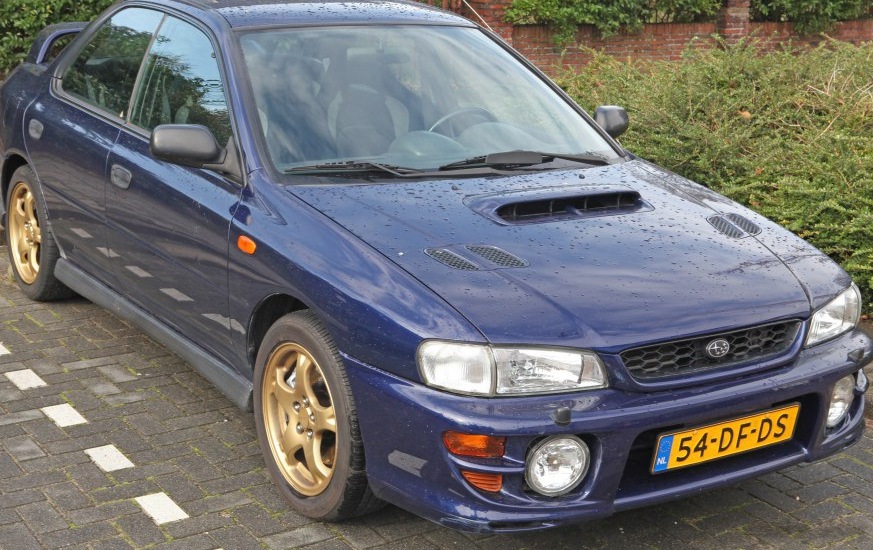
The Subaru Impreza GT 2.0 Turbo, produced between 1994 and 2000 as part of the first-generation Impreza (GC/GM chassis), represented a significant step up in performance and refinement for the model line. Positioned as the premium trim level, it catered to enthusiasts seeking a capable all-wheel-drive sedan with a turbocharged engine. This variant played a crucial role in establishing the Impreza’s reputation for rally-inspired performance in markets worldwide, though its initial focus was primarily on Japan and Europe before gaining traction in North America. The GT model distinguished itself from the base Impreza trims with its larger engine, more sophisticated suspension, and enhanced interior appointments.
Technical Specifications
| Brand | Subaru |
| Model | Impreza |
| Generation | Impreza I (GC) |
| Type | GT 2.0 Turbo (211 Hp) 4WD Automatic |
| Start of production | 1994 |
| End of production | 2000 |
| Powertrain Architecture | Internal Combustion engine |
| Body type | Sedan |
| Seats | 5 |
| Doors | 4 |
| Fuel consumption (urban) | 13.7 l/100 km (17.2 US mpg) |
| Fuel consumption (extra urban) | 8 l/100 km (29.4 US mpg) |
| Fuel Type | Petrol (Gasoline) |
| Acceleration 0 – 100 km/h | 6.3 sec |
| Acceleration 0 – 62 mph | 6.3 sec |
| Acceleration 0 – 60 mph | 6 sec |
| Maximum speed | 231 km/h (143.54 mph) |
| Weight-to-power ratio | 5.9 kg/Hp |
| Weight-to-torque ratio | 4.3 kg/Nm |
| Power | 211 Hp @ 5600 rpm |
| Power per litre | 105.8 Hp/l |
| Torque | 290 Nm @ 4000 rpm (213.89 lb.-ft. @ 4000 rpm) |
| Engine layout | Front, Longitudinal |
| Engine Model/Code | EJ20 T |
| Engine displacement | 1994 cm3 (121.68 cu. in.) |
| Number of cylinders | 4 |
| Engine configuration | Boxer |
| Cylinder Bore | 92 mm (3.62 in.) |
| Piston Stroke | 75 mm (2.95 in.) |
| Compression ratio | 8:1 |
| Number of valves per cylinder | 4 |
| Fuel injection system | Multi-port manifold injection |
| Engine aspiration | Turbocharger |
| Valvetrain | DOHC |
| Engine oil capacity | 4.5 l (4.76 US qt | 3.96 UK qt) |
| Kerb Weight | 1255 kg (2766.8 lbs.) |
| Max. weight | 1750 kg (3858.09 lbs.) |
| Max load | 495 kg (1091.29 lbs.) |
| Trunk (boot) space | 353 l (12.47 cu. ft.) |
| Fuel tank capacity | 50 l (13.21 US gal | 11 UK gal) |
| Length | 4350 mm (171.26 in.) |
| Width | 1690 mm (66.54 in.) |
| Height | 1415 mm (55.71 in.) |
| Wheelbase | 2520 mm (99.21 in.) |
| Front track | 1460 mm (57.48 in.) |
| Rear track | 1455 mm (57.28 in.) |
| Drive wheel | All wheel drive (4×4) |
| Number of gears | 4 |
| Gearbox type | Automatic transmission |
| Front suspension | Wishbone |
| Rear suspension | Several levers and rods |
| Front brakes | Ventilated discs |
| Rear brakes | Disc |
| Assisting systems | ABS (Anti-lock braking system) |
| Steering type | Steering rack and pinion |
| Power steering | Hydraulic |
| Tires size | 205/50 R16 |
| Wheel rims size | 6J x 16 |
Powertrain & Engine Architecture
The heart of the Impreza GT 2.0 Turbo was the EJ20T engine, a 2.0-liter (1994cc) horizontally-opposed (boxer) four-cylinder. This engine utilized a single turbocharger with an intercooler to boost power output to 211 horsepower at 5600 rpm and 290 Nm (213.89 lb-ft) of torque at 4000 rpm. The EJ20T featured multi-port fuel injection and a dual overhead camshaft (DOHC) valvetrain. The 8:1 compression ratio was a compromise to accommodate the turbocharging system. The automatic transmission was a four-speed unit, designed to handle the engine’s torque output. While offering convenience, this transmission was often criticized for slightly dulling the engine’s responsiveness compared to the available five-speed manual.
Driving Characteristics
The Impreza GT 2.0 Turbo Automatic offered a blend of performance and usability. Acceleration to 60 mph was achieved in around 6 seconds, and it could reach a top speed of 143.54 mph. However, the automatic transmission did impact the driving experience. Gear changes weren’t as crisp or engaging as those of the manual transmission, and the transmission’s programming prioritized smooth shifts over outright performance. Compared to the manual version, the automatic felt slightly less eager to rev and lacked some of the driver involvement. The all-wheel-drive system provided excellent traction in various conditions, making it a capable performer in both dry and wet weather.
Equipment & Trim Levels
The GT trim level came standard with features such as power windows, power locks, air conditioning, and a decent audio system. Interior upholstery typically consisted of cloth seats, although leather options were sometimes available. The dashboard featured a straightforward layout with easy-to-read gauges. Optional extras included a sunroof, upgraded audio systems, and alloy wheels. The GT model generally offered a more refined interior compared to the base Impreza models, with improved sound insulation and higher-quality materials.
Chassis & Braking
The Impreza GT 2.0 Turbo utilized a MacPherson strut front suspension and a multi-link rear suspension. This setup provided a good balance between ride comfort and handling. The car was equipped with ventilated disc brakes at the front and solid disc brakes at the rear. Anti-lock braking system (ABS) was standard, enhancing safety and control during hard braking. The chassis was reinforced compared to the base Impreza models to handle the increased power and torque of the turbocharged engine.
Market Reception & Comparison
The Impreza GT 2.0 Turbo Automatic received generally positive reviews, with critics praising its performance, all-wheel-drive system, and practicality. However, the automatic transmission was a common point of criticism, with many reviewers preferring the more engaging experience of the manual gearbox. Compared to other trims, such as the naturally aspirated 1.8L models, the GT offered a significant performance upgrade. Fuel economy was understandably lower than the base models, averaging around 17.2 mpg in the city and 29.4 mpg on the highway. Reliability was generally good, although the turbocharger and associated components required regular maintenance.
Legacy
The Subaru Impreza GT 2.0 Turbo, particularly the automatic version, has become a sought-after classic among enthusiasts. While not as highly regarded as the manual transmission versions, the automatic offers a unique driving experience and remains a capable and enjoyable car. The EJ20T engine is known for its durability and potential for modification. Today, well-maintained examples command a premium in the used car market. The Impreza GT 2.0 Turbo played a vital role in establishing Subaru’s reputation for building reliable, high-performance all-wheel-drive vehicles, and its legacy continues to influence the brand’s current lineup.