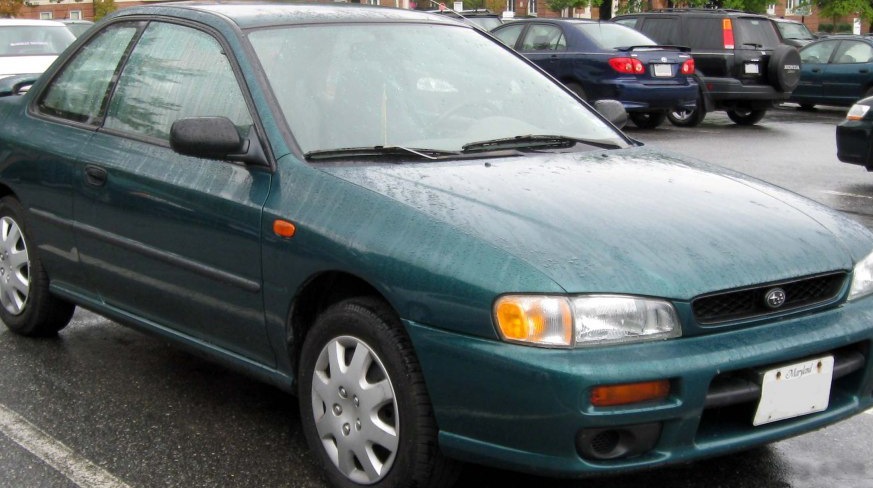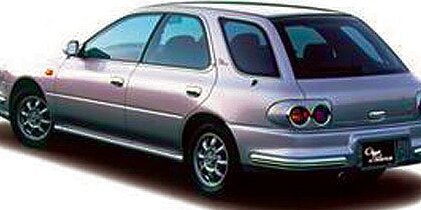
The Subaru Impreza I Station Wagon (GF) 1.5i 16V, produced between 1994 and 2000, represented an entry point into the first generation of Subaru’s popular compact car. Positioned as a practical and affordable family vehicle, this variant offered the versatility of a station wagon body style combined with a modest, yet reliable, 1.5-liter engine. It was a key model in Subaru’s European and Japanese markets, offering an alternative to more performance-oriented Impreza trims and competitors like the Toyota Corolla Wagon and Ford Escort Estate. This specific configuration, with its 97 horsepower output and typically paired with a five-speed manual transmission, aimed for fuel efficiency and everyday usability rather than outright speed.
Technical Specifications
| Brand | Subaru |
| Model | Impreza |
| Generation | Impreza I Station Wagon (GF) |
| Type (Engine) | 1.5i 16V (97 Hp) |
| Start of production | 1994 |
| End of production | 2000 |
| Powertrain Architecture | Internal Combustion engine |
| Body type | Station wagon (estate) |
| Seats | 5 |
| Doors | 5 |
| Fuel Type | Petrol (Gasoline) |
| Weight-to-power ratio | 11 kg/Hp, 90.7 Hp/tonne |
| Weight-to-torque ratio | 8.3 kg/Nm, 120.6 Nm/tonne |
| Power | 97 Hp @ 6000 rpm |
| Power per litre | 65 Hp/l |
| Torque | 129 Nm @ 4500 rpm (95.15 lb.-ft. @ 4500 rpm) |
| Engine layout | Front, Longitudinal |
| Engine Model/Code | EJ15 |
| Engine displacement | 1493 cm3 (91.11 cu. in.) |
| Number of cylinders | 4 |
| Engine configuration | Boxer |
| Cylinder Bore | 85 mm (3.35 in.) |
| Piston Stroke | 65.8 mm (2.59 in.) |
| Compression ratio | 9.4:1 |
| Number of valves per cylinder | 4 |
| Fuel injection system | Multi-port manifold injection |
| Engine aspiration | Naturally aspirated engine |
| Valvetrain | OHC |
| Kerb Weight | 1070 kg (2358.95 lbs.) |
| Max. weight | 1600 kg (3527.4 lbs.) |
| Max load | 530 kg (1168.45 lbs.) |
| Trunk (boot) space – minimum | 356 l (12.57 cu. ft.) |
| Trunk (boot) space – maximum | 1275 l (45.03 cu. ft.) |
| Fuel tank capacity | 50 l (13.21 US gal | 11 UK gal) |
| Length | 4350 mm (171.26 in.) |
| Width | 1690 mm (66.54 in.) |
| Height | 1440 mm (56.69 in.) |
| Wheelbase | 2520 mm (99.21 in.) |
| Front track | 1470 mm (57.87 in.) |
| Rear (Back) track | 1465 mm (57.68 in.) |
| Drivetrain Architecture | The Internal combustion engine (ICE) drives the front wheels of the vehicle. |
| Drive wheel | Front wheel drive |
| Number of gears and type of gearbox | 5 gears, manual transmission |
| Front suspension | Wishbone |
| Rear suspension | Several levers and rods |
| Front brakes | Ventilated discs |
| Rear brakes | Drum |
| Assisting systems | ABS (Anti-lock braking system) |
| Steering type | Steering rack and pinion |
| Power steering | Hydraulic Steering |
| Tires size | 165/80 R13 |
Powertrain & Engine Architecture
The heart of the Impreza 1.5i 16V is the EJ15 engine, a 1.5-liter, naturally aspirated, horizontally-opposed (boxer) four-cylinder. Subaru’s boxer engine design, with its pistons moving horizontally, contributes to a lower center of gravity, enhancing stability. The ‘16V’ designation indicates four valves per cylinder, improving breathing and overall efficiency. The EJ15 utilizes a multi-port fuel injection system, delivering fuel directly into the intake ports. This system, common for its time, provided a balance between fuel economy and performance. The engine’s 97 horsepower output at 6000 rpm and 129 Nm (95.15 lb-ft) of torque at 4500 rpm were modest, but sufficient for everyday driving. The engine’s longitudinal mounting, coupled with front-wheel drive, was a configuration common in European and Japanese market Subarus of this era.
Driving Characteristics
The 1.5i 16V Impreza Station Wagon offered a comfortable, if not particularly exciting, driving experience. The five-speed manual transmission provided adequate control, but the engine’s limited power meant frequent downshifts were necessary, especially when overtaking or climbing hills. Compared to the more powerful 1.8L and 2.0L Impreza variants, the 1.5i felt noticeably slower. The front-wheel drive configuration offered predictable handling, but lacked the all-weather capability of Subaru’s renowned all-wheel drive systems found in higher-spec models. The gear ratios were tuned for fuel efficiency, prioritizing economy over rapid acceleration. The relatively light weight of the vehicle (1070 kg / 2358.95 lbs) helped to mitigate the engine’s power deficit to some extent.
Equipment & Trim Levels
The 1.5i 16V typically represented the entry-level trim in the Impreza Station Wagon range. Standard equipment generally included power steering, central locking, and basic instrumentation. Interior upholstery was typically cloth, with a functional, if somewhat spartan, dashboard layout. Optional extras could include air conditioning, electric windows, and a radio/cassette player. The trim level was designed to appeal to budget-conscious buyers who prioritized practicality and reliability over luxury features. Higher trim levels, such as the 1.8L and 2.0L models, offered more comprehensive equipment lists, including alloy wheels, upgraded interior trim, and additional safety features.
Chassis & Braking
The Impreza 1.5i 16V utilized a relatively simple chassis design. Front suspension consisted of wishbones, providing a comfortable ride, while the rear suspension employed a multi-link setup. Braking was handled by ventilated discs on the front wheels and drum brakes on the rear. ABS (Anti-lock Braking System) was often included as standard equipment, enhancing safety. The suspension setup was tuned for comfort and stability, rather than sporty handling. Stabilizer bars were typically smaller in diameter compared to those found on higher-performance Impreza models.
Market Reception & Comparison
The Impreza 1.5i 16V was generally well-received as a practical and affordable family car. Critics praised its fuel efficiency and reliability, but noted its lack of outright performance. Compared to the more powerful Impreza variants, the 1.5i offered a lower purchase price and running costs, making it an attractive option for first-time buyers and those on a tight budget. Fuel economy was a key selling point, typically achieving around 35-40 mpg on the combined cycle. Reliability was generally good, although regular maintenance was essential to ensure the longevity of the engine and drivetrain.
Legacy
The Subaru Impreza I Station Wagon 1.5i 16V, while not the most glamorous or powerful variant in the Impreza lineup, has proven to be a durable and reliable vehicle. Today, well-maintained examples are sought after by enthusiasts and collectors. The EJ15 engine, while not known for its high performance, is relatively simple to maintain and repair. The car’s practicality and versatility continue to appeal to those seeking a classic Subaru with a focus on everyday usability. Parts availability is generally good, although some components may be becoming increasingly difficult to source. The 1.5i 16V represents a significant chapter in Subaru’s history, demonstrating the brand’s commitment to building reliable and affordable vehicles.