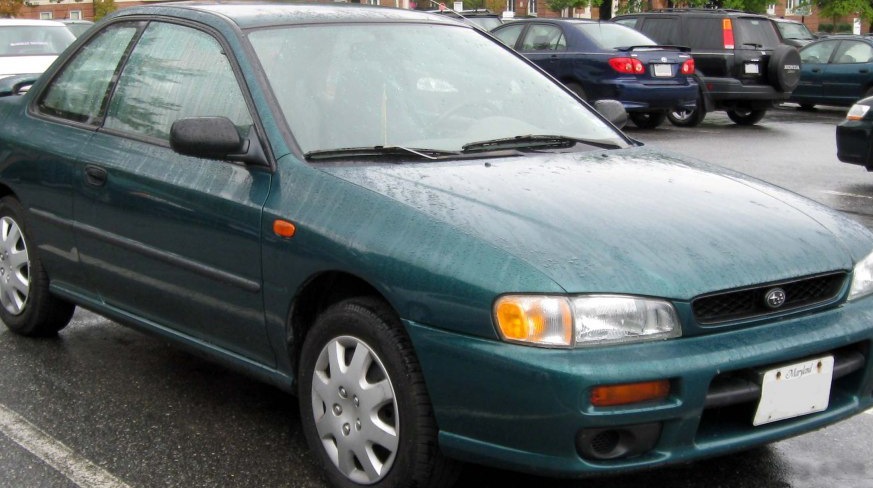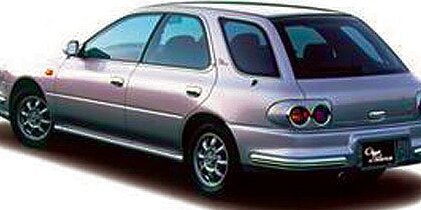
The Subaru Impreza I Station Wagon (GF) 1.6i, produced from 1992 to 2000, represented Subaru’s entry-level offering within the first generation Impreza lineup. Positioned as a practical and affordable all-wheel-drive vehicle, it catered to buyers seeking a versatile family car with Subaru’s renowned symmetrical all-wheel-drive system. This variant, powered by the 90 horsepower 1.6-liter engine and typically paired with a five-speed manual transmission (though automatics were available), served as the gateway to the Impreza range, offering a balance between economy and capability. The GF chassis code designates the station wagon body style, distinguishing it from the sedan and hatchback versions available during the same period.
Technical Specifications
| Brand | Subaru |
| Model | Impreza |
| Generation | Impreza I Station Wagon (GF) |
| Type | 1.6i (90 Hp) 4WD |
| Start of production | 1992 |
| End of production | 2000 |
| Powertrain Architecture | Internal Combustion engine |
| Body type | Station wagon (estate) |
| Seats | 5 |
| Doors | 5 |
| Fuel consumption (combined) | 8.5 l/100 km (27.7 US mpg, 33.2 UK mpg, 11.8 km/l) |
| Fuel Type | Petrol (Gasoline) |
| Acceleration 0 – 100 km/h | 13.6 sec |
| Acceleration 0 – 62 mph | 13.6 sec |
| Acceleration 0 – 60 mph | 12.9 sec |
| Maximum speed | 166 km/h (103.15 mph) |
| Weight-to-power ratio | 12.9 kg/Hp, 77.6 Hp/tonne |
| Weight-to-torque ratio | 9.1 kg/Nm, 110.3 Nm/tonne |
| Power | 90 Hp @ 5600 rpm |
| Power per litre | 56.4 Hp/l |
| Torque | 128 Nm @ 4000 rpm (94.41 lb.-ft. @ 4000 rpm) |
| Engine layout | Front, Longitudinal |
| Engine Model/Code | EJ16 |
| Engine displacement | 1597 cm3 (97.45 cu. in.) |
| Number of cylinders | 4 |
| Engine configuration | Boxer |
| Cylinder Bore | 87.9 mm (3.46 in.) |
| Piston Stroke | 65.8 mm (2.59 in.) |
| Compression ratio | 9.4:1 |
| Number of valves per cylinder | 4 |
| Fuel injection system | Multi-port manifold injection |
| Engine aspiration | Naturally aspirated engine |
| Valvetrain | OHC |
| Engine oil capacity | 4 l (4.23 US qt | 3.52 UK qt) |
| Kerb Weight | 1160 kg (2557.36 lbs.) |
| Max. weight | 1690 kg (3725.81 lbs.) |
| Max load | 530 kg (1168.45 lbs.) |
| Trunk (boot) space – minimum | 365 l (12.89 cu. ft.) |
| Trunk (boot) space – maximum | 1275 l (45.03 cu. ft.) |
| Fuel tank capacity | 50 l (13.21 US gal | 11 UK gal) |
| Length | 4350 mm (171.26 in.) |
| Width | 1690 mm (66.54 in.) |
| Height | 1420 mm (55.91 in.) |
| Wheelbase | 2520 mm (99.21 in.) |
| Front track | 1460 mm (57.48 in.) |
| Rear (Back) track | 1450 mm (57.09 in.) |
| Drive wheel | All wheel drive (4×4) |
| Number of gears and type of gearbox | 5 gears, manual transmission |
| Front suspension | Wishbone |
| Rear suspension | Several levers and rods |
| Front brakes | Ventilated discs |
| Rear brakes | Drum |
| Assisting systems | ABS (Anti-lock braking system) |
| Steering type | Steering rack and pinion |
| Power steering | Hydraulic Steering |
| Tires size | 175/70 R14 |
| Wheel rims size | 14 |
Powertrain & Engine Architecture
The heart of the 1.6i was the EJ16 engine, a 1.6-liter (1597 cc) naturally aspirated, horizontally-opposed (boxer) four-cylinder. This engine design, a Subaru hallmark, offered inherent balance and a lower center of gravity, contributing to the car’s handling characteristics. The EJ16 featured a single overhead camshaft (OHC) valvetrain with four valves per cylinder. Fuel delivery was managed by a multi-port fuel injection system. The engine produced 90 horsepower at 5600 rpm and 128 Nm (94.41 lb-ft) of torque at 4000 rpm. While not a powerhouse, the engine was known for its reliability and reasonable fuel economy. The five-speed manual transmission was the most common pairing, providing adequate gear ratios for everyday driving. A four-speed automatic transmission was also offered, but it noticeably impacted acceleration and fuel consumption.
Driving Characteristics
The 1.6i Station Wagon, with its 90 hp output, wasn’t designed for outright speed. Acceleration from 0 to 60 mph took around 12.9 seconds, and top speed was limited to 103.15 mph. The manual transmission allowed drivers to make the most of the available power, while the automatic, though convenient, felt sluggish in comparison. The all-wheel-drive system provided excellent traction in various conditions, making it a capable vehicle for inclement weather or light off-road use. The boxer engine’s low center of gravity contributed to stable handling, but the suspension, tuned for comfort, resulted in some body roll during cornering. The gear ratios in the manual transmission were well-spaced, allowing for relatively relaxed cruising on the highway.
Equipment & Trim Levels
The 1.6i typically came with a fairly basic level of equipment. Standard features generally included power steering, central locking, and an AM/FM radio. Interior upholstery was typically cloth, and the dashboard featured a simple, functional design. Optional extras included air conditioning, power windows, and a sunroof. Trim levels were relatively limited, with the 1.6i serving as the base model. Higher trim levels, such as the 1.8i or the turbocharged WRX, offered more luxurious features and significantly more performance.
Chassis & Braking
The Impreza I Station Wagon utilized a MacPherson strut front suspension and a multi-link rear suspension. The suspension was tuned for comfort, prioritizing ride quality over sporty handling. Braking duties were handled by ventilated discs at the front and drum brakes at the rear. Anti-lock braking system (ABS) was available, enhancing safety by preventing wheel lockup during hard braking. The chassis was relatively lightweight, contributing to the car’s overall efficiency. Stabilizer bars were present, but were relatively thin compared to those found on higher-performance Impreza models.
Market Reception & Comparison
The 1.6i Station Wagon was generally well-received as a practical and affordable family car. Critics praised its all-wheel-drive system and reliability, but noted its lack of outright performance. Compared to the 1.8i and 2.0i models, the 1.6i offered lower running costs but significantly less power. The 1.8i provided a noticeable performance boost, while the 2.0i, particularly in turbocharged WRX form, was aimed at enthusiasts. Fuel economy was respectable for its time, averaging around 27.7 US mpg. Reliability was generally good, although regular maintenance was essential to ensure the longevity of the engine and drivetrain.
Legacy
The Subaru Impreza I Station Wagon 1.6i remains a relatively common sight on used car markets today. The EJ16 engine is known for its durability, and with proper maintenance, can provide many years of reliable service. However, age-related issues such as rust and wear and tear on suspension components are common. The 1.6i is often seen as a good entry point into Subaru ownership, offering the brand’s signature all-wheel-drive capability at an affordable price. While it may not be the fastest or most luxurious Impreza variant, its practicality, reliability, and all-weather capability have ensured its enduring appeal.