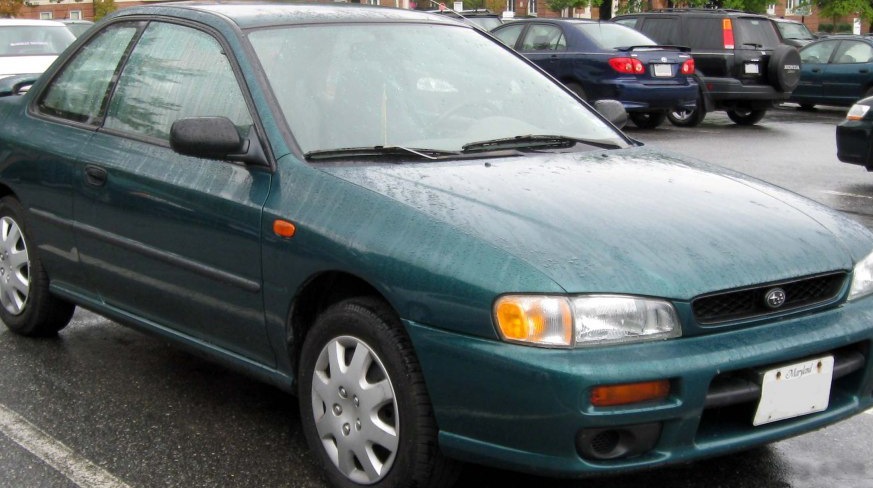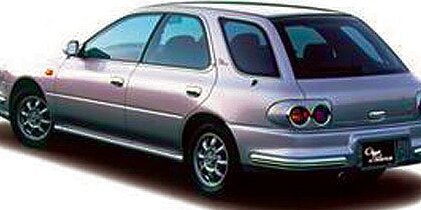
The Subaru Impreza I Station Wagon (GF) 1.6i, produced between 1998 and 2000, represented an entry-level offering within the first generation (GF/GM) Impreza range. Positioned as a practical and affordable family vehicle, it catered to buyers seeking the versatility of a station wagon combined with Subaru’s renowned all-wheel drive system – though this specific variant was front-wheel drive. This model played a significant role in expanding Subaru’s presence in the European market, offering a compelling alternative to traditional hatchbacks and estates. It was built on the Subaru C platform, shared with other compact Subaru models of the era.
Technical Specifications
| Brand | Subaru |
| Model | Impreza |
| Generation | Impreza I Station Wagon (GF) |
| Type (Engine) | 1.6i (95 Hp) |
| Start of production | 1998 |
| End of production | 2000 |
| Powertrain Architecture | Internal Combustion engine |
| Body type | Station wagon (estate) |
| Seats | 5 |
| Doors | 5 |
| Fuel Type | Petrol (Gasoline) |
| Acceleration 0 – 100 km/h | 12.3 sec |
| Acceleration 0 – 62 mph | 12.3 sec |
| Acceleration 0 – 60 mph | 11.7 sec |
| Maximum speed | 175 km/h (108.74 mph) |
| Weight-to-power ratio | 10.9 kg/Hp, 91.3 Hp/tonne |
| Weight-to-torque ratio | 7.3 kg/Nm, 137.5 Nm/tonne |
| Power | 95 Hp @ 5600 rpm |
| Power per litre | 59.5 Hp/l |
| Torque | 143 Nm @ 3600 rpm (105.47 lb.-ft. @ 3600 rpm) |
| Engine layout | Front, Longitudinal |
| Engine Model/Code | EJ16S |
| Engine displacement | 1597 cm3 (97.45 cu. in.) |
| Number of cylinders | 4 |
| Engine configuration | Boxer |
| Cylinder Bore | 87.9 mm (3.46 in.) |
| Piston Stroke | 65.8 mm (2.59 in.) |
| Compression ratio | 10:1 |
| Number of valves per cylinder | 4 |
| Fuel injection system | Multi-port manifold injection |
| Engine aspiration | Naturally aspirated engine |
| Valvetrain | OHC |
| Engine oil capacity | 4 l (4.23 US qt | 3.52 UK qt) |
| Kerb Weight | 1040 kg (2292.81 lbs.) |
| Max. weight | 1580 kg (3483.3 lbs.) |
| Max load | 540 kg (1190.5 lbs.) |
| Trunk (boot) space – minimum | 356 l (12.57 cu. ft.) |
| Trunk (boot) space – maximum | 1275 l (45.03 cu. ft.) |
| Fuel tank capacity | 50 l (13.21 US gal | 11 UK gal) |
| Length | 4350 mm (171.26 in.) |
| Width | 1690 mm (66.54 in.) |
| Height | 1420 mm (55.91 in.) |
| Wheelbase | 2520 mm (99.21 in.) |
| Front track | 1460 mm (57.48 in.) |
| Rear (Back) track | 1450 mm (57.09 in.) |
| Drivetrain Architecture | The Internal combustion engine (ICE) drives the front wheels of the vehicle. |
| Drive wheel | Front wheel drive |
| Number of gears and type of gearbox | 5 gears, manual transmission |
| Front suspension | Wishbone |
| Rear suspension | Several levers and rods |
| Front brakes | Ventilated discs |
| Rear brakes | Disc |
| Assisting systems | ABS (Anti-lock braking system) |
| Steering type | Steering rack and pinion |
| Power steering | Hydraulic Steering |
| Tires size | 175/70 R14 |
| Wheel rims size | 14 |
INTRODUCTION
The Subaru Impreza I Station Wagon (GF) 1.6i, launched in 1998, was a key component of Subaru’s strategy to broaden the appeal of the Impreza range. It offered a more practical body style than the hatchback, targeting families and individuals needing increased cargo capacity. Unlike many of its siblings, this variant was front-wheel drive, a deliberate choice to lower the price point and appeal to a wider audience less concerned with all-weather performance. The ‘GF’ designation refers to the chassis code for the first-generation Impreza wagon. This model competed with other compact estates like the Ford Focus Estate and Vauxhall/Opel Astra Estate.
Powertrain & Engine Architecture
At the heart of the 1.6i was the EJ16S engine, a 1.6-liter (1597cc) naturally aspirated, horizontally-opposed (boxer) four-cylinder petrol engine. The boxer configuration, a Subaru hallmark, contributes to a lower center of gravity, improving handling. The EJ16S featured a single overhead camshaft (OHC) valvetrain and multi-point fuel injection. This engine produced 95 horsepower at 5600 rpm and 143 Nm (105.47 lb-ft) of torque at 3600 rpm. The engine’s relatively simple design prioritized reliability and affordability over outright performance. The 1.6i was exclusively offered with a 5-speed manual transmission, designed to maximize fuel efficiency and provide adequate performance for everyday driving. The transmission was a conventional setup with synchromesh gears and a cable-operated shift linkage.
Driving Characteristics
The 1.6i’s driving experience was characterized by its smooth, if uninspiring, performance. Acceleration from 0-60 mph took around 11.7 seconds, and top speed was approximately 108.74 mph. The engine felt somewhat strained at higher speeds, and overtaking required careful planning. The manual transmission offered precise shifts, but the gear ratios were geared towards economy rather than spirited driving. Compared to the more powerful 1.8L and 2.0L Impreza variants, the 1.6i felt noticeably slower. However, its lighter weight and front-wheel drive configuration contributed to decent fuel economy and predictable handling. The steering was light and responsive, making it easy to maneuver in urban environments.
Equipment & Trim Levels
The 1.6i typically came with a modest level of standard equipment. Interior features generally included cloth upholstery, a basic stereo system, power steering, and central locking. Air conditioning was often an optional extra. Safety features included driver and passenger airbags and ABS (Anti-lock Braking System). Trim levels were relatively limited, with most 1.6i models offering a similar specification. Optional extras could include alloy wheels, electric windows, and a sunroof. The interior design was functional and durable, prioritizing practicality over luxury.
Chassis & Braking
The Impreza I Station Wagon utilized a MacPherson strut front suspension and a multi-link rear suspension. This setup provided a comfortable ride and reasonable handling characteristics. The front brakes were ventilated discs, while the rear brakes were solid discs. The ABS system helped to maintain control during emergency braking. The front-wheel drive configuration meant that the 1.6i did not benefit from the advanced all-wheel drive system found on many other Impreza models. The suspension was tuned for comfort, resulting in a slightly softer ride compared to the sportier Impreza variants.
Market Reception & Comparison
The 1.6i was generally well-received as an affordable and practical family car. Critics praised its fuel efficiency and comfortable ride, but noted its lack of performance compared to higher-spec Impreza models. Compared to the 1.8L and 2.0L variants, the 1.6i offered a lower purchase price but sacrificed performance and refinement. The 1.8L offered a noticeable power increase, while the 2.0L provided even more performance and often included additional features. Fuel economy was a strong point for the 1.6i, making it an attractive option for budget-conscious buyers. Reliability was generally good, although regular maintenance was essential to ensure the longevity of the engine and transmission.
Legacy
The Subaru Impreza I Station Wagon 1.6i has become a relatively affordable classic in the used car market. While not as sought-after as the turbocharged WRX models, it remains a popular choice for those seeking a reliable and practical estate car. The EJ16S engine is known for its durability, but regular maintenance is crucial to prevent issues such as oil leaks and timing belt failure. Parts availability is generally good, although some components may be becoming increasingly difficult to find. Today, these Imprezas are appreciated for their simplicity, affordability, and the enduring reputation of the Subaru brand.