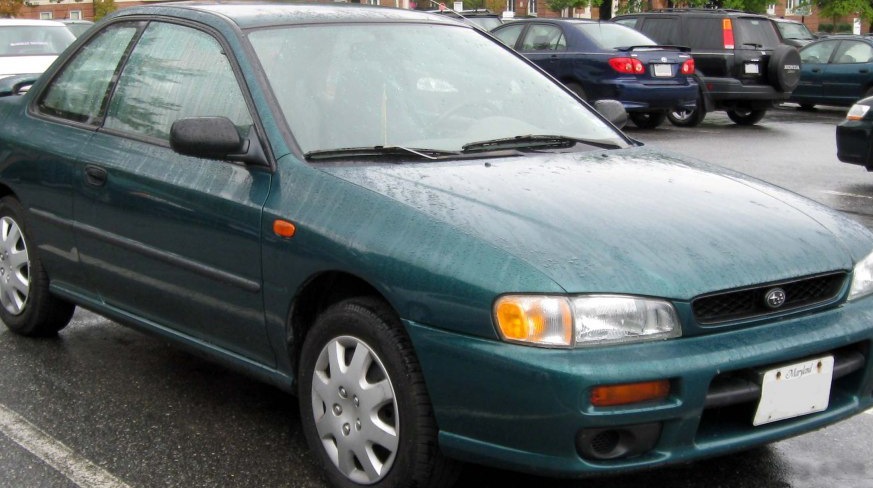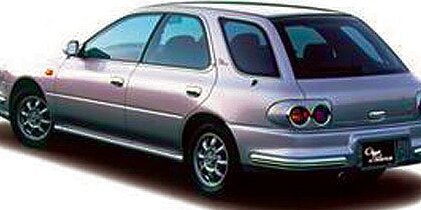
The Subaru Impreza I Station Wagon (GF) 1.8i, produced from 1992 to 2000, represented Subaru’s entry into the compact estate car market. Part of the first-generation Impreza (GF/GM/GE) lineup, this variant offered a practical, all-wheel-drive option for families and individuals seeking a versatile vehicle. Positioned as the base engine and drivetrain option, the 1.8i aimed for affordability and fuel efficiency within the Impreza range, appealing to buyers who didn’t require the performance of the more potent turbocharged models. It was primarily sold in European and Japanese markets, where the demand for compact wagons with all-weather capability was strong.
Technical Specifications
| Brand | Subaru |
| Model | Impreza |
| Generation | Impreza I Station Wagon (GF) |
| Type | 1.8i (103 Hp) 4WD |
| Start of production | 1992 |
| End of production | 2000 |
| Powertrain Architecture | Internal Combustion engine |
| Body type | Station wagon (estate) |
| Seats | 5 |
| Doors | 5 |
| Fuel consumption (combined) | 8.8 l/100 km (26.7 US mpg, 32.1 UK mpg, 11.4 km/l) |
| Fuel Type | Petrol (Gasoline) |
| Acceleration 0 – 100 km/h | 11.8 sec |
| Acceleration 0 – 62 mph | 11.8 sec |
| Acceleration 0 – 60 mph | 11.2 sec |
| Maximum speed | 174 km/h (108.12 mph) |
| Weight-to-power ratio | 11.3 kg/Hp, 88.4 Hp/tonne |
| Weight-to-torque ratio | 7.9 kg/Nm, 126.2 Nm/tonne |
| Power | 103 Hp @ 5600 rpm |
| Power per litre | 56.6 Hp/l |
| Torque | 147 Nm @ 4400 rpm (108.42 lb.-ft. @ 4400 rpm) |
| Engine layout | Front, Longitudinal |
| Engine Model/Code | EJ18S |
| Engine displacement | 1820 cm3 (111.06 cu. in.) |
| Number of cylinders | 4 |
| Engine configuration | Boxer |
| Cylinder Bore | 87.9 mm (3.46 in.) |
| Piston Stroke | 75 mm (2.95 in.) |
| Compression ratio | 9.5:1 |
| Number of valves per cylinder | 4 |
| Fuel injection system | Multi-port manifold injection |
| Engine aspiration | Naturally aspirated engine |
| Valvetrain | OHC |
| Engine oil capacity | 4 l (4.23 US qt | 3.52 UK qt) |
| Kerb Weight | 1165 kg (2568.39 lbs.) |
| Trunk (boot) space – minimum | 356 l (12.57 cu. ft.) |
| Trunk (boot) space – maximum | 1275 l (45.03 cu. ft.) |
| Fuel tank capacity | 50 l (13.21 US gal | 11 UK gal) |
| Length | 4350 mm (171.26 in.) |
| Width | 1690 mm (66.54 in.) |
| Height | 1420 mm (55.91 in.) |
| Wheelbase | 2520 mm (99.21 in.) |
| Front track | 1460 mm (57.48 in.) |
| Rear (Back) track | 1450 mm (57.09 in.) |
| Drive wheel | All wheel drive (4×4) |
| Number of gears and type of gearbox | 5 gears, manual transmission |
| Front suspension | Wishbone |
| Rear suspension | Several levers and rods |
| Front brakes | Ventilated discs |
| Rear brakes | Disc |
| Assisting systems | ABS (Anti-lock braking system) |
| Steering type | Steering rack and pinion |
| Power steering | Hydraulic Steering |
| Tires size | 175/70 R14 |
| Wheel rims size | 14 |
Powertrain & Engine Architecture
The heart of the Impreza 1.8i was the EJ18S engine, a 1.8-liter (1820 cc) naturally aspirated, horizontally-opposed (boxer) four-cylinder. This engine design, a Subaru hallmark, offered a lower center of gravity, contributing to improved handling. The EJ18S featured a single overhead camshaft (OHC) valvetrain with four valves per cylinder. Fuel delivery was managed by a multi-port fuel injection system. The engine produced 103 horsepower at 5600 rpm and 147 Nm (108.42 lb-ft) of torque at 4400 rpm. The engine’s relatively modest output was paired with a five-speed manual transmission, delivering power to all four wheels via Subaru’s symmetrical all-wheel-drive system. The all-wheel drive system utilized a viscous coupling center differential, providing automatic torque distribution between the front and rear axles.
Driving Characteristics
The 1.8i offered a comfortable, if not particularly exhilarating, driving experience. Acceleration from 0 to 60 mph took around 11.2 seconds, and top speed was approximately 108 mph. The engine felt somewhat strained at higher speeds, and overtaking required careful planning. The manual transmission featured relatively long gear ratios, prioritizing fuel economy over outright performance. However, the all-wheel-drive system provided excellent traction in various weather conditions, making it a sure-footed and predictable vehicle. Compared to the more powerful 2.0-liter and turbocharged Impreza variants, the 1.8i was noticeably slower, but it offered a smoother and more refined ride.
Equipment & Trim Levels
The 1.8i typically came with a fairly basic level of equipment. Standard features generally included power steering, central locking, electric windows, and an AM/FM radio. Interior upholstery was typically cloth, and the dashboard featured a simple, functional design. Optional extras could include air conditioning, a sunroof, and upgraded audio systems. Trim levels varied slightly depending on the market, but the 1.8i generally represented the entry point into the Impreza range. It was aimed at buyers who prioritized practicality and affordability over luxury features.
Chassis & Braking
The Impreza 1.8i utilized a MacPherson strut front suspension and a multi-link rear suspension. The suspension setup provided a comfortable ride, although it wasn’t particularly sporty. Braking duties were handled by ventilated discs at the front and solid discs at the rear. Anti-lock braking system (ABS) was standard, enhancing safety. The car’s relatively light weight (1165 kg / 2568.39 lbs) helped to compensate for the engine’s modest power output, contributing to reasonable braking performance.
Market Reception & Comparison
The Impreza 1.8i was generally well-received as a practical and reliable family car. Critics praised its all-wheel-drive system and spacious interior, but noted its lack of outright performance. Compared to other compact estates of the time, such as the Ford Escort Estate or the Vauxhall Astra Estate, the Impreza 1.8i offered a unique combination of all-wheel-drive capability and Japanese build quality. Fuel economy was reasonable for its class, averaging around 26.7 US mpg. The 1.8i was often seen as a sensible choice for buyers who needed a versatile vehicle for everyday use, but didn’t require the performance of the more expensive Impreza Turbo models.
Legacy
The EJ18S engine, while not known for its high performance, proved to be a durable and reliable unit. Impreza 1.8i models are now considered collectible by some enthusiasts, particularly those who appreciate the simplicity and practicality of the first-generation Impreza. On the used car market, these vehicles are generally affordable and relatively easy to maintain, although finding parts can sometimes be a challenge. The all-wheel-drive system remains a key selling point, making them popular in regions with harsh winter weather. The Impreza 1.8i represents a significant chapter in Subaru’s history, demonstrating the company’s commitment to building practical, reliable, and capable vehicles.