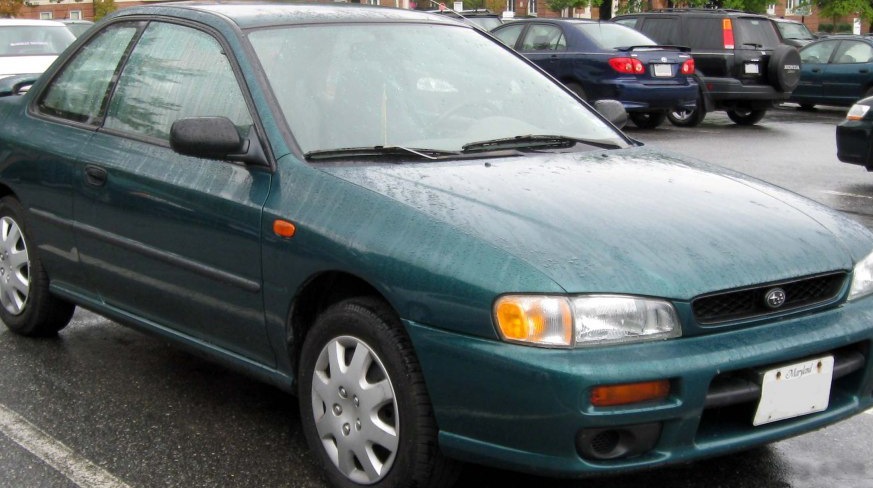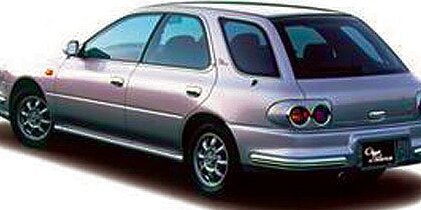
The Subaru Impreza I Station Wagon (GF) 2.0i Turbo, produced between 1994 and 2000, represents a significant offering from Subaru during a period of increasing popularity for all-wheel-drive vehicles. This variant, equipped with the EJ20T engine producing 211 horsepower, was positioned as a performance-oriented option within the first-generation Impreza wagon lineup. It catered to buyers seeking a practical family vehicle with enhanced driving capabilities, particularly in regions with challenging weather conditions. The GF chassis Impreza wagon was primarily sold in markets like Europe, Japan, and Australia, offering a blend of utility and Subaru’s renowned symmetrical all-wheel-drive system.
Technical Specifications
| Brand | Subaru |
| Model | Impreza |
| Generation | Impreza I Station Wagon (GF) |
| Type | 2.0i Turbo (211 Hp) 4WD |
| Start of production | 1994 |
| End of production | 2000 |
| Powertrain Architecture | Internal Combustion engine |
| Body type | Station wagon (estate) |
| Seats | 5 |
| Doors | 5 |
| Fuel consumption (urban) | 13.8 l/100 km (17 US mpg, 20.5 UK mpg) |
| Fuel consumption (extra urban) | 8.1 l/100 km (29 US mpg, 34.9 UK mpg) |
| Fuel Type | Petrol (Gasoline) |
| Acceleration 0 – 100 km/h | 6.5 sec |
| Acceleration 0 – 62 mph | 6.5 sec |
| Acceleration 0 – 60 mph | 6.2 sec |
| Maximum speed | 228 km/h (141.67 mph) |
| Weight-to-power ratio | 5.7 kg/Hp |
| Weight-to-torque ratio | 4.1 kg/Nm |
| Power | 211 Hp @ 5600 rpm |
| Torque | 290 Nm @ 4000 rpm (213.89 lb.-ft. @ 4000 rpm) |
| Engine layout | Front, Longitudinal |
| Engine Model/Code | EJ20 T |
| Engine displacement | 1994 cm3 (121.68 cu. in.) |
| Number of cylinders | 4 |
| Engine configuration | Boxer |
| Cylinder Bore | 92 mm (3.62 in.) |
| Piston Stroke | 75 mm (2.95 in.) |
| Compression ratio | 8:1 |
| Number of valves per cylinder | 4 |
| Fuel injection system | Multi-port manifold injection |
| Engine aspiration | Turbocharger |
| Valvetrain | SOHC |
| Engine oil capacity | 4.5 l (4.76 US qt | 3.96 UK qt) |
| Kerb Weight | 1200 kg (2645.55 lbs.) |
| Max. weight | 1800 kg (3968.32 lbs.) |
| Max load | 600 kg (1322.77 lbs.) |
| Trunk (boot) space – minimum | 365 l (12.89 cu. ft.) |
| Trunk (boot) space – maximum | 1280 l (45.2 cu. ft.) |
| Fuel tank capacity | 50 l (13.21 US gal | 11 UK gal) |
| Length | 4350 mm (171.26 in.) |
| Width | 1690 mm (66.54 in.) |
| Height | 1450 mm (57.09 in.) |
| Wheelbase | 2520 mm (99.21 in.) |
| Front track | 1465 mm (57.68 in.) |
| Rear track | 1455 mm (57.28 in.) |
| Drive wheel | All wheel drive (4×4) |
| Number of gears | 5 |
| Gearbox type | Manual transmission |
| Front suspension | Wishbone |
| Rear suspension | Several levers and rods |
| Front brakes | Ventilated discs |
| Rear brakes | Disc |
| Assisting systems | ABS (Anti-lock braking system) |
| Steering type | Steering rack and pinion |
| Power steering | Hydraulic |
| Tires size | 205/55 R15 |
| Wheel rims size | 15 |
Powertrain & Engine Architecture
The heart of the Impreza I Station Wagon 2.0i Turbo is the EJ20T engine, a 2.0-liter (1994cc) horizontally-opposed (boxer) four-cylinder gasoline engine. This engine utilizes a single turbocharger with an intercooler to boost power output to 211 horsepower at 5600 rpm and 290 Nm (213.89 lb-ft) of torque at 4000 rpm. The EJ20T features a single overhead camshaft (SOHC) valvetrain and multi-port fuel injection. The boxer engine configuration, a Subaru hallmark, provides a low center of gravity, contributing to improved handling and stability. The engine’s longitudinal mounting, combined with Subaru’s symmetrical all-wheel-drive system, further enhances traction and balance. The 5-speed manual transmission was the standard offering, providing direct control over the engine’s power.
Driving Characteristics
The 2.0i Turbo variant offered a noticeably more spirited driving experience compared to naturally aspirated Impreza wagons. The turbocharger provides a surge of power in the mid-range, making overtaking and highway merging considerably easier. While not as raw or focused as the later WRX models, the 211 hp version delivered respectable acceleration – 0 to 60 mph in approximately 6.2 seconds. The all-wheel-drive system provides excellent grip in various conditions, enhancing cornering stability and confidence. The manual transmission allows for precise gear selection, maximizing the engine’s performance. However, turbo lag was present, requiring drivers to adjust their driving style to maintain optimal power delivery.
Equipment & Trim Levels
The Impreza I Station Wagon 2.0i Turbo typically came equipped with a reasonable level of standard features for its time. These included power windows, power steering, central locking, and an AM/FM radio. Interior upholstery was generally cloth, with options for upgraded materials available. Depending on the market, features like air conditioning, alloy wheels, and a sunroof were often available as optional extras. The dashboard layout was functional and straightforward, prioritizing usability over luxury. The wagon body style provided ample cargo space, making it a practical choice for families and those needing to transport larger items.
Chassis & Braking
The Impreza I Station Wagon utilized a MacPherson strut front suspension and a multi-link rear suspension, providing a comfortable yet controlled ride. The chassis was reinforced to handle the increased power output of the turbocharged engine. Braking duties were handled by ventilated discs at the front and solid discs at the rear. Anti-lock braking system (ABS) was standard, enhancing safety and control during emergency braking situations. The steering system employed a rack-and-pinion setup with hydraulic power assistance, providing precise and responsive steering feel.
Market Reception & Comparison
The Impreza I Station Wagon 2.0i Turbo was generally well-received by automotive critics, who praised its performance, handling, and practicality. It offered a compelling alternative to traditional hatchbacks and sedans, providing the benefits of all-wheel drive and a spacious interior. Compared to the base Impreza models, the 2.0i Turbo offered a significant performance upgrade. However, it was less focused on outright performance than the later WRX variants. Fuel economy was reasonable for a turbocharged vehicle of its era, but not exceptional. Reliability was generally good, although the turbocharger and associated components required regular maintenance.
Legacy
The Subaru Impreza I Station Wagon 2.0i Turbo holds a respected position among enthusiasts as a capable and versatile vehicle. The EJ20T engine, while requiring diligent maintenance, is known for its potential for modification and tuning. Today, well-maintained examples are sought after by collectors and Subaru enthusiasts. The combination of all-wheel drive, a turbocharged engine, and a practical wagon body style makes it a unique and desirable vehicle in the used car market. Its influence can be seen in subsequent generations of Impreza wagons and the continued popularity of Subaru’s all-wheel-drive technology.