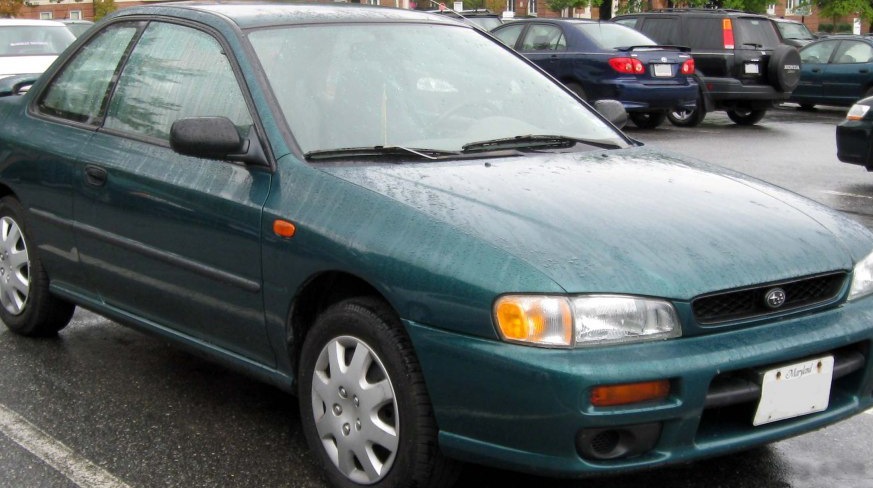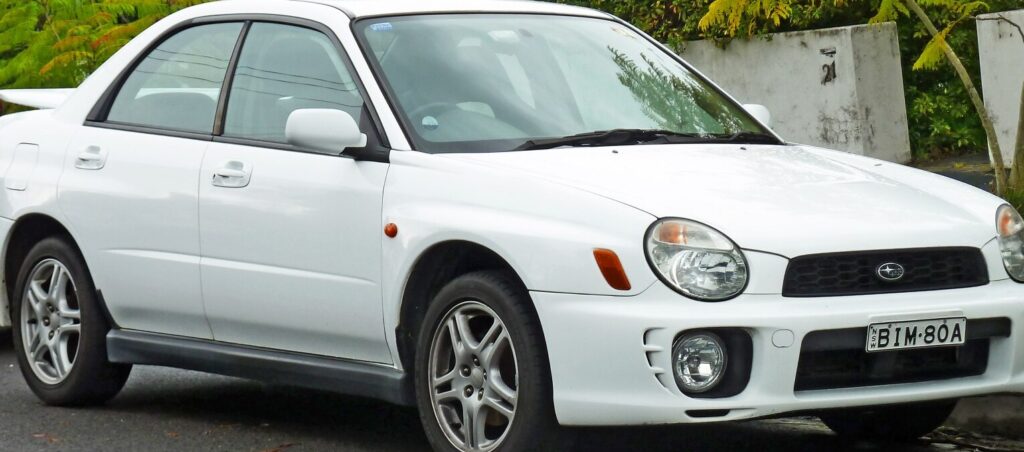
The Subaru Impreza II 1.6i, produced between 2000 and 2002, represented the entry point into the second generation of Subaru’s popular compact car. Part of the GD chassis series (internally designated GG for the sedan), this variant offered a blend of Subaru’s signature all-wheel drive capability with an economical 1.6-liter engine. Positioned as the most affordable Impreza model, it catered to buyers prioritizing practicality and all-weather safety over outright performance. It served as a crucial volume seller in markets where Subaru was establishing its presence, particularly as an alternative to front-wheel drive competitors.
Technical Specifications
| Brand | Subaru |
| Model | Impreza |
| Generation | Impreza II |
| Type (Engine) | 1.6i (95 Hp) 4WD |
| Start of production | 2000 year |
| End of production | 2002 year |
| Powertrain Architecture | Internal Combustion engine |
| Body type | Sedan |
| Seats | 5 |
| Doors | 4 |
| Fuel consumption (economy) – urban | 10.9 l/100 km (21.6 US mpg) |
| Fuel consumption (economy) – extra urban | 6.8 l/100 km (34.6 US mpg) |
| Fuel Type | Petrol (Gasoline) |
| Acceleration 0 – 100 km/h | 12.9 sec |
| Acceleration 0 – 62 mph | 12.9 sec |
| Acceleration 0 – 60 mph | 12.3 sec |
| Maximum speed | 171 km/h (106.25 mph) |
| Weight-to-power ratio | 11.7 kg/Hp |
| Weight-to-torque ratio | 7.8 kg/Nm |
| Power | 95 Hp @ 5600 rpm |
| Power per litre | 59.5 Hp/l |
| Torque | 143 Nm @ 3600 rpm (105.47 lb.-ft. @ 3600 rpm) |
| Engine layout | Front, Longitudinal |
| Engine Model/Code | EJ16 |
| Engine displacement | 1597 cm3 (97.45 cu. in.) |
| Number of cylinders | 4 |
| Engine configuration | Boxer |
| Cylinder Bore | 87.9 mm (3.46 in.) |
| Piston Stroke | 65.8 mm (2.59 in.) |
| Compression ratio | 10:1 |
| Number of valves per cylinder | 4 |
| Fuel injection system | Multi-port manifold injection |
| Engine aspiration | Naturally aspirated engine |
| Valvetrain | OHC |
| Engine oil capacity | 4.5 l (4.76 US qt | 3.96 UK qt) |
| Coolant | 7.4 l (7.82 US qt | 6.51 UK qt) |
| Kerb Weight | 1115 kg (2458.15 lbs.) |
| Max. weight | 1680 kg (3703.77 lbs.) |
| Max load | 565 kg (1245.61 lbs.) |
| Trunk (boot) space – minimum | 353 l (12.47 cu. ft.) |
| Fuel tank capacity | 50 l (13.21 US gal | 11 UK gal) |
| Length | 4350 mm (171.26 in.) |
| Width | 1690 mm (66.54 in.) |
| Height | 1415 mm (55.71 in.) |
| Wheelbase | 2520 mm (99.21 in.) |
| Front track | 1460 mm (57.48 in.) |
| Rear (Back) track | 1455 mm (57.28 in.) |
| Drive wheel | All wheel drive (4×4) |
| Number of gears and type of gearbox | 5 gears, manual transmission |
| Front suspension | Wishbone |
| Rear suspension | Spring Strut |
| Front brakes | Ventilated discs |
| Rear brakes | Drum |
| Assisting systems | ABS (Anti-lock braking system) |
| Steering type | Steering rack and pinion |
| Power steering | Hydraulic Steering |
| Tires size | 175/70 R14 |
| Wheel rims size | 14 |
Powertrain & Engine Architecture
The heart of the Impreza 1.6i was the EJ16 engine, a 1.6-liter (1597 cc) naturally aspirated, horizontally-opposed (boxer) four-cylinder. This engine design, a Subaru hallmark, offered inherent balance and a lower center of gravity, contributing to the car’s handling characteristics. The EJ16 featured a single overhead camshaft (SOHC) valvetrain with four valves per cylinder and multi-point fuel injection. While not a powerhouse, the EJ16 was known for its reliability and relatively smooth operation. The 95 horsepower output at 5600 rpm and 143 Nm (105 lb-ft) of torque at 3600 rpm were adequate for everyday driving, but didn’t provide particularly brisk acceleration. The engine was paired with a five-speed manual transmission, which was the standard offering. The transmission was designed to maximize fuel efficiency and provide smooth shifts, though it wasn’t geared for sporty performance.
Driving Characteristics
The Impreza 1.6i 4WD offered a composed and predictable driving experience. The all-wheel drive system provided excellent traction in various weather conditions, making it a safe and confident vehicle to drive year-round. However, the 95 hp engine and the relatively long gearing of the five-speed manual meant that acceleration was modest. Overtaking maneuvers required planning, and the engine needed to be revved to extract its full potential. Compared to the more powerful 2.0-liter Impreza variants (like the WRX), the 1.6i felt significantly slower. The suspension, tuned for comfort, provided a reasonably smooth ride, but didn’t offer the same level of handling precision as the sportier Impreza models. The steering was light and accurate, making it easy to maneuver in urban environments.
Equipment & Trim Levels
The 1.6i trim level was the base model in the Impreza II range. Standard equipment typically included power steering, central locking, electric windows, and an AM/FM radio. Air conditioning was often an optional extra. Interior upholstery was typically cloth, and the dashboard featured a simple, functional design. Higher trim levels, such as the 1.8R and WRX, offered more luxurious features like alloy wheels, upgraded audio systems, and leather upholstery. The 1.6i was deliberately positioned as a value-oriented option, focusing on essential features rather than luxury appointments.
Chassis & Braking
The Impreza II utilized a MacPherson strut front suspension and a double-wishbone rear suspension. This setup provided a good balance between ride comfort and handling. The 1.6i models typically featured ventilated disc brakes at the front and drum brakes at the rear. While adequate for the car’s performance level, the rear drum brakes were a cost-saving measure compared to the disc brakes found on higher-spec Impreza models. Anti-lock braking system (ABS) was standard, enhancing safety by preventing wheel lockup during hard braking. The chassis was designed to be rigid and durable, providing a solid foundation for the all-wheel drive system.
Market Reception & Comparison
The Impreza 1.6i 4WD was generally well-received as a practical and affordable all-wheel drive car. Critics praised its safety, reliability, and fuel efficiency. However, the engine’s lack of power was a common criticism. Compared to other compact cars in its class, the Impreza 1.6i offered a unique combination of all-wheel drive capability and a reasonable price point. It was often compared to front-wheel drive competitors like the Honda Civic and Toyota Corolla, offering a distinct advantage in terms of all-weather traction. Fuel economy was respectable for its time, averaging around 35 mpg on the highway.
Legacy
The EJ16 engine, while not as celebrated as Subaru’s turbocharged engines, proved to be a durable and reliable powerplant. Impreza 1.6i models from the early 2000s are still found on the used car market today, often with relatively high mileage. The all-wheel drive system remains a key selling point, and these cars are often sought after by buyers looking for a safe and dependable vehicle for commuting or driving in inclement weather. Maintenance costs are generally reasonable, and parts availability is good. While not a performance icon, the Impreza 1.6i 4WD played an important role in establishing Subaru’s reputation for building capable and reliable all-wheel drive vehicles.