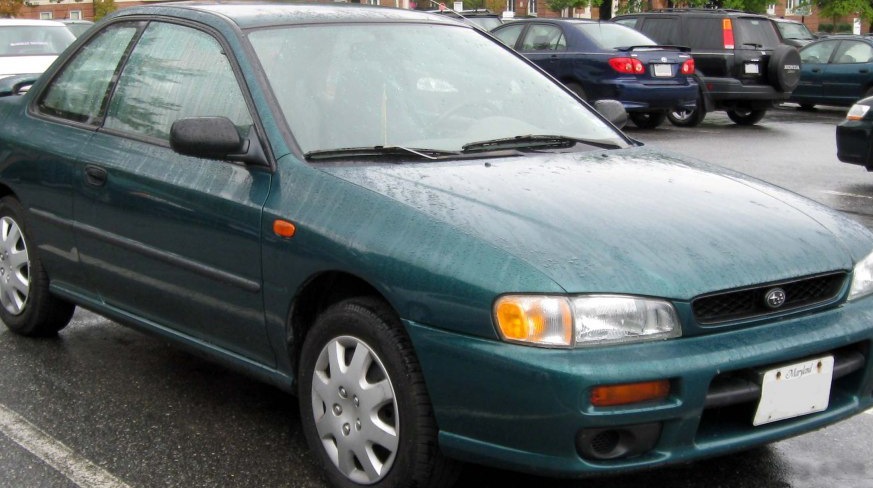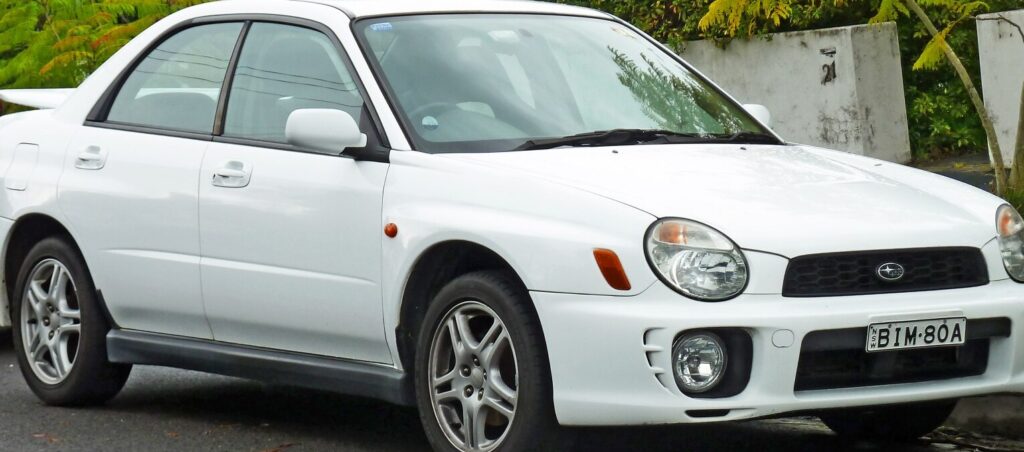
The Subaru Impreza II 2.0i 16V, produced between 2000 and 2002, represented a significant evolution of Subaru’s popular compact car. Positioned as a mid-range offering within the second-generation Impreza (GJ/GE chassis), this variant combined a 2.0-liter naturally aspirated boxer engine with a five-speed manual transmission and Subaru’s renowned symmetrical all-wheel drive system. It aimed to provide a balance of performance, practicality, and affordability for buyers seeking a capable and reliable vehicle. The Impreza II was a crucial model for Subaru in numerous international markets, including North America, Europe, and Australia, solidifying the brand’s reputation for durable, all-weather vehicles.
Technical Specifications
| Brand | Subaru |
| Model | Impreza |
| Generation | Impreza II |
| Type (Engine) | 2.0i 16V (155 Hp) 4WD |
| Start of production | 2000 year |
| End of production | 2002 year |
| Powertrain Architecture | Internal Combustion engine |
| Body type | Sedan |
| Seats | 5 |
| Doors | 4 |
| Fuel consumption (urban) | 13.5 l/100 km (17.4 US mpg, 20.9 UK mpg, 7.4 km/l) |
| Fuel consumption (extra urban) | 7.4 l/100 km (31.8 US mpg, 38.2 UK mpg, 13.5 km/l) |
| Fuel consumption (combined) | 9.6 l/100 km (24.5 US mpg, 29.4 UK mpg, 10.4 km/l) |
| Fuel Type | Petrol (Gasoline) |
| Acceleration 0 – 100 km/h | 10.2 sec |
| Acceleration 0 – 62 mph | 10.2 sec |
| Acceleration 0 – 60 mph | 9.7 sec |
| Maximum speed | 185 km/h (114.95 mph) |
| Weight-to-power ratio | 8.9 kg/Hp, 112.7 Hp/tonne |
| Weight-to-torque ratio | 7 kg/Nm, 142.5 Nm/tonne |
| Power | 155 Hp @ 6400 rpm |
| Power per litre | 77.7 Hp/l |
| Torque | 196 Nm @ 3200 rpm (144.56 lb.-ft. @ 3200 rpm) |
| Engine layout | Front, Longitudinal |
| Engine Model/Code | EJ20 |
| Engine displacement | 1994 cm3 (121.68 cu. in.) |
| Number of cylinders | 4 |
| Engine configuration | Boxer |
| Cylinder Bore | 92 mm (3.62 in.) |
| Piston Stroke | 75 mm (2.95 in.) |
| Compression ratio | 10.8:1 |
| Number of valves per cylinder | 4 |
| Fuel injection system | Multi-port manifold injection |
| Engine aspiration | Naturally aspirated engine |
| Valvetrain | OHC |
| Engine oil capacity | 4 l (4.23 US qt | 3.52 UK qt) |
| Coolant capacity | 6 l (6.34 US qt | 5.28 UK qt) |
| Kerb Weight | 1375 kg (3031.36 lbs.) |
| Max. weight | 1800 kg (3968.32 lbs.) |
| Max load | 425 kg (936.96 lbs.) |
| Trunk (boot) space – minimum | 401 l (14.16 cu. ft.) |
| Fuel tank capacity | 50 l (13.21 US gal | 11 UK gal) |
| Length | 4405 mm (173.43 in.) |
| Width | 1730 mm (68.11 in.) |
| Height | 1440 mm (56.69 in.) |
| Wheelbase | 2525 mm (99.41 in.) |
| Front track | 1485 mm (58.46 in.) |
| Rear (Back) track | 1475 mm (58.07 in.) |
| Drive wheel | All wheel drive (4×4) |
| Number of gears and type of gearbox | 5 gears, manual transmission |
| Front suspension | Wishbone |
| Rear suspension | Spring Strut |
| Front brakes | Ventilated discs |
| Rear brakes | Disc |
| Assisting systems | ABS (Anti-lock braking system) |
| Steering type | Steering rack and pinion |
| Power steering | Hydraulic Steering |
| Tires size | 195/60 R15 H |
| Wheel rims size | 15 |
Powertrain & Engine Architecture
The heart of the Impreza II 2.0i 16V is the EJ20 engine, a 1994cc naturally aspirated 16-valve boxer-four. Subaru’s boxer engine design, with its horizontally opposed pistons, provides a low center of gravity, contributing to the car’s balanced handling. The EJ20 featured multi-point fuel injection and a single overhead camshaft (SOHC) valvetrain. This configuration prioritized reliability and smooth power delivery over outright peak horsepower. The engine produced 155 horsepower at 6,400 rpm and 196 Nm (144.56 lb-ft) of torque at 3,200 rpm. The five-speed manual transmission was well-matched to the engine’s characteristics, offering precise shifts and allowing the driver to effectively utilize the available power. The transmission’s gear ratios were tuned for a balance of acceleration and fuel efficiency.
Driving Characteristics
The 2.0i 16V offered a competent and engaging driving experience. While not as overtly sporty as the turbocharged WRX models, it provided ample power for everyday driving and comfortable highway cruising. Acceleration from 0-60 mph took approximately 9.7 seconds, and the car could reach a top speed of 114.95 mph. The symmetrical all-wheel drive system provided excellent traction in various weather conditions, making it a particularly appealing choice in regions with inclement weather. Compared to the higher-output turbocharged Impreza variants, the 2.0i 16V felt less urgent in its acceleration, but its smoother power delivery and lower maintenance requirements made it a more practical choice for many buyers. The manual transmission allowed for a more connected driving experience than the optional four-speed automatic.
Equipment & Trim Levels
The Impreza II 2.0i 16V typically came standard with features such as air conditioning, power windows and locks, and an AM/FM stereo. Higher trim levels offered options like alloy wheels, a sunroof, and upgraded interior upholstery. Interior materials were generally durable and functional, reflecting the car’s focus on practicality. The dashboard layout was straightforward and easy to use, with clearly labeled controls. Safety features included dual front airbags and ABS brakes.
Chassis & Braking
The Impreza II utilized a MacPherson strut front suspension and a double-wishbone rear suspension, providing a comfortable ride and predictable handling. The chassis was relatively lightweight, contributing to the car’s agility. Braking duties were handled by ventilated discs at the front and solid discs at the rear. The ABS system helped to maintain control during hard braking situations. The steering was precise and responsive, thanks to the rack-and-pinion system with hydraulic power assistance.
Market Reception & Comparison
The Impreza II 2.0i 16V was generally well-received by automotive critics. It was praised for its reliability, all-weather capability, and comfortable ride. However, some reviewers noted that its performance was not as exciting as that of the turbocharged models. Compared to other compact cars of the era, the Impreza offered a unique combination of features, including standard all-wheel drive and a durable powertrain. Fuel economy was respectable, averaging around 24.5 US mpg in combined driving. The 2.0i 16V represented a good value proposition for buyers seeking a practical and reliable compact car.
Legacy
The EJ20 engine, in its various iterations, proved to be remarkably durable and reliable. The Impreza II 2.0i 16V continues to be a popular choice among used car buyers, particularly those seeking a dependable and affordable all-wheel drive vehicle. While maintenance costs can increase with age, the engine is generally considered to be relatively easy to work on. The Impreza II’s reputation for reliability and its capable all-wheel drive system have cemented its place as a classic among Subaru enthusiasts. Today, well-maintained examples of the 2.0i 16V can still provide years of reliable service.