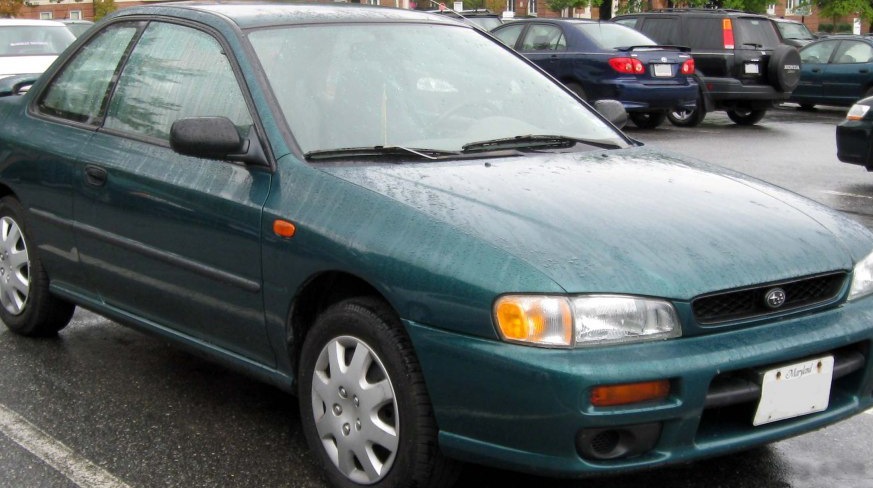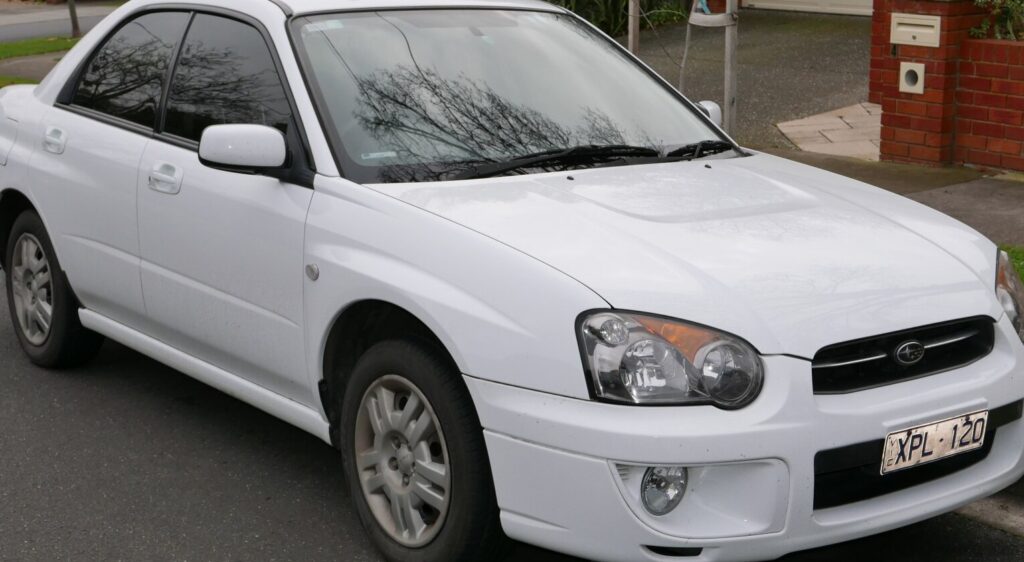
The Subaru Impreza II, specifically the facelifted version introduced in 2002, represented a significant evolution of Subaru’s popular compact car. Produced between 2002 and 2005, this generation aimed to refine the Impreza’s blend of practicality, reliability, and all-wheel-drive capability. The 2.0-liter (125 hp) AWD Automatic variant occupied a middle ground within the Impreza lineup, offering a balance between affordability, ease of use, and Subaru’s signature symmetrical all-wheel drive system. It was positioned as a comfortable and capable daily driver, appealing to buyers who prioritized convenience over outright performance.
Technical Specifications
| Brand | Subaru |
| Model | Impreza |
| Generation | Impreza II (facelift 2002) |
| Type (Engine) | 2.0 (125 Hp) AWD Automatic |
| Start of production | 2002 |
| End of production | 2005 |
| Powertrain Architecture | Internal Combustion engine |
| Body type | Sedan |
| Seats | 5 |
| Doors | 4 |
| Fuel consumption (economy) – urban (NEDC) | 12.3 l/100 km (19.1 US mpg, 23 UK mpg, 8.1 km/l) |
| Fuel consumption (economy) – extra urban (NEDC) | 6.5 l/100 km (36.2 US mpg, 43.5 UK mpg, 15.4 km/l) |
| Fuel consumption (economy) – combined (NEDC) | 8.6 l/100 km (27.4 US mpg, 32.8 UK mpg, 11.6 km/l) |
| CO2 emissions (NEDC) | 206 g/km |
| Fuel Type | Petrol (Gasoline) |
| Acceleration 0 – 100 km/h | 12.7 sec |
| Acceleration 0 – 62 mph | 12.7 sec |
| Acceleration 0 – 60 mph | 12.1 sec |
| Maximum speed | 183 km/h (113.71 mph) |
| Emission standard | Euro 3 |
| Weight-to-power ratio | 10.8 kg/Hp, 92.6 Hp/tonne |
| Weight-to-torque ratio | 7.3 kg/Nm, 136.3 Nm/tonne |
| Power | 125 Hp @ 5600 rpm |
| Power per litre | 62.7 Hp/l |
| Torque | 184 Nm @ 3600 rpm (135.71 lb.-ft. @ 3600 rpm) |
| Engine layout | Front, Longitudinal |
| Engine Model/Code | EJ201 |
| Engine displacement | 1994 cm3 (121.68 cu. in.) |
| Number of cylinders | 4 |
| Engine configuration | Boxer |
| Cylinder Bore | 92 mm (3.62 in.) |
| Piston Stroke | 75 mm (2.95 in.) |
| Compression ratio | 10:1 |
| Number of valves per cylinder | 4 |
| Fuel injection system | Multi-port manifold injection |
| Engine aspiration | Naturally aspirated engine |
| Valvetrain | SOHC |
| Engine oil capacity | 4.5 l (4.76 US qt, 3.96 UK qt) |
| Coolant | 7 l (7.4 US qt, 6.16 UK qt) |
| Kerb Weight | 1350 kg (2976.24 lbs.) |
| Max. weight | 1760 kg (3880.14 lbs.) |
| Max load | 410 kg (903.9 lbs.) |
| Trunk (boot) space – minimum | 401 l (14.16 cu. ft.) |
| Fuel tank capacity | 50 l (13.21 US gal, 11 UK gal) |
| Max. roof load | 80 kg (176.37 lbs.) |
| Permitted trailer load with brakes (12%) | 1200 kg (2645.55 lbs.) |
| Permitted trailer load without brakes | 500 kg (1102.31 lbs.) |
| Length | 4415 mm (173.82 in.) |
| Width | 1740 mm (68.5 in.) |
| Height | 1440 mm (56.69 in.) |
| Wheelbase | 2525 mm (99.41 in.) |
| Front track | 1485 mm (58.46 in.) |
| Rear (Back) track | 1475 mm (58.07 in.) |
| Ride height (ground clearance) | 150 mm (5.91 in.) |
| Drivetrain Architecture | The Internal combustion engine (ICE) drives permanently the four wheels of the vehicle. |
| Drive wheel | All wheel drive (4×4) |
| Number of gears and type of gearbox | 4 gears, automatic transmission |
| Front suspension | Spring Strut, Transverse stabilizer |
| Rear suspension | Spring Strut, Transverse stabilizer |
| Front brakes | Ventilated discs |
| Rear brakes | Disc |
| Assisting systems | ABS (Anti-lock braking system) |
| Steering type | Steering rack and pinion |
| Power steering | Hydraulic Steering |
| Tires size | 195/60 R15 |
| Wheel rims size | 6J x 15 |
Powertrain & Engine Architecture
At the heart of the 2002-2005 Subaru Impreza 2.0 Automatic lay the EJ201 engine, a 1994cc horizontally-opposed (boxer) four-cylinder. This engine was a hallmark of Subaru, known for its smooth operation and inherent balance. The EJ201 featured a single overhead camshaft (SOHC) design and multi-point fuel injection. The 125 horsepower output at 5600 rpm and 184 Nm (135.71 lb-ft) of torque at 3600 rpm were respectable for its time, but not particularly high. The engine’s longitudinal mounting, coupled with Subaru’s symmetrical all-wheel-drive system, contributed to the car’s balanced handling. The automatic transmission was a conventional four-speed unit, chosen for its ease of use and suitability for everyday driving. While not offering the sporty engagement of a manual gearbox, it provided smooth shifts and reduced driver fatigue.
Driving Characteristics
The Impreza 2.0 Automatic delivered a comfortable and predictable driving experience. Acceleration was adequate for most situations, with a 0-60 mph time of around 12.1 seconds. However, it wasn’t a particularly quick car, especially when compared to the turbocharged WRX models. The automatic transmission, while smooth, did detract from the engine’s responsiveness. The gear ratios were tuned for fuel efficiency and relaxed cruising rather than spirited performance. The all-wheel-drive system provided excellent traction in various weather conditions, making it a secure and confident vehicle to drive year-round. Compared to the five-speed manual version, the automatic felt noticeably slower and less engaging, but it offered a more relaxed driving experience, particularly in city traffic.
Equipment & Trim Levels
The 2.0-liter Automatic Impreza typically came with a reasonable level of standard equipment. This included air conditioning, power windows and locks, and an AM/FM stereo. Interior upholstery was typically cloth, with a relatively simple and functional dashboard layout. Optional extras could include a sunroof, upgraded audio system, and alloy wheels. The trim level was generally considered a mid-range offering, bridging the gap between the base models and the more performance-oriented WRX variants.
Chassis & Braking
The Impreza II utilized a MacPherson strut suspension setup at both the front and rear, incorporating a transverse stabilizer bar to reduce body roll. The front brakes were ventilated discs, providing good stopping power, while the rear brakes were solid discs. The steering was rack-and-pinion with hydraulic power assistance, offering a reasonably direct and responsive feel. The chassis was designed to provide a comfortable ride while maintaining good handling characteristics, a balance that Subaru consistently aimed for.
Market Reception & Comparison
The 2002-2005 Subaru Impreza 2.0 Automatic was generally well-received by automotive critics as a practical and reliable all-wheel-drive sedan. However, its performance was often criticized as being underwhelming, particularly when compared to the more powerful WRX models. Fuel economy was average for its class, with combined figures around 27.4 US mpg. Compared to other compact sedans of the time, the Impreza’s all-wheel-drive system was a significant advantage, especially in regions with inclement weather. The automatic transmission, while convenient, was often seen as a compromise in terms of performance and driver engagement.
Legacy
The EJ201 engine, in its various iterations, proved to be a durable and reliable powerplant. While not without its potential maintenance needs (such as head gasket issues common to some Subaru engines), it generally offered good longevity with proper care. Today, the 2002-2005 Impreza 2.0 Automatic can be found on the used car market at relatively affordable prices. It remains a viable option for buyers seeking a dependable and capable all-wheel-drive sedan, particularly those who prioritize practicality and reliability over outright performance. Its enduring appeal lies in its combination of Subaru’s renowned engineering and its suitability for a wide range of driving conditions.