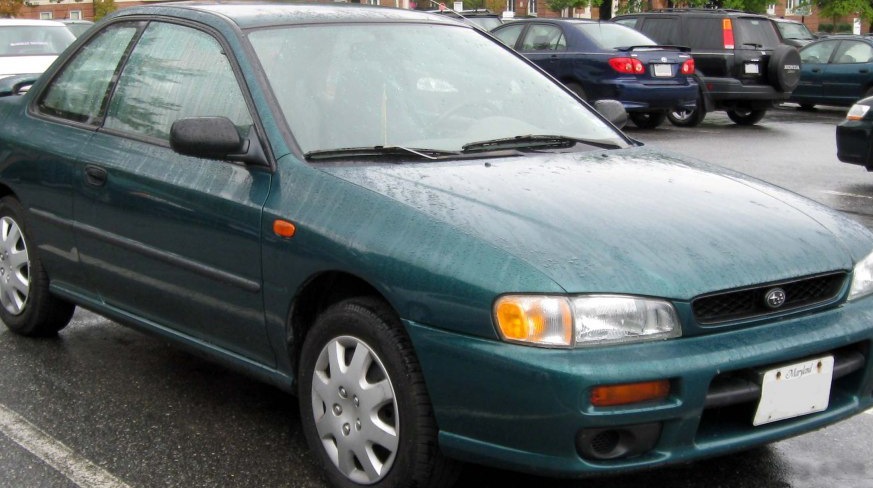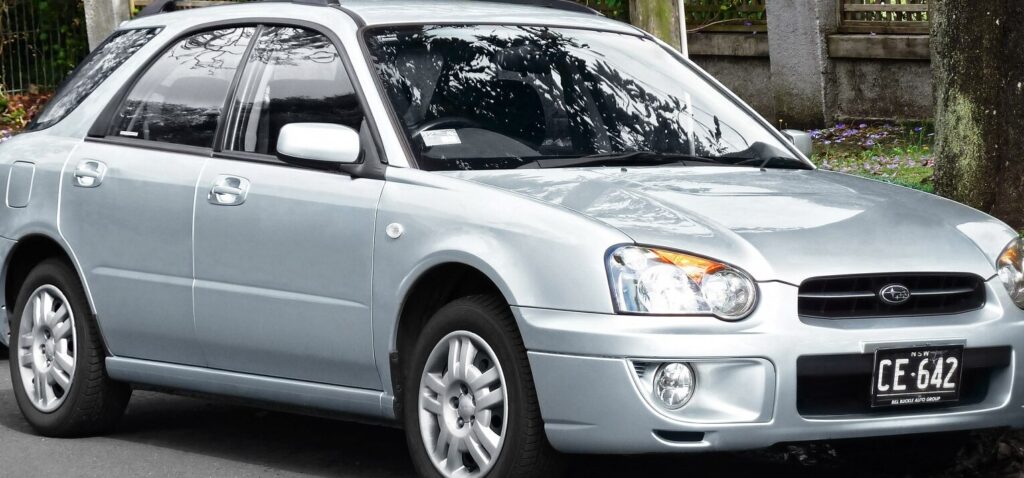
The Subaru Impreza II Station Wagon, specifically the facelifted version produced from 2002 to 2005, represented Subaru’s entry into the competitive compact estate car segment. This variant, equipped with the 2.0-liter naturally aspirated boxer engine producing 125 horsepower and paired with a five-speed manual transmission, offered a blend of practicality, all-wheel-drive capability, and Subaru’s signature reliability. Positioned as a mid-range offering within the Impreza lineup, it catered to buyers seeking a versatile vehicle for family use and light-duty cargo hauling, particularly in regions where inclement weather demanded all-wheel drive. This model was primarily sold in Europe, Australia, and select Asian markets, with limited availability in North America where the Impreza was largely offered as a sedan or hatchback.
Technical Specifications
| Brand | Subaru |
| Model | Impreza |
| Generation | Impreza II Station Wagon (facelift 2002) |
| Type (Engine) | 2.0 (125 Hp) AWD |
| Start of production | 2002 |
| End of production | 2005 |
| Powertrain Architecture | Internal Combustion engine |
| Body type | Station wagon (estate) |
| Seats | 5 |
| Doors | 5 |
| Fuel consumption (urban) | 12.4 l/100 km (19 US mpg, 22.8 UK mpg) |
| Fuel consumption (extra urban) | 6.8 l/100 km (34.6 US mpg, 41.5 UK mpg) |
| Fuel consumption (combined) | 8.9 l/100 km (26.4 US mpg, 31.7 UK mpg) |
| CO2 emissions | 212 g/km |
| Fuel Type | Petrol (Gasoline) |
| Acceleration 0 – 100 km/h | 10.2 sec |
| Acceleration 0 – 62 mph | 10.2 sec |
| Acceleration 0 – 60 mph | 9.7 sec |
| Maximum speed | 188 km/h (116.82 mph) |
| Emission standard | Euro 3 |
| Weight-to-power ratio | 11 kg/Hp |
| Weight-to-torque ratio | 7.5 kg/Nm |
| Power | 125 Hp @ 5600 rpm |
| Torque | 184 Nm @ 3600 rpm (135.71 lb.-ft. @ 3600 rpm) |
| Engine layout | Front, Longitudinal |
| Engine Model/Code | EJ201 |
| Engine displacement | 1994 cm3 (121.68 cu. in.) |
| Number of cylinders | 4 |
| Engine configuration | Boxer |
| Cylinder Bore | 92 mm (3.62 in.) |
| Piston Stroke | 75 mm (2.95 in.) |
| Compression ratio | 10:1 |
| Number of valves per cylinder | 4 |
| Fuel injection system | Multi-port manifold injection |
| Engine aspiration | Naturally aspirated |
| Valvetrain | SOHC |
| Engine oil capacity | 4.5 l (4.76 US qt | 3.96 UK qt) |
| Coolant capacity | 7 l (7.4 US qt | 6.16 UK qt) |
| Kerb Weight | 1375 kg (3031.36 lbs.) |
| Max. weight | 1800 kg (3968.32 lbs.) |
| Max load | 425 kg (936.96 lbs.) |
| Trunk (boot) space – minimum | 356 l (12.57 cu. ft.) |
| Trunk (boot) space – maximum | 1266 l (44.71 cu. ft.) |
| Fuel tank capacity | 50 l (13.21 US gal | 11 UK gal) |
| Max. roof load | 80 kg (176.37 lbs.) |
| Permitted trailer load (braked) | 1600 kg (3527.4 lbs.) |
| Permitted trailer load (unbraked) | 500 kg (1102.31 lbs.) |
| Length | 4415 mm (173.82 in.) |
| Width | 1695 mm (66.73 in.) |
| Height | 1465 mm (57.68 in.) |
| Wheelbase | 2525 mm (99.41 in.) |
| Front track | 1465 mm (57.68 in.) |
| Rear track | 1455 mm (57.28 in.) |
| Ride height | 150 mm (5.91 in.) |
| Drivetrain | All wheel drive (4×4) |
| Number of gears | 5 |
| Gearbox type | Manual transmission |
| Front suspension | Spring Strut, Transverse stabilizer |
| Rear suspension | Spring Strut, Transverse stabilizer |
| Front brakes | Ventilated discs |
| Rear brakes | Disc |
| Assisting systems | ABS (Anti-lock braking system) |
| Steering type | Steering rack and pinion |
| Power steering | Hydraulic |
| Tires size | 195/60 R15 |
| Wheel rims size | 6J x 15 |
Powertrain & Engine Architecture
The heart of this Impreza variant is the EJ201 2.0-liter horizontally-opposed (boxer) four-cylinder engine. This engine, a hallmark of Subaru, is known for its compact design and inherent balance, contributing to smooth operation. The EJ201 utilizes a single overhead camshaft (SOHC) design, operating four valves per cylinder. Fuel delivery is managed by a multi-point fuel injection system, providing adequate, though not exceptional, performance. The engine’s 125 horsepower and 184 Nm (135.71 lb-ft) of torque are respectable for its displacement, but it’s important to note that this is a naturally aspirated engine, lacking the forced induction found in higher-performance Impreza models like the WRX. The five-speed manual transmission provides a direct connection to the drivetrain, offering drivers control over gear selection. The transmission’s gear ratios are tuned for a balance of fuel efficiency and usable power, though it doesn’t offer the close ratios found in sportier applications.
Driving Characteristics
The 2.0-liter Impreza Station Wagon with a manual transmission delivers a competent, if not thrilling, driving experience. Acceleration from 0-60 mph takes around 9.7 seconds, making it adequate for everyday driving but not particularly quick. The engine feels relatively relaxed at highway speeds, but requires downshifting for brisk overtaking maneuvers. The all-wheel-drive system provides excellent traction in various conditions, making it a sure-footed vehicle in rain, snow, or on gravel roads. Compared to the turbocharged WRX models, this variant lacks the immediate punch and responsiveness, but it offers a more linear power delivery and a more forgiving driving experience. The manual transmission is light and precise, enhancing driver engagement.
Equipment & Trim Levels
The 2.0-liter Impreza Station Wagon typically came equipped with a reasonable level of standard features. These generally included power windows and locks, central locking, air conditioning, and an AM/FM radio. Interior upholstery was typically cloth, with a functional, if somewhat basic, dashboard layout. Optional extras could include alloy wheels, a sunroof, and upgraded audio systems. Trim levels varied by market, but this engine/transmission combination generally represented a mid-range offering, bridging the gap between the base models and the more performance-oriented WRX variants.
Chassis & Braking
The Impreza II Station Wagon utilizes a MacPherson strut suspension setup at both the front and rear, incorporating a transverse stabilizer bar to reduce body roll. The suspension is tuned for comfort and stability, providing a reasonably compliant ride. Braking duties are handled by ventilated discs at the front and solid discs at the rear. Anti-lock braking system (ABS) is standard, enhancing safety. The chassis is robust and well-engineered, contributing to the car’s overall durability.
Market Reception & Comparison
The 2.0-liter Impreza Station Wagon was generally well-received by automotive critics as a practical and reliable family vehicle. It was praised for its all-wheel-drive capability, spacious interior, and fuel efficiency (around 26.4 US mpg combined). However, it was often criticized for its relatively modest performance compared to its turbocharged siblings. Compared to other compact estates of the time, such as the Ford Focus Estate or Volkswagen Golf Estate, the Impreza offered the unique advantage of standard all-wheel drive, making it a compelling choice for buyers in regions with challenging weather conditions.
Legacy
The EJ201 engine, while not the most powerful in the Impreza lineup, is known for its durability and relatively straightforward maintenance. These engines, when properly maintained, can accumulate high mileage. Today, the 2002-2005 Impreza Station Wagon 2.0L is a relatively affordable used car, appealing to buyers seeking a practical and reliable vehicle with all-wheel-drive capability. Parts availability is generally good, and the car’s simple mechanical design makes it relatively easy to repair. While not a collector’s item like the WRX models, it remains a popular choice for those seeking a dependable and versatile estate car.