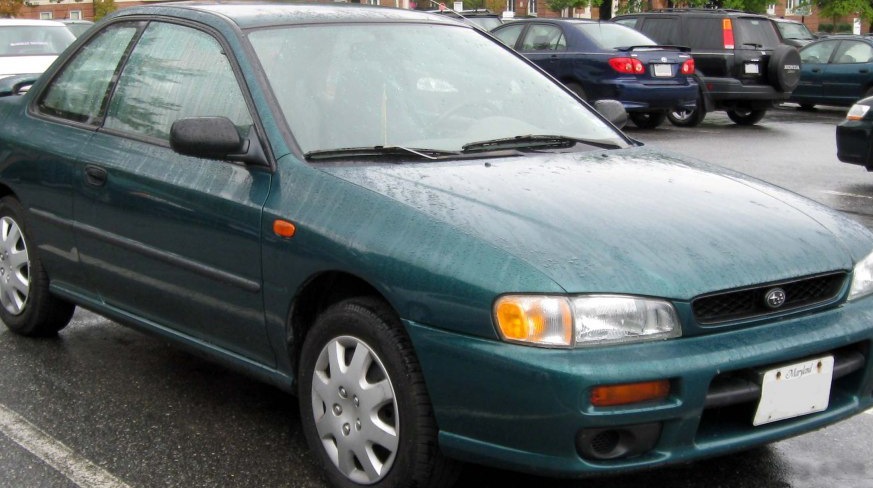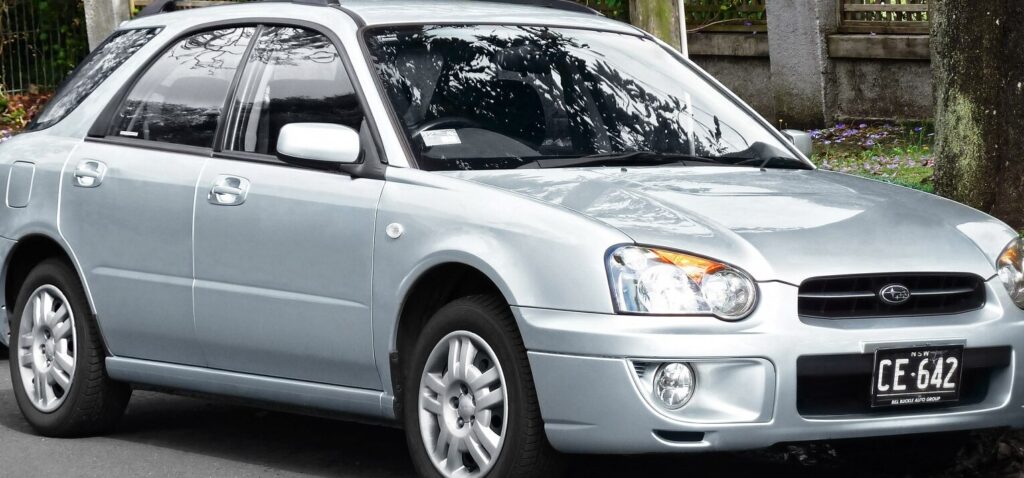
The Subaru Impreza II Station Wagon, specifically the WRX 2.0 variant produced from 2002 to 2005, represents a significant iteration of Subaru’s rally-bred compact. This facelifted model, part of the “blobeye” generation (chassis code GD), offered a compelling blend of practicality, performance, and all-weather capability. Positioned as the performance flagship of the Impreza wagon lineup, the WRX 2.0 catered to enthusiasts seeking a versatile vehicle capable of both daily driving and spirited performance. It built upon the foundation of the Impreza’s renowned symmetrical all-wheel-drive system and boxer engine layout, offering a more potent alternative to the naturally aspirated models.
Technical Specifications
| Brand | Subaru |
| Model | Impreza |
| Generation | Impreza II Station Wagon (facelift 2002) |
| Type (Engine) | WRX 2.0 (225 Hp) AWD |
| Start of production | 2002 |
| End of production | 2005 |
| Powertrain Architecture | Internal Combustion engine |
| Body type | Station wagon (estate) |
| Seats | 5 |
| Doors | 5 |
| Fuel consumption (urban) | 12.7 l/100 km (18.5 US mpg, 22.2 UK mpg, 7.9 km/l) |
| Fuel consumption (extra urban) | 7.1 l/100 km (33.1 US mpg, 39.8 UK mpg, 14.1 km/l) |
| Fuel consumption (combined) | 9.2 l/100 km (25.6 US mpg, 30.7 UK mpg, 10.9 km/l) |
| CO2 emissions | 219 g/km |
| Fuel Type | Petrol (Gasoline) |
| Acceleration 0 – 100 km/h | 6.1 sec |
| Acceleration 0 – 62 mph | 6.1 sec |
| Acceleration 0 – 60 mph | 5.8 sec |
| Maximum speed | 230 km/h (142.92 mph) |
| Emission standard | Euro 3 |
| Weight-to-power ratio | 6.4 kg/Hp, 157.3 Hp/tonne |
| Weight-to-torque ratio | 4.8 kg/Nm, 209.8 Nm/tonne |
| Power | 225 Hp @ 5600 rpm |
| Power per litre | 112.8 Hp/l |
| Torque | 300 Nm @ 4000 rpm (221.27 lb.-ft. @ 4000 rpm) |
| Engine layout | Front, Longitudinal |
| Engine Model/Code | EJ205 |
| Engine displacement | 1994 cm3 (121.68 cu. in.) |
| Number of cylinders | 4 |
| Engine configuration | Boxer |
| Cylinder Bore | 92 mm (3.62 in.) |
| Piston Stroke | 75 mm (2.95 in.) |
| Compression ratio | 8:1 |
| Number of valves per cylinder | 4 |
| Fuel injection system | Multi-port manifold injection |
| Engine aspiration | Turbocharger, Intercooler |
| Valvetrain | DOHC |
| Engine oil capacity | 4.5 l (4.76 US qt | 3.96 UK qt) |
| Coolant capacity | 7.7 l (8.14 US qt | 6.78 UK qt) |
| Kerb Weight | 1430 kg (3152.61 lbs.) |
| Max. weight | 1860 kg (4100.6 lbs.) |
| Max load | 430 kg (947.99 lbs.) |
| Trunk (boot) space – minimum | 356 l (12.57 cu. ft.) |
| Trunk (boot) space – maximum | 1266 l (44.71 cu. ft.) |
| Fuel tank capacity | 60 l (15.85 US gal | 13.2 UK gal) |
| Max. roof load | 80 kg (176.37 lbs.) |
| Permitted trailer load with brakes (12%) | 1200 kg (2645.55 lbs.) |
| Permitted trailer load without brakes | 500 kg (1102.31 lbs.) |
| Length | 4415 mm (173.82 in.) |
| Width | 1695 mm (66.73 in.) |
| Height | 1465 mm (57.68 in.) |
| Wheelbase | 2525 mm (99.41 in.) |
| Front track | 1465 mm (57.68 in.) |
| Rear track | 1455 mm (57.28 in.) |
| Ride height (ground clearance) | 155 mm (6.1 in.) |
| Drivetrain | All wheel drive (4×4) |
| Number of gears | 5 |
| Gearbox type | Manual transmission |
| Front suspension | Spring Strut, Transverse stabilizer |
| Rear suspension | Spring Strut, Transverse stabilizer |
| Front brakes | Ventilated discs |
| Rear brakes | Ventilated discs |
| Assisting systems | ABS (Anti-lock braking system) |
| Steering type | Steering rack and pinion |
| Power steering | Hydraulic Steering |
| Tires size | 215/45 R17 |
| Wheel rims size | 7J x 17 |
Powertrain & Engine Architecture
The heart of the 2002-2005 Impreza WRX Wagon was the EJ205 2.0-liter turbocharged boxer-four engine. This engine, a hallmark of Subaru’s performance models, featured a closed-deck block for increased strength, a single scroll turbocharger, and intercooling to manage intake temperatures. The EJ205 utilized multi-point fuel injection and a dual overhead camshaft (DOHC) valvetrain. The engine’s flat-four configuration contributed to a low center of gravity, enhancing handling characteristics. The five-speed manual transmission was the only transmission option available for this variant, providing direct control over the engine’s power. The transmission was designed to handle the increased torque output of the turbocharged engine and deliver power efficiently to all four wheels.
Driving Characteristics
The Impreza WRX 2.0 Wagon offered a distinctly engaging driving experience. The 225 horsepower and 300 Nm (221 lb-ft) of torque provided brisk acceleration, with 0-60 mph times consistently in the high 5-second range. The symmetrical all-wheel-drive system delivered exceptional traction, particularly in adverse weather conditions. While not as raw or focused as some dedicated performance cars, the WRX Wagon struck a balance between usability and excitement. The turbocharger provided a noticeable surge of power in the mid-range, making overtaking maneuvers effortless. The manual transmission, while requiring more driver involvement than an automatic, offered precise gear changes and a more connected feel.
Equipment & Trim Levels
The WRX 2.0 Wagon was relatively well-equipped for its time. Standard features typically included air conditioning, power windows and locks, a CD player, and alloy wheels. Sport seats with bolstered support were also standard, providing a secure feel during spirited driving. Optional extras included a sunroof, upgraded audio system, and leather upholstery. The interior design was functional and driver-focused, with a clear instrument cluster and logically placed controls.
Chassis & Braking
The Impreza WRX Wagon featured a MacPherson strut suspension setup at both the front and rear, with a transverse stabilizer bar to reduce body roll. The chassis was reinforced compared to the standard Impreza models to handle the increased power and stresses of performance driving. Braking duties were handled by ventilated disc brakes on all four wheels, providing ample stopping power. The anti-lock braking system (ABS) was standard, enhancing safety and control during emergency braking situations.
Market Reception & Comparison
The 2002-2005 Impreza WRX Wagon was generally well-received by automotive critics. It was praised for its performance, handling, and all-weather capability. Compared to the naturally aspirated Impreza models, the WRX offered a significant performance upgrade. It also provided a more practical alternative to some of its direct competitors, such as the Mitsubishi Lancer Evolution, offering a larger cargo area and more comfortable ride. Fuel economy was a common criticism, with the turbocharged engine consuming more fuel than its naturally aspirated counterparts. However, the performance benefits were generally considered to outweigh the fuel economy penalty.
Legacy
The EJ205-powered Impreza WRX Wagon has developed a strong following among enthusiasts. The engine, while known for requiring regular maintenance (particularly oil changes), is generally considered reliable when properly cared for. The symmetrical all-wheel-drive system remains a key selling point, making these wagons highly sought after in regions with inclement weather. Today, well-maintained examples of the 2002-2005 Impreza WRX Wagon are becoming increasingly collectible, representing a unique blend of practicality, performance, and rally-inspired heritage. The car’s robust build quality and readily available parts supply contribute to its continued viability as a daily driver and enthusiast vehicle.