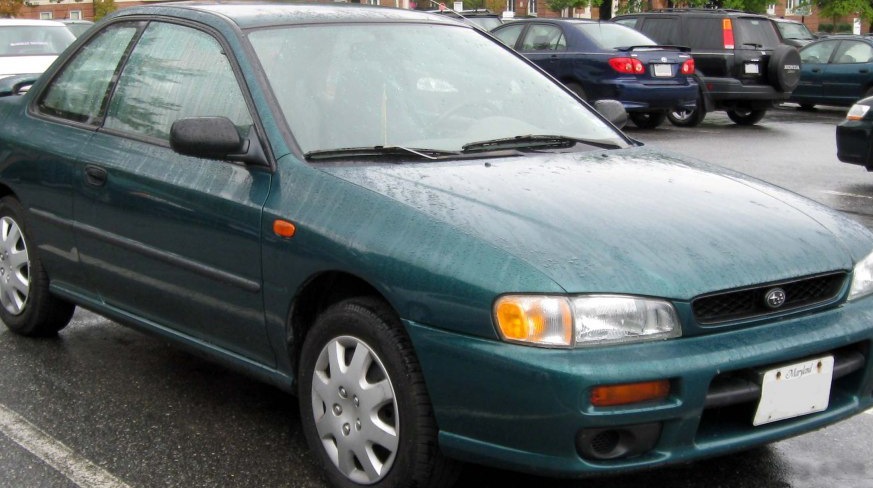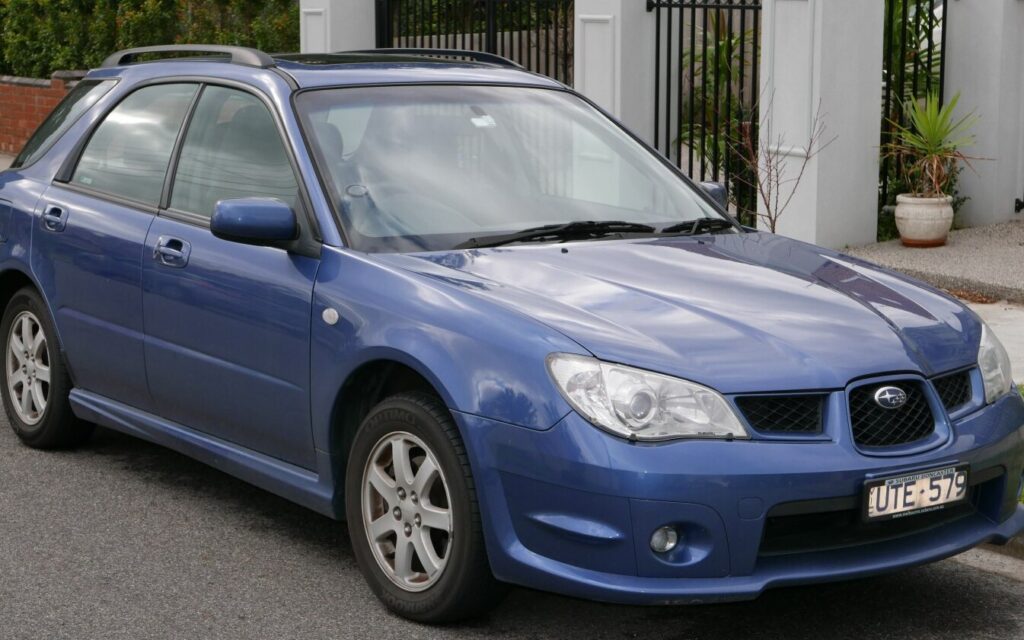
The Subaru Impreza II Station Wagon, specifically the WRX 2.5 model produced from 2005 to 2007, represents a significant iteration of Subaru’s rally-bred compact. This facelifted version of the GD-chassis Impreza (internally designated as the GE series for the wagon) built upon the success of its predecessors, offering a blend of practicality, performance, and all-weather capability. The WRX 2.5 occupied a performance-oriented niche within the Impreza lineup, positioned above the naturally aspirated models and below the even more potent STI variant. It was primarily marketed towards enthusiasts seeking a capable and engaging driving experience in a versatile package, particularly in markets where station wagons remained popular, like Europe and Australia, though it was also available in the United States.
Technical Specifications
| Brand | Subaru |
| Model | Impreza |
| Generation | Impreza II Station Wagon (facelift 2005) |
| Type (Engine) | WRX 2.5 (230 Hp) AWD |
| Start of production | 2005 |
| End of production | 2007 |
| Powertrain Architecture | Internal Combustion engine |
| Body type | Station wagon (estate) |
| Seats | 5 |
| Doors | 5 |
| Fuel consumption (economy) – urban (NEDC) | 14.4 l/100 km (19.6 UK mpg, 6.9 km/l) |
| Fuel consumption (economy) – extra urban (NEDC) | 7.9 l/100 km (29.8 US mpg, 12.7 km/l) |
| Fuel consumption (economy) – combined (NEDC) | 10.3 l/100 km (22.8 US mpg, 9.7 km/l) |
| CO2 emissions (NEDC) | 244 g/km |
| Fuel Type | Petrol (Gasoline) |
| Acceleration 0 – 100 km/h | 6.1 sec |
| Acceleration 0 – 62 mph | 6.1 sec |
| Acceleration 0 – 60 mph | 5.8 sec |
| Maximum speed | 230 km/h (142.92 mph) |
| Emission standard | Euro 4 |
| Weight-to-power ratio | 6.2 kg/Hp, 161.4 Hp/tonne |
| Weight-to-torque ratio | 4.5 kg/Nm, 224.6 Nm/tonne |
| Power | 230 Hp @ 5600 rpm |
| Torque | 320 Nm @ 3600 rpm (236.02 lb.-ft. @ 3600 rpm) |
| Engine layout | Front, Longitudinal |
| Engine Model/Code | EJ255 |
| Engine displacement | 2457 cm3 (149.94 cu. in.) |
| Number of cylinders | 4 |
| Engine configuration | Boxer |
| Cylinder Bore | 99.5 mm (3.92 in.) |
| Piston Stroke | 79 mm (3.11 in.) |
| Compression ratio | 8.4:1 |
| Number of valves per cylinder | 4 |
| Fuel injection system | Multi-port manifold injection |
| Engine aspiration | Turbocharger, Intercooler |
| Valvetrain | DOHC |
| Engine oil capacity | 4.3 l (4.54 US qt | 3.78 UK qt) |
| Coolant | 7.7 l (8.14 US qt | 6.78 UK qt) |
| Kerb Weight | 1425 kg (3141.59 lbs.) |
| Max. weight | 1860 kg (4100.6 lbs.) |
| Max load | 435 kg (959.01 lbs.) |
| Trunk (boot) space – minimum | 356 l (12.57 cu. ft.) |
| Trunk (boot) space – maximum | 1266 l (44.71 cu. ft.) |
| Fuel tank capacity | 60 l (15.85 US gal | 13.2 UK gal) |
| Max. roof load | 80 kg (176.37 lbs.) |
| Permitted trailer load with brakes (12%) | 1200 kg (2645.55 lbs.) |
| Permitted trailer load without brakes | 500 kg (1102.31 lbs.) |
| Length | 4465 mm (175.79 in.) |
| Width | 1695 mm (66.73 in.) |
| Height | 1465 mm (57.68 in.) |
| Wheelbase | 2525 mm (99.41 in.) |
| Front track | 1465 mm (57.68 in.) |
| Rear (Back) track | 1455 mm (57.28 in.) |
| Ride height (ground clearance) | 155 mm (6.1 in.) |
| Minimum turning circle (turning diameter) | 11.8 m (38.71 ft.) |
| Drivetrain Architecture | All wheel drive (4×4) |
| Number of gears and type of gearbox | 5 gears, manual transmission |
| Front suspension | Spring Strut, Transverse stabilizer |
| Rear suspension | Spring Strut, Transverse stabilizer |
| Front brakes | Ventilated discs |
| Rear brakes | Ventilated discs |
| Assisting systems | ABS (Anti-lock braking system) |
| Steering type | Steering rack and pinion |
| Power steering | Hydraulic Steering |
| Tires size | 215/45 R17 |
| Wheel rims size | 7J x 17 |
Powertrain & Engine Architecture
The heart of the 2005-2007 Impreza WRX 2.5 was the EJ255 2.5-liter horizontally-opposed (boxer) four-cylinder engine. This engine represented a significant upgrade over the 2.0-liter EJ20 engine found in earlier WRX models, offering increased displacement and torque. The EJ255 featured multi-port fuel injection and a single turbocharger with an intercooler to mitigate turbo lag and maximize power output. The engine code ‘EJ255’ signifies the 2.5-liter displacement and the fifth iteration of the EJ25 series. The engine produced 230 horsepower at 5600 rpm and 320 Nm (236 lb-ft) of torque at 3600 rpm. The engine’s longitudinal mounting and the symmetrical all-wheel-drive system contributed to balanced handling. The standard transmission was a five-speed manual, providing direct control over the engine’s power. While an automatic transmission was offered in some markets, it wasn’t as common as the manual and generally detuned the engine slightly.
Driving Characteristics
The WRX 2.5 offered a noticeable step up in performance compared to the base Impreza models. The 2.5-liter engine provided a broader torque curve, making it more tractable in everyday driving situations. While not as razor-sharp as the STI, the WRX 2.5 delivered a satisfying driving experience with responsive acceleration and confident handling. The all-wheel-drive system provided excellent grip in various weather conditions. The five-speed manual transmission offered precise shifts, allowing drivers to fully exploit the engine’s power. Compared to the STI, the WRX 2.5 felt slightly less aggressive and more forgiving, making it a more approachable performance car for a wider range of drivers. The automatic transmission, when equipped, dulled the responsiveness somewhat, with noticeable delays in shifting and a less engaging feel.
Equipment & Trim Levels
The WRX 2.5 typically came standard with features such as alloy wheels, sport seats, a leather-wrapped steering wheel, and air conditioning. Interior trim generally consisted of cloth upholstery with a sporty design. Optional extras included a sunroof, upgraded audio system, and various cosmetic enhancements. The dashboard layout was functional and driver-focused, with clear instrumentation and easy-to-reach controls. The WRX 2.5 aimed for a balance between performance and practicality, offering a comfortable and well-equipped interior without the premium price tag of the STI.
Chassis & Braking
The Impreza WRX 2.5 utilized a MacPherson strut suspension setup at both the front and rear, incorporating transverse stabilizer bars to reduce body roll. The braking system consisted of ventilated disc brakes on all four wheels, providing ample stopping power. The chassis was reinforced compared to the standard Impreza to handle the increased power and stresses of performance driving. The suspension tuning was geared towards providing a balance between comfort and handling, offering a reasonably compliant ride while maintaining good control in corners.
Market Reception & Comparison
The 2005-2007 Impreza WRX 2.5 was generally well-received by automotive critics. It was praised for its performance, handling, and all-weather capability. However, some reviewers noted that the engine, while powerful, lacked the refinement and responsiveness of the STI’s engine. Fuel economy was also a common criticism, with the 2.5-liter engine consuming a significant amount of fuel, particularly during spirited driving. Compared to the STI, the WRX 2.5 offered a more affordable entry point into the world of Subaru performance, appealing to buyers who prioritized value and practicality over ultimate performance.
Legacy
The EJ255 engine, while generally reliable, is known to be susceptible to head gasket failures, a common issue with earlier Subaru boxer engines. Regular maintenance, including oil changes and coolant flushes, is crucial to prolonging the engine’s life. Today, the 2005-2007 Impreza WRX 2.5 remains a popular choice among enthusiasts, offering a compelling combination of performance, practicality, and affordability. Well-maintained examples command reasonable prices in the used car market, and the car’s robust all-wheel-drive system and readily available aftermarket parts make it a popular platform for modification and performance upgrades. The WRX 2.5 represents a sweet spot in the Impreza lineage, offering a rewarding driving experience without the high cost and complexity of the STI.