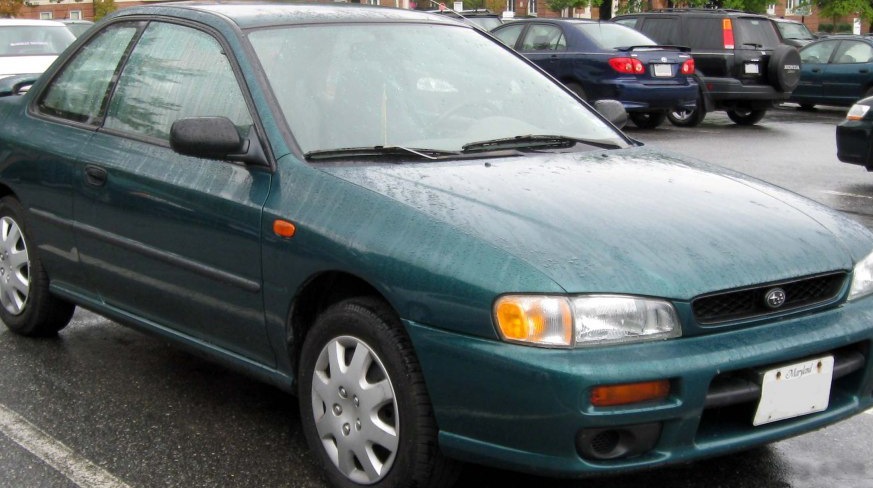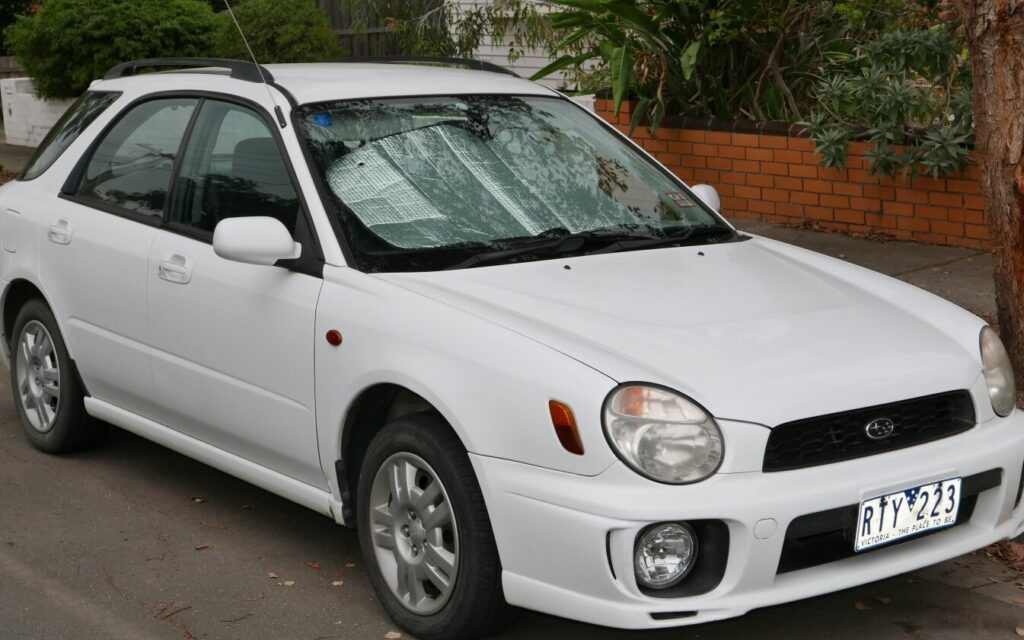
The Subaru Impreza II Station Wagon WRX 2.0 16V, produced between 2000 and 2002, represents a compelling blend of practicality and performance within the second generation (GF/GM) Impreza lineup. Positioned as a sporty variant of the versatile station wagon body style, the WRX 2.0 offered a significant step up in power and handling compared to the standard Impreza models. This vehicle was primarily aimed at the European and Japanese markets, where the demand for practical, all-wheel-drive performance cars was strong. While the Impreza was sold in the US market, the station wagon variant, and particularly the WRX trim, were less common than the sedan and hatchback versions.
Technical Specifications
| Brand | Subaru |
| Model | Impreza |
| Generation | Impreza II Station Wagon |
| Type | WRX 2.0 16V (218 Hp) 4WD |
| Start of production | 2000 |
| End of production | 2002 |
| Powertrain Architecture | Internal Combustion engine |
| Body type | Station wagon (estate) |
| Seats | 5 |
| Doors | 5 |
| Fuel consumption (urban) | 14.2 l/100 km (16.6 US mpg, 19.9 UK mpg, 7 km/l) |
| Fuel consumption (extra urban) | 7.9 l/100 km (29.8 US mpg, 35.8 UK mpg, 12.7 km/l) |
| Fuel consumption (combined) | 10.2 l/100 km (23.1 US mpg, 27.7 UK mpg, 9.8 km/l) |
| Fuel Type | Petrol (Gasoline) |
| Acceleration 0 – 100 km/h | 6.2 sec |
| Acceleration 0 – 62 mph | 6.2 sec |
| Acceleration 0 – 60 mph | 5.9 sec |
| Maximum speed | 225 km/h (139.81 mph) |
| Weight-to-power ratio | 6.9 kg/Hp, 144.9 Hp/tonne |
| Weight-to-torque ratio | 5.2 kg/Nm, 194 Nm/tonne |
| Power | 218 Hp @ 5600 rpm |
| Power per litre | 109.3 Hp/l |
| Torque | 292 Nm @ 3600 rpm (215.37 lb.-ft. @ 3600 rpm) |
| Engine layout | Front, Longitudinal |
| Engine Model/Code | EJ205 |
| Engine displacement | 1994 cm3 (121.68 cu. in.) |
| Number of cylinders | 4 |
| Engine configuration | Boxer |
| Cylinder Bore | 92 mm (3.62 in.) |
| Piston Stroke | 75 mm (2.95 in.) |
| Compression ratio | 8:1 |
| Number of valves per cylinder | 4 |
| Fuel injection system | Multi-port manifold injection |
| Engine aspiration | Turbocharger |
| Valvetrain | DOHC |
| Engine oil capacity | 4.5 l (4.76 US qt | 3.96 UK qt) |
| Coolant capacity | 7.7 l (8.14 US qt | 6.78 UK qt) |
| Kerb Weight | 1505 kg (3317.96 lbs.) |
| Max. weight | 1860 kg (4100.6 lbs.) |
| Max load | 355 kg (782.64 lbs.) |
| Trunk (boot) space – minimum | 356 l (12.57 cu. ft.) |
| Trunk (boot) space – maximum | 1266 l (44.71 cu. ft.) |
| Fuel tank capacity | 60 l (15.85 US gal | 13.2 UK gal) |
| Length | 4405 mm (173.43 in.) |
| Width | 1695 mm (66.73 in.) |
| Height | 1485 mm (58.46 in.) |
| Wheelbase | 2525 mm (99.41 in.) |
| Front track | 1465 mm (57.68 in.) |
| Rear track | 1455 mm (57.28 in.) |
| Drive wheel | All wheel drive (4×4) |
| Number of gears | 5 |
| Gearbox type | Manual transmission |
| Front suspension | Wishbone |
| Rear suspension | Spring Strut |
| Front brakes | Ventilated discs |
| Rear brakes | Disc |
| Assisting systems | ABS (Anti-lock braking system) |
| Steering type | Steering rack and pinion |
| Power steering | Hydraulic Steering |
| Tires size | 215/45 R17 W |
| Wheel rims size | 17 |
Powertrain & Engine Architecture
The heart of the Impreza WRX 2.0 was the EJ205 engine, a 1994cc horizontally-opposed (boxer) four-cylinder. This engine was a key component of Subaru’s identity, offering a low center of gravity for improved handling. The EJ205 featured a single turbocharger, multi-point fuel injection, and a dual overhead camshaft (DOHC) valvetrain. The 8:1 compression ratio was a compromise to accommodate the turbocharging system and prevent detonation. The engine produced 218 horsepower at 5600 rpm and 292 Nm (215 lb-ft) of torque at 3600 rpm. This power was delivered to all four wheels through a robust five-speed manual transmission, a staple of the WRX experience. The transmission was chosen for its durability and direct connection to the engine, enhancing the sporty driving feel.
Driving Characteristics
The Impreza WRX 2.0 Station Wagon offered a noticeably more engaging driving experience than its naturally aspirated counterparts. The turbocharger provided a surge of power in the mid-range, making overtaking and spirited driving enjoyable. While not as brutally fast as later WRX models, the 218 hp output was sufficient for brisk acceleration – 0 to 60 mph in around 5.9 seconds. The all-wheel-drive system provided excellent traction, particularly on slippery surfaces, making it a capable vehicle in all weather conditions. The suspension was tuned for a balance between comfort and handling, offering a firm but not overly harsh ride. Compared to the later, more powerful WRX STI models, the 2.0 WRX offered a more accessible and manageable power delivery, making it a good choice for drivers who wanted performance without the added complexity and cost of the STI.
Equipment & Trim Levels
The WRX 2.0 Station Wagon typically came equipped with a range of features designed to enhance both comfort and performance. Standard equipment often included power windows and locks, air conditioning, and a basic audio system. Sport seats provided additional support during spirited driving. The interior trim was generally functional and durable, reflecting the car’s performance-oriented nature. Optional extras could include alloy wheels, a sunroof, and upgraded audio systems. The station wagon body style offered a generous amount of cargo space, making it a practical choice for families or those who needed to transport larger items.
Chassis & Braking
The Impreza WRX 2.0 utilized a MacPherson strut front suspension and a double-wishbone rear suspension, providing a stable and controlled ride. Ventilated disc brakes were fitted to the front wheels, while solid discs were used at the rear. Anti-lock brakes (ABS) were standard, enhancing safety and control during emergency braking. The chassis was reinforced compared to the standard Impreza models to handle the increased power and stresses of performance driving. The all-wheel-drive system employed a viscous limited-slip center differential, distributing power between the front and rear axles as needed.
Market Reception & Comparison
The Impreza WRX 2.0 Station Wagon was generally well-received by automotive critics, who praised its performance, handling, and practicality. It was seen as a compelling alternative to more mainstream station wagons, offering a unique blend of sportiness and versatility. Fuel economy was reasonable for a turbocharged performance car, averaging around 23.1 US mpg in combined driving. Reliability was generally good, although the turbocharger and all-wheel-drive system required regular maintenance. Compared to other trims in the Impreza lineup, the WRX 2.0 represented a significant performance upgrade, but it also came with a higher price tag.
Legacy
The Subaru Impreza WRX 2.0 16V Station Wagon has become a sought-after vehicle among enthusiasts. The EJ205 engine is known for its durability and tunability, making it a popular choice for modifications. While finding well-maintained examples can be challenging, these cars offer a unique driving experience and a connection to Subaru’s rich rally heritage. The combination of all-wheel drive, a turbocharged engine, and a practical station wagon body style continues to appeal to drivers who want a versatile and engaging vehicle. Today, these Imprezas are increasingly appreciated as modern classics, representing a golden era of performance station wagons.