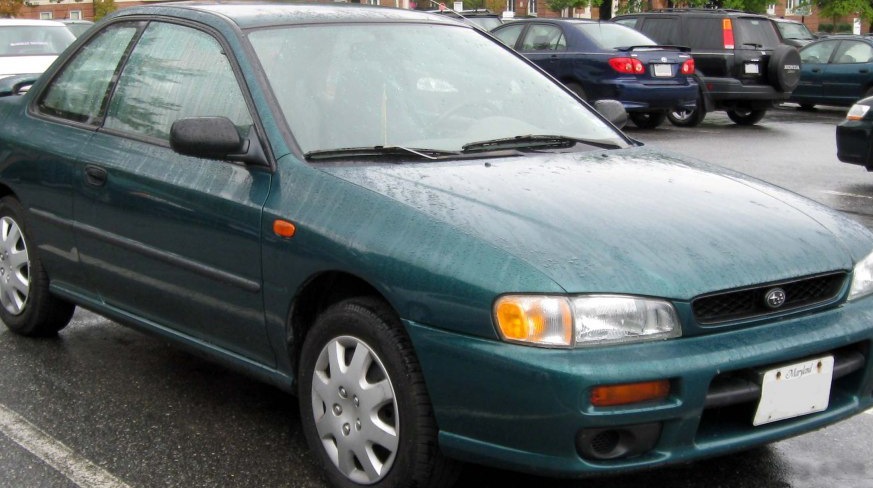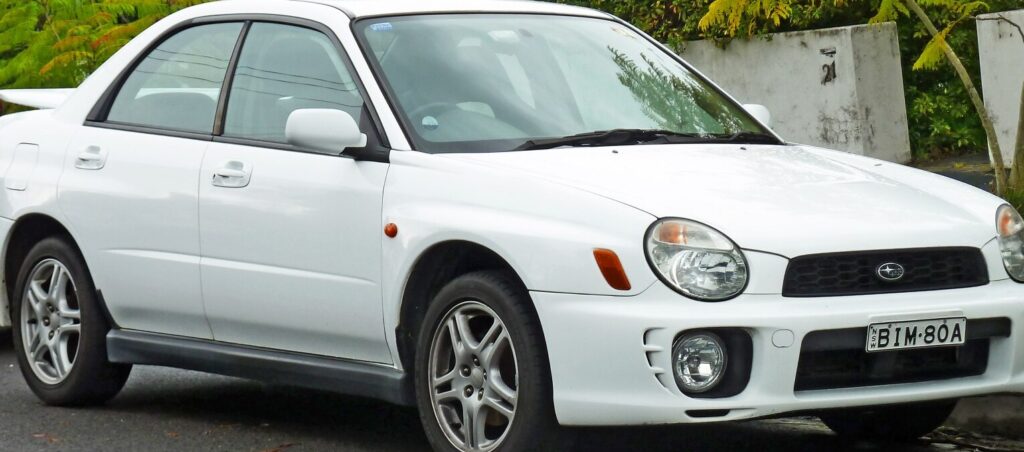
The Subaru Impreza II WRX 2.0i 16V, produced between 2000 and 2002, represented a significant evolution of Subaru’s rally-bred performance sedan. Falling within the second generation of the Impreza (GJ/GE chassis codes, though often referred to as the “blobeye” due to its distinctive headlight design), the WRX 2.0i occupied a crucial position as the entry point into the high-performance Impreza lineup in many markets. While the more potent WRX STI offered even greater performance, the 2.0i WRX provided a compelling blend of turbocharged power, all-wheel drive capability, and relative affordability. It was primarily sold in Europe, Australia, and select Asian markets, and was never officially offered in the United States during this generation.
Technical Specifications
| Brand | Subaru |
| Model | Impreza |
| Generation | Impreza II |
| Type (Engine) | WRX 2.0i 16V (218 Hp) 4WD |
| Start of production | 2000 |
| End of production | 2002 |
| Powertrain Architecture | Internal Combustion engine |
| Body type | Sedan |
| Seats | 5 |
| Doors | 4 |
| Fuel consumption (urban) | 14.2 l/100 km (16.6 US mpg / 19.9 UK mpg) |
| Fuel consumption (extra urban) | 7.9 l/100 km (29.8 US mpg / 35.8 UK mpg) |
| Fuel consumption (combined) | 10.2 l/100 km (23.1 US mpg / 27.7 UK mpg) |
| Fuel Type | Petrol (Gasoline) |
| Acceleration 0 – 100 km/h | 6.2 sec |
| Acceleration 0 – 62 mph | 6.2 sec |
| Acceleration 0 – 60 mph | 5.9 sec |
| Maximum speed | 230 km/h (142.92 mph) |
| Weight-to-power ratio | 6.7 kg/Hp |
| Weight-to-torque ratio | 5 kg/Nm |
| Power | 218 Hp @ 5600 rpm |
| Torque | 292 Nm @ 3600 rpm (215.37 lb.-ft. @ 3600 rpm) |
| Engine layout | Front, Longitudinal |
| Engine Model/Code | EJ205 |
| Engine displacement | 1994 cm3 (121.68 cu. in.) |
| Number of cylinders | 4 |
| Engine configuration | Boxer |
| Cylinder Bore | 92 mm (3.62 in.) |
| Piston Stroke | 75 mm (2.95 in.) |
| Compression ratio | 8:1 |
| Number of valves per cylinder | 4 |
| Fuel injection system | Multi-port manifold injection |
| Engine aspiration | Turbocharger |
| Valvetrain | DOHC |
| Engine oil capacity | 4.5 l (4.76 US qt | 3.96 UK qt) |
| Coolant capacity | 7.7 l (8.14 US qt | 6.78 UK qt) |
| Kerb Weight | 1470 kg (3240.8 lbs.) |
| Max. weight | 1820 kg (4012.41 lbs.) |
| Max load | 350 kg (771.62 lbs.) |
| Trunk (boot) space | 401 l (14.16 cu. ft.) |
| Fuel tank capacity | 60 l (15.85 US gal | 13.2 UK gal) |
| Length | 4405 mm (173.43 in.) |
| Width | 1730 mm (68.11 in.) |
| Height | 1440 mm (56.69 in.) |
| Wheelbase | 2525 mm (99.41 in.) |
| Front track | 1485 mm (58.46 in.) |
| Rear track | 1480 mm (58.27 in.) |
| Drive wheel | All wheel drive (4×4) |
| Number of gears | 5 |
| Gearbox type | Manual transmission |
| Front suspension | Wishbone |
| Rear suspension | Spring Strut |
| Front brakes | Ventilated discs |
| Rear brakes | Disc |
| Assisting systems | ABS (Anti-lock braking system) |
| Steering type | Steering rack and pinion |
| Power steering | Hydraulic Steering |
| Tires size | 215/45 R17 W |
| Wheel rims size | 17 |
Powertrain & Engine Architecture
The heart of the Impreza II WRX 2.0i was the EJ205 engine, a 1994cc horizontally-opposed (boxer) four-cylinder. This engine was a derivative of the EJ20 series, specifically tuned for the WRX model. The EJ205 featured a single turbocharger, intercooling, and multi-point fuel injection. The 8:1 compression ratio was a compromise to accommodate the turbocharging system and prevent detonation. The DOHC (Dual Overhead Camshaft) valvetrain, with four valves per cylinder, contributed to the engine’s relatively high specific output. The engine was longitudinally mounted, driving all four wheels through a five-speed manual transmission. This transmission was known for its robust construction and relatively short gearing, optimized for performance.
Driving Characteristics
The 218 horsepower and 292 Nm (215 lb-ft) of torque delivered by the EJ205 provided brisk acceleration. The 0-60 mph sprint was typically achieved in around 5.9 seconds, making it a genuinely quick car for its time. However, the power delivery wasn’t as peaky as some later turbocharged engines. The turbocharger provided a noticeable boost in mid-range power, making it flexible and usable in everyday driving situations. Compared to the higher-output WRX STI, the 2.0i WRX felt less aggressive and more approachable. The manual transmission’s gear ratios were well-matched to the engine’s powerband, allowing for spirited driving on both winding roads and open highways. The all-wheel drive system provided excellent traction, particularly in adverse weather conditions.
Equipment & Trim Levels
The WRX 2.0i typically came equipped with a range of features designed to enhance both performance and comfort. Standard equipment often included alloy wheels, a rear spoiler, sport seats, and air conditioning. Interior trim was generally functional and focused on providing a driver-centric experience. Optional extras could include a sunroof, upgraded audio systems, and leather upholstery. The trim level was generally considered a step up from the base Impreza models, offering a more sporty and well-equipped package.
Chassis & Braking
The Impreza II WRX 2.0i utilized a MacPherson strut front suspension and a double-wishbone rear suspension. This setup provided a good balance between handling and ride comfort. The chassis was reinforced compared to the standard Impreza to handle the increased power and stresses of performance driving. Braking duties were handled by ventilated disc brakes at the front and solid disc brakes at the rear. An Anti-lock Braking System (ABS) was standard, enhancing safety and control. The steering was a hydraulic rack and pinion system, providing precise and responsive handling.
Market Reception & Comparison
The Impreza II WRX 2.0i was generally well-received by automotive critics. It was praised for its performance, handling, and all-wheel drive capability. However, some reviewers noted that the interior was somewhat basic compared to some of its competitors. Compared to the WRX STI, the 2.0i WRX offered a more affordable entry point into the world of Subaru performance. It also provided better fuel economy than the STI, although still not particularly frugal at around 23.1 US mpg combined. The 2.0i WRX was often seen as a more practical and everyday-friendly option than the more hardcore STI.
Legacy
The EJ205 engine, while not as revered as some of Subaru’s later engines, proved to be a relatively reliable unit when properly maintained. Common issues included turbocharger wear and potential oil leaks. Today, the Impreza II WRX 2.0i is gaining a following among enthusiasts as a classic rally-inspired performance car. Well-maintained examples are becoming increasingly collectible. The car’s combination of performance, all-wheel drive, and relative affordability makes it an attractive option for those seeking a fun and engaging driving experience. Its status as a precursor to the more iconic WRX and STI models further enhances its appeal.