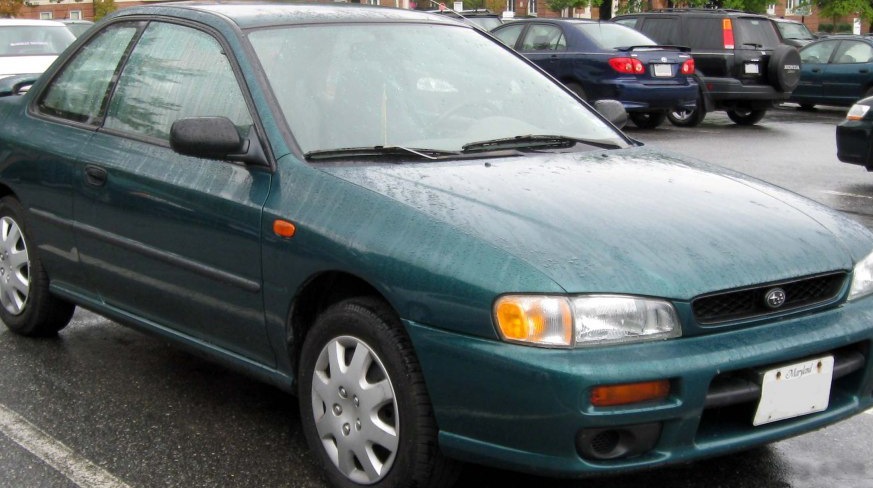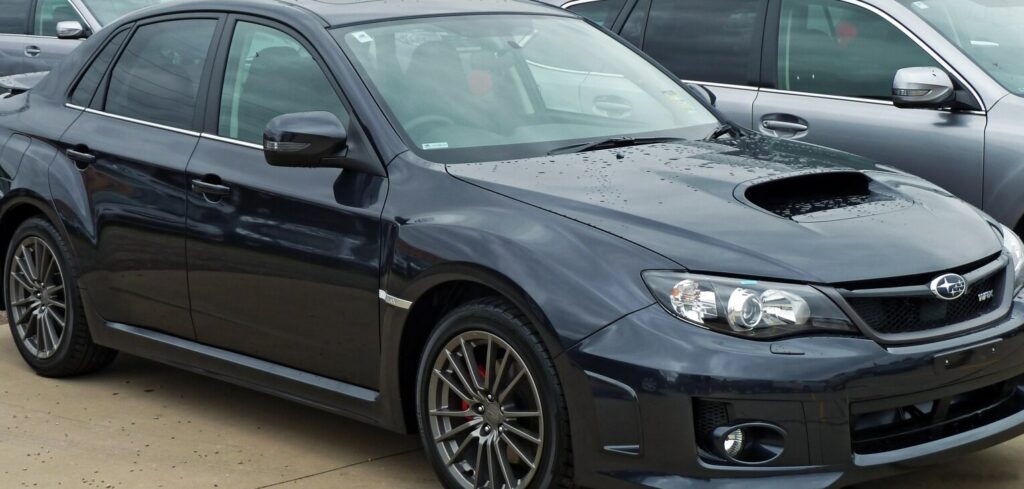
The Subaru Impreza III Sedan WRX 2.5, produced between 2008 and 2011, represented a significant evolution of the Impreza line, particularly in the North American market where the WRX variant gained a strong following. Positioned as the performance-oriented trim of the third-generation Impreza (GE/GH/GR/GV chassis codes), the WRX 2.5 offered a compelling blend of all-wheel-drive capability, turbocharged power, and practical sedan packaging. It sat above the base Impreza models and below the even more potent STI variant, targeting enthusiasts seeking a spirited driving experience without the higher price tag and more aggressive tuning of the STI.
Technical Specifications
| Brand | Subaru |
| Model | Impreza |
| Generation | Impreza III Sedan |
| Type (Engine) | WRX 2.5 (224 Hp) AWD |
| Start of production | 2008 |
| End of production | 2011 |
| Powertrain Architecture | Internal Combustion engine |
| Body type | Sedan |
| Seats | 5 |
| Doors | 4 |
| Fuel consumption (urban) | 14.3 l/100 km (16.4 US mpg) |
| Fuel consumption (extra urban) | 8.2 l/100 km (28.7 US mpg) |
| Fuel consumption (combined) | 10.4 l/100 km (22.6 US mpg) |
| Fuel Type | Petrol (Gasoline) |
| Acceleration 0 – 100 km/h | 5.8 sec |
| Acceleration 0 – 62 mph | 5.8 sec |
| Acceleration 0 – 60 mph | 5.5 sec |
| Maximum speed | 209 km/h (129.87 mph) |
| Emission standard | Euro 4 |
| Weight-to-power ratio | 6.2 kg/Hp |
| Weight-to-torque ratio | 4.6 kg/Nm |
| Power | 224 Hp @ 5200 rpm |
| Torque | 306 Nm @ 2800 rpm (225.69 lb.-ft. @ 2800 rpm) |
| Engine layout | Front, Longitudinal |
| Engine Model/Code | EJ255 |
| Engine displacement | 2457 cm3 (149.94 cu. in.) |
| Number of cylinders | 4 |
| Engine configuration | Boxer |
| Cylinder Bore | 99.5 mm (3.92 in.) |
| Piston Stroke | 79 mm (3.11 in.) |
| Number of valves per cylinder | 4 |
| Fuel injection system | Multi-port manifold injection |
| Engine aspiration | Turbocharger, Intercooler |
| Valvetrain | DOHC |
| Engine oil capacity | 4.2 l (4.44 US qt | 3.7 UK qt) |
| Coolant capacity | 7.5 l (7.93 US qt | 6.6 UK qt) |
| Kerb Weight | 1395 kg (3075.45 lbs.) |
| Trunk (boot) space – maximum | 538 l (19 cu. ft.) |
| Fuel tank capacity | 60 l (15.85 US gal | 13.2 UK gal) |
| Length | 4580 mm (180.31 in.) |
| Width | 1740 mm (68.5 in.) |
| Height | 1475 mm (58.07 in.) |
| Wheelbase | 2620 mm (103.15 in.) |
| Front track | 1495 mm (58.86 in.) |
| Rear track | 1500 mm (59.06 in.) |
| Minimum turning circle | 10.6 m (34.78 ft.) |
| Drive wheel | All wheel drive (4×4) |
| Number of gears | 5 |
| Gearbox type | Manual transmission |
| Front suspension | Independent type McPherson |
| Rear suspension | Several levers and rods |
| Front brakes | Ventilated discs |
| Rear brakes | Disc |
| Assisting systems | ABS (Anti-lock braking system) |
| Steering type | Steering rack and pinion |
| Tires size | 205/50 R17 |
| Wheel rims size | 17 |
Powertrain & Engine Architecture
The heart of the Impreza WRX 2.5 was the EJ255 2.5-liter turbocharged boxer-four engine. This engine, a staple of Subaru’s performance models, featured a cast iron block and aluminum cylinder heads. The “EJ255” designation indicated a specific iteration of the EJ25 engine family, optimized for turbocharging. It utilized multi-port fuel injection and a single turbocharger with an intercooler to deliver 224 horsepower at 5200 rpm and 225.69 lb-ft of torque at 2800 rpm. The boxer configuration, with horizontally opposed pistons, contributed to a low center of gravity, enhancing handling characteristics. The engine was paired exclusively with a five-speed manual transmission, delivering power to all four wheels via Subaru’s symmetrical all-wheel-drive system. This system employed a variable torque distribution, automatically adjusting power delivery between the front and rear axles based on road conditions and driver input.
Driving Characteristics
The WRX 2.5 offered a noticeably more engaging driving experience than the standard Impreza. The turbocharged engine provided strong acceleration, with peak torque available relatively low in the rev range, making it responsive in everyday driving situations. While not as brutally fast as the STI, the WRX 2.5’s power delivery was more linear and predictable. The five-speed manual transmission offered precise shifts, and the all-wheel-drive system provided excellent traction in a variety of conditions. The suspension was tuned for a balance between comfort and handling, offering a firm but not overly harsh ride. Compared to the STI, the WRX 2.5 felt less raw and more refined, making it a more comfortable daily driver. However, it still retained the Impreza’s inherent agility and cornering prowess.
Equipment & Trim Levels
The WRX 2.5 came reasonably well-equipped, though options were available to further enhance the experience. Standard features typically included sport seats, a leather-wrapped steering wheel, air conditioning, power windows and locks, and a basic audio system. Available options included a sunroof, upgraded audio systems, and alloy wheels. The interior design was functional and straightforward, prioritizing practicality over luxury. Upholstery was typically cloth, with leather options available. The dashboard layout was clean and easy to use, with clearly marked controls.
Chassis & Braking
The Impreza WRX 2.5 utilized a MacPherson strut front suspension and a multi-link rear suspension. The suspension components were stiffer than those found in the base Impreza models, contributing to improved handling. Braking duties were handled by ventilated disc brakes at all four corners, providing ample stopping power. An Anti-lock Braking System (ABS) was standard. The chassis was reinforced compared to the standard Impreza to handle the increased power and stresses of performance driving.
Market Reception & Comparison
The Impreza WRX 2.5 was generally well-received by automotive critics. It was praised for its performance, handling, and all-weather capability. However, some critics noted that the engine, while potent, lacked the outright excitement of the STI’s engine. Fuel economy was also a point of concern, with combined fuel consumption averaging around 22.6 US mpg. Compared to the base Impreza, the WRX 2.5 offered a significant performance upgrade, but at a higher price point. Compared to the STI, it offered a more accessible entry point into the world of Subaru performance, sacrificing some outright speed and handling precision for greater comfort and affordability.
Legacy
The EJ255 engine, while generally reliable, is known to be susceptible to head gasket failures, a common issue with earlier Subaru turbocharged engines. Regular maintenance, including oil changes and coolant flushes, is crucial for longevity. Today, the Impreza WRX 2.5 remains a popular choice among enthusiasts seeking an affordable and capable all-wheel-drive performance sedan. Well-maintained examples command reasonable prices in the used car market, and the car’s robust mechanicals and readily available parts supply ensure that it will continue to be enjoyed for years to come. The WRX 2.5 helped solidify Subaru’s reputation as a manufacturer of performance vehicles and paved the way for the continued success of the WRX and STI models.