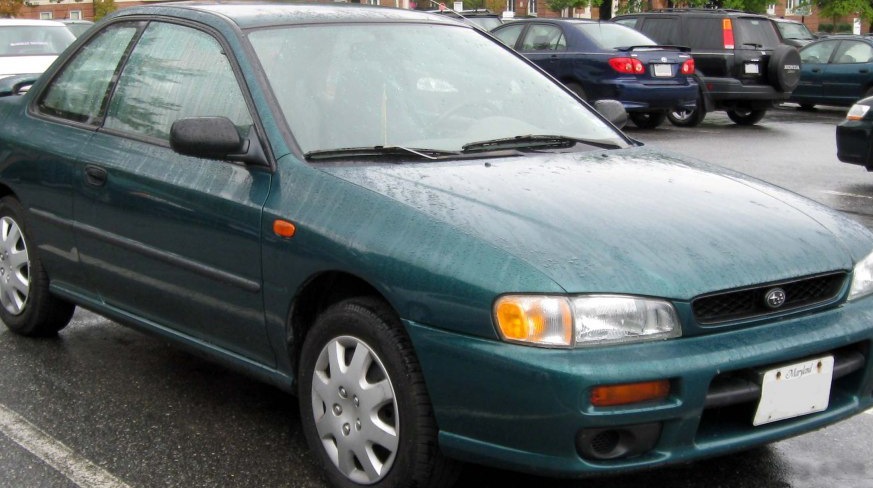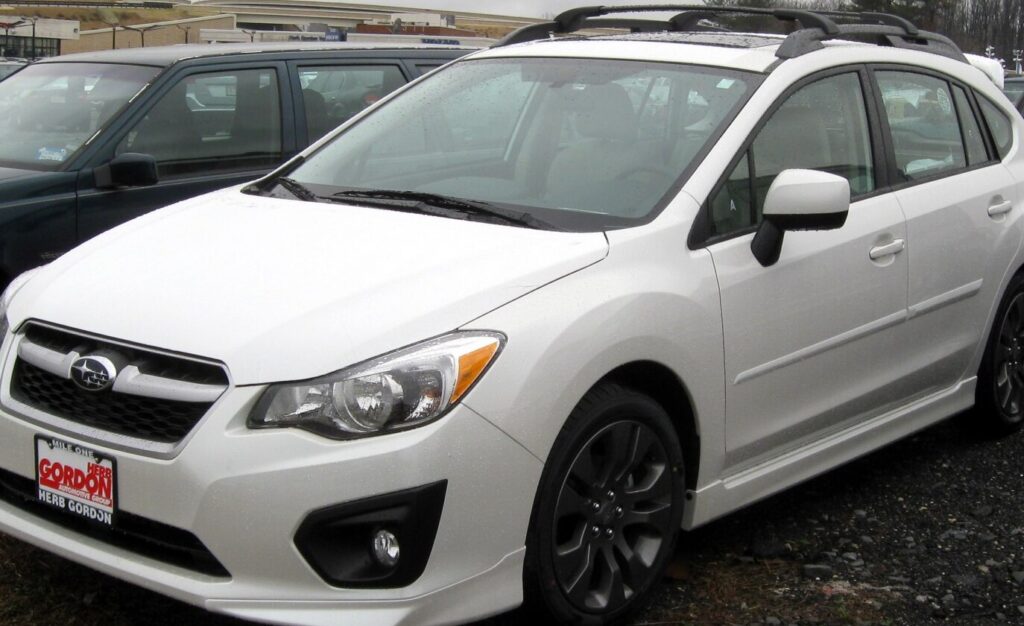
The Subaru Impreza IV Hatchback 2.0i, produced between 2011 and 2015, represented a significant evolution in Subaru’s compact car lineup. Part of the fourth generation (GE/GH/GR/GV) Impreza, this variant offered a blend of practicality, Subaru’s signature symmetrical all-wheel drive, and a naturally aspirated 2.0-liter Boxer engine producing 150 horsepower. Positioned as a mainstream offering within the Impreza range, it served as a step up from the base models while remaining more accessible than the higher-performance WRX variants. The Impreza IV aimed to broaden the appeal of the Impreza nameplate, focusing on fuel efficiency and everyday usability alongside Subaru’s renowned all-weather capability.
Technical Specifications
| Brand | Subaru |
| Model | Impreza |
| Generation | Impreza IV Hatchback |
| Type (Engine) | 2.0i (150 Hp) AWD |
| Start of production | 2011 |
| End of production | 2015 |
| Powertrain Architecture | Internal Combustion engine |
| Body type | Hatchback |
| Seats | 5 |
| Doors | 5 |
| Fuel consumption (urban) | 11 l/100 km (21.4 US mpg) |
| Fuel consumption (extra urban) | 6.1 l/100 km (38.6 US mpg) |
| Fuel consumption (combined) | 7.9 l/100 km (29.8 US mpg) |
| Fuel Type | Petrol (Gasoline) |
| Acceleration 0 – 100 km/h | 10.5 sec |
| Acceleration 0 – 62 mph | 10.5 sec |
| Acceleration 0 – 60 mph | 10 sec |
| Maximum speed | 193 km/h (119.92 mph) |
| Weight-to-power ratio | 8.8 kg/Hp |
| Weight-to-torque ratio | 6.7 kg/Nm |
| Power | 150 Hp @ 6200 rpm |
| Torque | 196 Nm @ 4200 rpm (144.56 lb.-ft. @ 4200 rpm) |
| Engine layout | Front, Longitudinal |
| Engine Model/Code | FB20 |
| Engine displacement | 1995 cm3 (121.74 cu. in.) |
| Number of cylinders | 4 |
| Engine configuration | Boxer |
| Cylinder Bore | 84 mm (3.31 in.) |
| Piston Stroke | 90 mm (3.54 in.) |
| Compression ratio | 10.5:1 |
| Number of valves per cylinder | 4 |
| Fuel injection system | Multi-port manifold injection |
| Engine aspiration | Naturally aspirated engine |
| Valvetrain | DOHC |
| Engine oil capacity | 4.8 l (5.07 US qt | 4.22 UK qt) |
| Coolant capacity | 7.7 l (8.14 US qt | 6.78 UK qt) |
| Kerb Weight | 1320 kg (2910.1 lbs.) |
| Trunk (boot) space – minimum | 1270 l (44.85 cu. ft.) |
| Fuel tank capacity | 55 l (14.53 US gal | 12.1 UK gal) |
| Length | 4415 mm (173.82 in.) |
| Width | 1740 mm (68.5 in.) |
| Height | 1465 mm (57.68 in.) |
| Wheelbase | 2645 mm (104.13 in.) |
| Front track | 1510 mm (59.45 in.) |
| Rear track | 1515 mm (59.65 in.) |
| Minimum turning circle | 10.6 m (34.78 ft.) |
| Drive wheel | All wheel drive (4×4) |
| Number of gears | 6 |
| Gearbox type | Manual transmission |
| Front suspension | Independent type McPherson |
| Rear suspension | Double wishbone |
| Front brakes | Ventilated discs |
| Rear brakes | Disc |
| Assisting systems | ABS (Anti-lock braking system) |
| Steering type | Steering rack and pinion |
| Tires size | 205/55 R16 |
| Wheel rims size | 6.5J x 16 |
Powertrain & Engine Architecture
The heart of the Impreza 2.0i is the FB20 2.0-liter horizontally-opposed (Boxer) four-cylinder engine. This engine, introduced in 2011, represented a move towards improved fuel efficiency and reduced internal friction compared to its predecessors. The FB20 utilizes a chain-driven dual overhead camshaft (DOHC) valvetrain with four valves per cylinder. Fuel delivery is managed by a multi-point fuel injection system. The Boxer configuration, with its pistons moving horizontally, contributes to a lower center of gravity, enhancing handling characteristics. Paired with this engine is a six-speed manual transmission, providing precise gear changes and a more engaging driving experience. The transmission’s gear ratios are tuned for a balance between acceleration and fuel economy, with a relatively tall sixth gear for highway cruising.
Driving Characteristics
The 150-horsepower output and 144.56 lb-ft of torque delivered by the FB20 engine, combined with the six-speed manual transmission, resulted in a respectable, though not exhilarating, driving experience. Acceleration from 0-60 mph took around 10 seconds. The all-wheel-drive system provides excellent traction in various conditions, making it a capable vehicle in inclement weather. Compared to the more powerful WRX models, the 2.0i offered a smoother, more refined ride. The manual transmission allowed for greater driver control, but the gear ratios were spaced to prioritize fuel efficiency over outright performance. The engine felt responsive enough for everyday driving, but lacked the punch of the turbocharged variants.
Equipment & Trim Levels
The 2.0i trim level typically included standard features such as air conditioning, power windows and locks, a basic audio system with auxiliary input, and alloy wheels. Safety features included anti-lock brakes (ABS), stability control, and multiple airbags. Optional extras often included a sunroof, upgraded audio systems, and keyless entry. Interior upholstery was typically cloth, with a functional and durable design. The dashboard layout was straightforward and user-friendly, prioritizing practicality over luxury.
Chassis & Braking
The Impreza IV Hatchback utilized a MacPherson strut front suspension and a double-wishbone rear suspension. This setup provided a good balance between ride comfort and handling precision. The all-wheel-drive system employed a symmetrical design, distributing power evenly to all four wheels for optimal traction. Braking duties were handled by ventilated discs at the front and solid discs at the rear. The ABS system helped to prevent wheel lockup during hard braking, enhancing safety. Stabilizer bars were fitted to both the front and rear axles to reduce body roll during cornering.
Market Reception & Comparison
The Impreza 2.0i Hatchback was generally well-received by automotive critics as a practical and reliable compact car. It was praised for its standard all-wheel drive, fuel efficiency, and spacious interior. However, some reviewers noted that the engine lacked the power and excitement of the WRX models. Compared to other compact hatchbacks of the time, the Impreza offered a unique combination of features, including its standard AWD system. Fuel economy was competitive, averaging around 29.8 US mpg in combined driving. Reliability was generally good, with the FB20 engine proving to be a durable and long-lasting unit.
Legacy
The FB20 engine and the Impreza IV generation as a whole have established a reputation for reliability and longevity. The 2.0i variant, while not the most performance-oriented Impreza, remains a popular choice in the used car market due to its affordability, practicality, and all-weather capability. The symmetrical all-wheel-drive system continues to be a key selling point for Subaru vehicles, and the FB20 engine served as a foundation for future Subaru powertrains. Well-maintained examples of the Impreza 2.0i can still provide years of reliable service, making it a sensible and dependable choice for budget-conscious buyers.