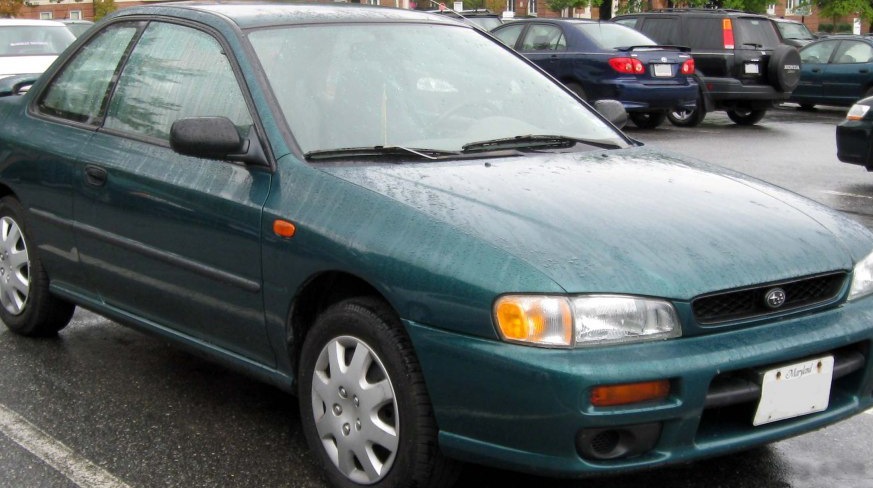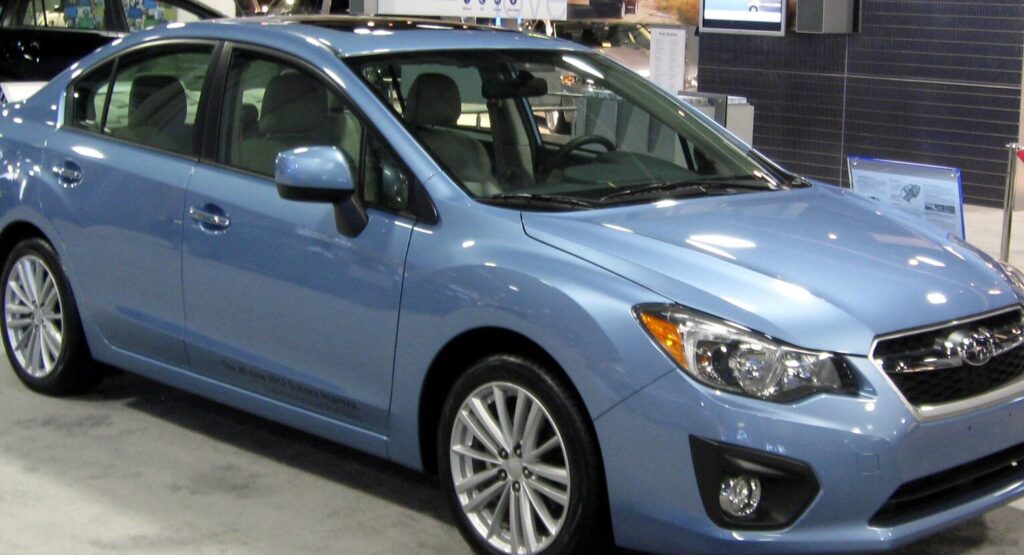
The Subaru Impreza IV Sedan 1.6i, produced between 2011 and 2015, represented an entry point into the fourth generation (GE/GH/GR/GV) of Subaru’s popular compact car. Positioned as a more economical and accessible option within the Impreza lineup, it offered Subaru’s signature symmetrical all-wheel drive system combined with a naturally aspirated 1.6-liter boxer engine. This variant primarily targeted buyers seeking a practical, reliable, and all-weather capable sedan, particularly in markets where fuel efficiency and affordability were key considerations. It served as a stepping stone to the more powerful 2.0-liter models and provided a distinct driving experience tailored to its lower output.
Technical Specifications
| Brand | Subaru |
| Model | Impreza |
| Generation | Impreza IV Sedan |
| Type (Engine) | 1.6i (114 Hp) AWD |
| Start of production | 2011 |
| End of production | 2015 |
| Powertrain Architecture | Internal Combustion engine |
| Body type | Sedan |
| Seats | 5 |
| Doors | 4 |
| Fuel consumption (urban) | 9.7 l/100 km (24.2 US mpg) |
| Fuel consumption (extra urban) | 5.7 l/100 km (41.3 US mpg) |
| Fuel consumption (combined) | 7.2 l/100 km (32.7 US mpg) |
| Fuel Type | Petrol (Gasoline) |
| Acceleration 0 – 100 km/h | 12.3 sec |
| Acceleration 0 – 62 mph | 12.3 sec |
| Acceleration 0 – 60 mph | 11.7 sec |
| Maximum speed | 189 km/h (117.44 mph) |
| Weight-to-power ratio | 11.5 kg/Hp |
| Weight-to-torque ratio | 8.7 kg/Nm |
| Power | 114 Hp @ 5600 rpm |
| Torque | 150 Nm @ 4000 rpm (110.63 lb.-ft. @ 4000 rpm) |
| Engine layout | Front, Longitudinal |
| Engine Model/Code | FB16 |
| Engine displacement | 1600 cm3 (97.64 cu. in.) |
| Number of cylinders | 4 |
| Engine configuration | Boxer |
| Cylinder Bore | 78.8 mm (3.1 in.) |
| Piston Stroke | 82 mm (3.23 in.) |
| Compression ratio | 10.5:1 |
| Number of valves per cylinder | 4 |
| Fuel injection system | Multi-port manifold injection |
| Engine aspiration | Naturally aspirated engine |
| Valvetrain | DOHC |
| Engine oil capacity | 4.8 l (5.07 US qt | 4.22 UK qt) |
| Coolant capacity | 8.1 l (8.56 US qt | 7.13 UK qt) |
| Kerb Weight | 1310 kg (2888.06 lbs.) |
| Trunk (boot) space | 460 l (16.24 cu. ft.) |
| Fuel tank capacity | 55 l (14.53 US gal | 12.1 UK gal) |
| Length | 4580 mm (180.31 in.) |
| Width | 1740 mm (68.5 in.) |
| Height | 1465 mm (57.68 in.) |
| Wheelbase | 2645 mm (104.13 in.) |
| Front track | 1510 mm (59.45 in.) |
| Rear track | 1515 mm (59.65 in.) |
| Minimum turning circle | 10.6 m (34.78 ft.) |
| Drive wheel | All wheel drive (4×4) |
| Number of gears | 5 |
| Gearbox type | Manual transmission |
| Front suspension | Independent type McPherson |
| Rear suspension | Double wishbone |
| Front brakes | Ventilated discs |
| Rear brakes | Disc |
| Assisting systems | ABS (Anti-lock braking system) |
| Steering type | Steering rack and pinion |
| Tires size | 195/65 R15 |
| Wheel rims size | 6J x 15 |
INTRODUCTION
The Impreza IV Sedan 1.6i AWD, launched in 2011, was a key component of Subaru’s strategy to broaden the appeal of the Impreza. It was built on the Subaru Global Platform (SGP), internally designated as the 1HX0/A3 platform, which aimed to improve rigidity and reduce weight compared to previous generations. This particular variant was primarily sold in Europe, Australia, and select Asian markets, where smaller displacement engines were favored due to tax regulations and fuel economy concerns. It offered a more affordable entry point into the Impreza range, appealing to buyers who prioritized all-weather capability and practicality over outright performance.
Powertrain & Engine Architecture
At the heart of the 1.6i was the FB16 1.6-liter horizontally opposed (boxer) four-cylinder engine. This engine was a significant departure from the older EJ series engines previously used in the Impreza. The FB16 featured a square bore and stroke (78.8mm x 82mm) and incorporated technologies like multi-point fuel injection and a double overhead camshaft (DOHC) valvetrain with four valves per cylinder. The boxer configuration inherently provides a lower center of gravity, contributing to improved handling. The engine produced 114 horsepower at 5600 rpm and 150 Nm (110.63 lb-ft) of torque at 4000 rpm. This power was delivered to all four wheels through a standard five-speed manual transmission. The transmission was chosen for its simplicity and efficiency, complementing the engine’s characteristics. While a continuously variable transmission (CVT) was offered on some Impreza models, it wasn’t typically paired with the 1.6i engine.
Driving Characteristics
The 1.6i’s driving experience was characterized by its smooth and predictable power delivery. Acceleration was modest, taking approximately 12.3 seconds to reach 62 mph (100 km/h). The five-speed manual transmission offered a reasonable spread of gears, but the engine lacked the low-end grunt of the larger 2.0-liter Impreza models. The all-wheel-drive system provided excellent traction in various conditions, making it a confident performer in rain, snow, and on gravel roads. Compared to the more powerful Impreza variants, the 1.6i felt less eager to rev and required more frequent downshifts to maintain momentum, especially when overtaking. The steering was light and precise, and the suspension provided a comfortable ride, although it wasn’t as sporty as the setup found in the WRX or STI models.
Equipment & Trim Levels
The 1.6i typically came with a fairly basic level of equipment, reflecting its position as the entry-level Impreza. Standard features generally included air conditioning, power windows, power door locks, and a basic audio system with CD player. Safety features such as ABS (Anti-lock Braking System), airbags, and stability control were also standard. Higher trim levels, often denoted by additions like “S” or “SE”, added features like alloy wheels, a more advanced audio system, and sometimes climate control. Interior upholstery was typically cloth, and the dashboard featured a functional but relatively simple design. Optional extras included a sunroof, navigation system, and upgraded audio systems.
Chassis & Braking
The Impreza IV Sedan 1.6i utilized an independent McPherson strut suspension at the front and a double wishbone suspension at the rear. This setup provided a good balance between ride comfort and handling. Braking duties were handled by ventilated discs at the front and solid discs at the rear. The braking system was adequate for the car’s weight and performance, but it lacked the stopping power of the larger brake systems found on the higher-performance Impreza models. The car’s relatively light weight (1310 kg / 2888.06 lbs) helped to mitigate the limitations of the braking system.
Market Reception & Comparison
The Impreza 1.6i was generally well-received by critics as a practical and affordable all-wheel-drive sedan. However, its performance was often criticized as being underwhelming, particularly when compared to the more powerful 2.0-liter Impreza models. Fuel economy was a strong point, with combined fuel consumption figures around 7.2 l/100 km (32.7 US mpg). Compared to rivals like the Volkswagen Golf or Ford Focus, the Impreza 1.6i offered the unique advantage of standard all-wheel drive, but it often lacked the refinement and driving dynamics of its European competitors. The 2.0-liter Impreza offered a significant performance upgrade, but at a higher price point.
Legacy
The FB16 engine, while not known for being a powerhouse, proved to be a reliable and durable unit. Properly maintained examples of the Impreza 1.6i continue to be relatively common on the used car market. The engine’s simplicity and robust construction contribute to its longevity. However, like all older vehicles, potential buyers should be aware of common issues such as oil leaks and wear on suspension components. The Impreza 1.6i remains a viable option for buyers seeking an affordable, reliable, and all-weather capable compact sedan, particularly those who prioritize practicality over performance.