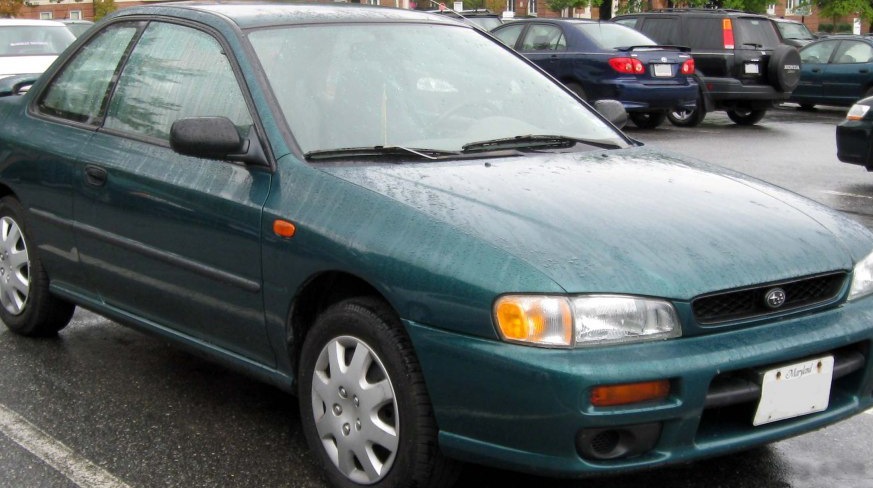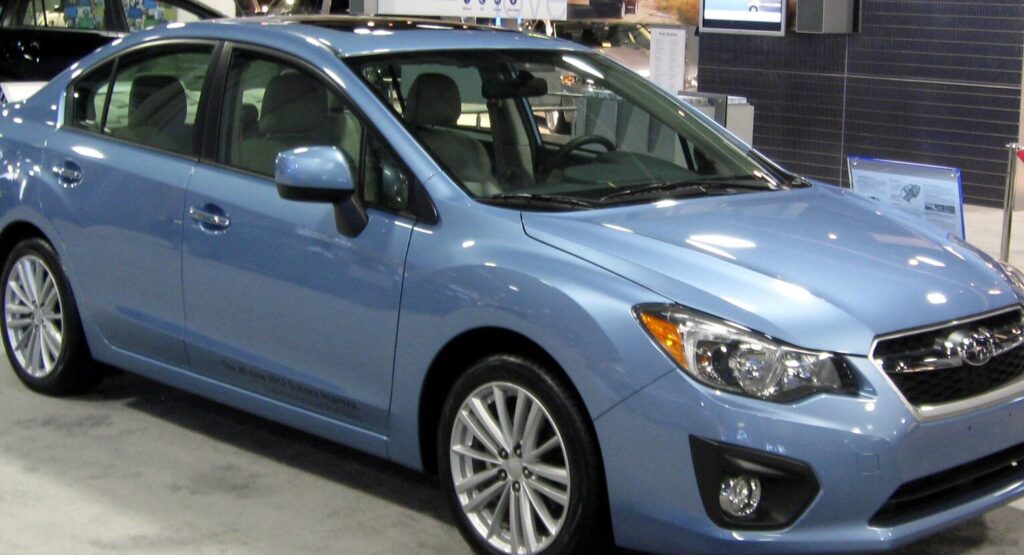
The Subaru Impreza IV Sedan 1.6i Sport, produced between 2011 and 2015, represented an entry point into the fourth generation (GE/GH/GR/GV) of Subaru’s popular compact car. Positioned as a more affordable and fuel-efficient option within the Impreza lineup, it catered to buyers seeking the security of Subaru’s symmetrical all-wheel drive system without the higher price tag of the more powerful 2.5-liter models. This variant was primarily sold in markets outside of North America, where the Impreza range was often configured differently. The 1.6i Sport occupied the base trim level, offering a balance of practicality and Subaru’s core engineering values.
Technical Specifications
| Brand | Subaru |
| Model | Impreza |
| Generation | Impreza IV Sedan |
| Type (Engine) | 1.6i sport (114 Hp) AWD |
| Start of production | 2011 |
| End of production | 2015 |
| Powertrain Architecture | Internal Combustion engine |
| Body type | Sedan |
| Seats | 5 |
| Doors | 4 |
| Fuel consumption (urban) | 9.7 l/100 km (24.2 US mpg) |
| Fuel consumption (extra urban) | 5.7 l/100 km (41.3 US mpg) |
| Fuel consumption (combined) | 7.2 l/100 km (32.7 US mpg) |
| Fuel Type | Petrol (Gasoline) |
| Acceleration 0 – 100 km/h | 12.3 sec |
| Acceleration 0 – 62 mph | 12.3 sec |
| Acceleration 0 – 60 mph | 11.7 sec |
| Maximum speed | 189 km/h (117.44 mph) |
| Weight-to-power ratio | 11.5 kg/Hp |
| Weight-to-torque ratio | 8.8 kg/Nm |
| Power | 114 Hp @ 5600 rpm |
| Torque | 150 Nm @ 4000 rpm (110.63 lb.-ft. @ 4000 rpm) |
| Engine layout | Front, Longitudinal |
| Engine Model/Code | FB16 |
| Engine displacement | 1600 cm3 (97.64 cu. in.) |
| Number of cylinders | 4 |
| Engine configuration | Boxer |
| Cylinder Bore | 78.8 mm (3.1 in.) |
| Piston Stroke | 82 mm (3.23 in.) |
| Compression ratio | 10.5:1 |
| Number of valves per cylinder | 4 |
| Fuel injection system | Multi-port manifold injection |
| Engine aspiration | Naturally aspirated engine |
| Valvetrain | DOHC |
| Engine oil capacity | 4.8 l (5.07 US qt | 4.22 UK qt) |
| Coolant capacity | 8.1 l (8.56 US qt | 7.13 UK qt) |
| Kerb Weight | 1315 kg (2899.08 lbs.) |
| Trunk (boot) space | 460 l (16.24 cu. ft.) |
| Fuel tank capacity | 55 l (14.53 US gal | 12.1 UK gal) |
| Length | 4580 mm (180.31 in.) |
| Width | 1740 mm (68.5 in.) |
| Height | 1465 mm (57.68 in.) |
| Wheelbase | 2645 mm (104.13 in.) |
| Front track | 1510 mm (59.45 in.) |
| Rear track | 1515 mm (59.65 in.) |
| Minimum turning circle | 10.6 m (34.78 ft.) |
| Drive wheel | All wheel drive (4×4) |
| Number of gears | 5 |
| Gearbox type | Manual transmission |
| Front suspension | Independent type McPherson |
| Rear suspension | Double wishbone |
| Front brakes | Ventilated discs |
| Rear brakes | Disc |
| Assisting systems | ABS (Anti-lock braking system) |
| Steering type | Steering rack and pinion |
| Tires size | 195/65 R15 |
| Wheel rims size | 6J x 15 |
INTRODUCTION
The Impreza IV Sedan 1.6i Sport, launched in 2011, was a key component of Subaru’s strategy to broaden the appeal of the Impreza range. Built on the Subaru Global Platform (SGP) – though early iterations of the fourth generation still utilized elements of the previous platform – it aimed to deliver a more refined driving experience and improved fuel efficiency compared to its predecessors. This model was particularly important in European and Asian markets, where smaller displacement engines were favored due to tax regulations and consumer preferences. The “i” designation signified the use of Subaru’s Intelligent Drive system, which integrated various engine management and transmission controls for optimized performance and economy.
Powertrain & Engine Architecture
At the heart of the 1.6i Sport lies the FB16 1.6-liter horizontally-opposed (Boxer) four-cylinder engine. This engine represented a significant departure from the older EJ series engines previously used in the Impreza. The FB16 featured a square bore and stroke (78.8mm x 82mm) and a relatively high compression ratio of 10.5:1. It employed multi-point fuel injection and a double overhead camshaft (DOHC) valvetrain with four valves per cylinder. The Boxer configuration, a Subaru hallmark, provided inherent balance and a lower center of gravity, contributing to improved handling. Paired with the FB16 was a five-speed manual transmission, delivering power to all four wheels via Subaru’s symmetrical all-wheel drive system. The AWD system utilized a viscous coupling center differential, providing automatic torque distribution between the front and rear axles.
Driving Characteristics
The 1.6i Sport, with its 114 horsepower and 150 Nm (110.63 lb-ft) of torque, offered adequate performance for everyday driving. Acceleration from 0-60 mph took around 11.7 seconds, and top speed was limited to 189 km/h (117.44 mph). While not a performance-oriented variant, the Boxer engine provided a unique engine note and a responsive feel. The five-speed manual transmission offered precise shifts, and the all-wheel drive system instilled confidence in various road conditions. Compared to the 2.0-liter Impreza models, the 1.6i Sport felt less powerful, particularly during overtaking maneuvers. However, its lighter weight and more efficient engine contributed to better fuel economy. The gear ratios were tuned for fuel efficiency rather than outright acceleration, making it a comfortable cruiser but less engaging for spirited driving.
Equipment & Trim Levels
The 1.6i Sport trim level typically included standard features such as air conditioning, power windows, power mirrors, and a basic audio system with CD player and auxiliary input. Safety features included ABS brakes, electronic brakeforce distribution (EBD), and multiple airbags. Interior upholstery was typically cloth, and the dashboard featured a straightforward design with easy-to-read gauges. Optional extras included alloy wheels, a sunroof, and upgraded audio systems. The “Sport” designation indicated some minor cosmetic enhancements, such as sport seats and a leather-wrapped steering wheel, but the overall focus remained on practicality and affordability.
Chassis & Braking
The Impreza IV Sedan 1.6i Sport utilized an independent McPherson strut suspension at the front and a double wishbone suspension at the rear. This setup provided a comfortable ride and predictable handling. The front brakes were ventilated discs, while the rear brakes were solid discs. The suspension was tuned for a balance between comfort and handling, offering a relatively compliant ride over uneven surfaces. Stabilizer bars were fitted to both the front and rear axles to reduce body roll during cornering. The steering was a rack and pinion system, providing precise and responsive steering feel.
Market Reception & Comparison
The Impreza 1.6i Sport was generally well-received by automotive critics as a sensible and practical choice for buyers seeking a reliable and fuel-efficient compact car. It was praised for its all-wheel drive system, comfortable ride, and spacious interior. However, some critics noted its lack of outright performance compared to the 2.0-liter models. In terms of fuel economy, the 1.6i Sport offered a significant improvement over the larger-engined variants, achieving around 32.7 US mpg in combined driving. Reliability was generally good, with the FB16 engine proving to be a durable and dependable unit. Compared to competitors like the Volkswagen Golf or Ford Focus, the Impreza 1.6i Sport offered the unique advantage of standard all-wheel drive.
Legacy
The Subaru Impreza IV Sedan 1.6i Sport remains a popular choice in the used car market, particularly for buyers seeking a reliable and affordable all-wheel drive vehicle. The FB16 engine has proven to be a long-lasting and relatively maintenance-free unit, although regular oil changes and preventative maintenance are essential. While not a collector’s item, the 1.6i Sport represents a significant step forward in Subaru’s engineering and design, offering a compelling combination of practicality, safety, and all-weather capability. Its enduring appeal lies in its ability to provide secure and dependable transportation for everyday use.