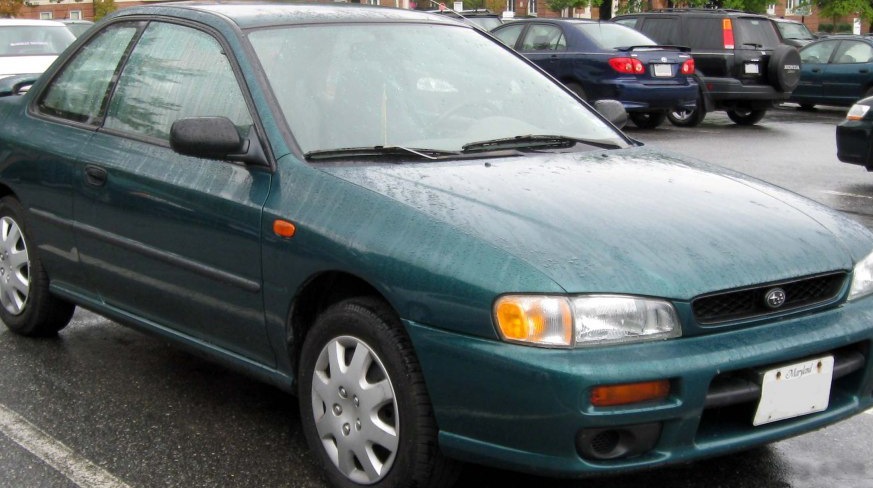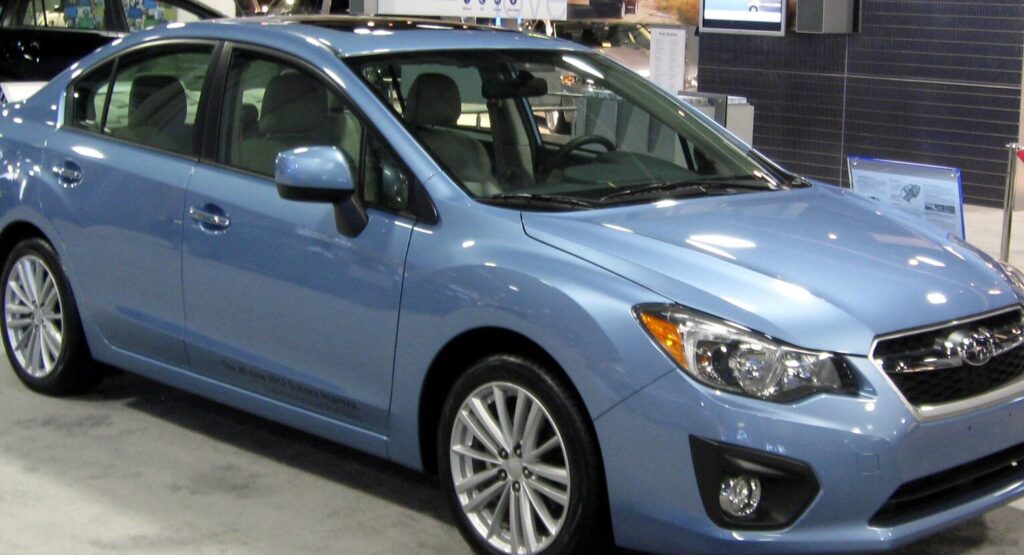
The Subaru Impreza IV Sedan 2.0i (150 Hp) AWD Lineartronic, produced between 2011 and 2015, represented a significant evolution in Subaru’s compact car offerings. Part of the fourth-generation Impreza (GP/GR/GE chassis codes), this variant aimed to balance fuel efficiency with Subaru’s renowned symmetrical all-wheel drive system. It occupied a mid-range position within the Impreza lineup, offering a more refined driving experience than the base models while remaining more accessible than the higher-performance WRX variants. This model was primarily marketed towards buyers seeking a practical, reliable, and all-weather capable sedan.
Technical Specifications
| Brand | Subaru |
| Model | Impreza |
| Generation | Impreza IV Sedan |
| Type (Engine) | 2.0i (150 Hp) AWD Lineartronic |
| Start of production | 2011 |
| End of production | 2015 |
| Powertrain Architecture | Internal Combustion engine |
| Body type | Sedan |
| Seats | 5 |
| Doors | 4 |
| Fuel consumption (urban) | 10.6 l/100 km (22.2 US mpg) |
| Fuel consumption (extra urban) | 6 l/100 km (39.2 US mpg) |
| Fuel consumption (combined) | 7.6 l/100 km (30.9 US mpg) |
| Fuel Type | Petrol (Gasoline) |
| Acceleration 0 – 100 km/h | 11.1 sec |
| Acceleration 0 – 62 mph | 11.1 sec |
| Acceleration 0 – 60 mph | 10.5 sec |
| Maximum speed | 197 km/h (122.41 mph) |
| Weight-to-power ratio | 9.1 kg/Hp |
| Weight-to-torque ratio | 7 kg/Nm |
| Power | 150 Hp @ 6200 rpm |
| Torque | 196 Nm @ 4200 rpm (144.56 lb.-ft. @ 4200 rpm) |
| Engine layout | Front, Longitudinal |
| Engine Model/Code | FB20 |
| Engine displacement | 1995 cm3 (121.74 cu. in.) |
| Number of cylinders | 4 |
| Engine configuration | Boxer |
| Cylinder Bore | 84 mm (3.31 in.) |
| Piston Stroke | 90 mm (3.54 in.) |
| Compression ratio | 10.5:1 |
| Number of valves per cylinder | 4 |
| Fuel injection system | Multi-port manifold injection |
| Engine aspiration | Naturally aspirated engine |
| Valvetrain | DOHC |
| Engine oil capacity | 4.8 l (5.07 US qt | 4.22 UK qt) |
| Coolant | 7.7 l (8.14 US qt | 6.78 UK qt) |
| Kerb Weight | 1370 kg (3020.33 lbs.) |
| Trunk (boot) space | 460 l (16.24 cu. ft.) |
| Fuel tank capacity | 55 l (14.53 US gal | 12.1 UK gal) |
| Length | 4580 mm (180.31 in.) |
| Width | 1740 mm (68.5 in.) |
| Height | 1465 mm (57.68 in.) |
| Wheelbase | 2645 mm (104.13 in.) |
| Front track | 1510 mm (59.45 in.) |
| Rear track | 1515 mm (59.65 in.) |
| Minimum turning circle | 10.6 m (34.78 ft.) |
| Drive wheel | All wheel drive (4×4) |
| Front suspension | Independent type McPherson |
| Rear suspension | Double wishbone |
| Front brakes | Ventilated discs |
| Rear brakes | Disc |
| Assisting systems | ABS (Anti-lock braking system) |
| Steering type | Steering rack and pinion |
| Tires size | 205/55 R16 |
| Wheel rims size | 6.5J x 16 |
Powertrain & Engine Architecture
The heart of the Impreza 2.0i Lineartronic is the FB20 2.0-liter horizontally-opposed (boxer) four-cylinder engine. This engine, a key component of Subaru’s engine strategy, was designed for improved efficiency and reduced internal friction compared to its predecessors. The FB20 utilizes a chain-driven dual overhead camshaft (DOHC) valvetrain with four valves per cylinder. Fuel delivery is managed by a multi-point fuel injection system. The engine’s 150 horsepower at 6,200 rpm and 144.56 lb-ft of torque at 4,200 rpm are respectable figures for its displacement, but prioritize fuel economy over outright performance. Paired with the engine is Subaru’s Lineartronic continuously variable transmission (CVT). This CVT, unlike traditional stepped automatic transmissions, provides a seamless and theoretically infinite number of gear ratios, optimizing engine speed for efficiency or power as needed. The Lineartronic CVT in this Impreza featured simulated “shift points” to mimic the feel of a conventional automatic, addressing some driver concerns about the rubber-band feel often associated with CVTs.
Driving Characteristics
The 2.0i Lineartronic Impreza delivers a comfortable and predictable driving experience. The CVT contributes to smooth acceleration, although it doesn’t offer the immediate response of a traditional automatic or manual transmission. Acceleration from 0-60 mph takes around 10.5 seconds, making it adequate for everyday driving but not particularly sporty. The Lineartronic CVT is programmed to hold lower “gear” ratios under hard acceleration, providing a more engaging feel. The symmetrical all-wheel drive system provides excellent traction in various weather conditions, a hallmark of Subaru vehicles. Compared to the 2.5i models, the 2.0i offers slightly less power and acceleration, but it also returns better fuel economy. Manual transmission versions of the 2.0i provided a more direct and engaging driving experience, but the Lineartronic CVT appealed to buyers prioritizing convenience and ease of use.
Equipment & Trim Levels
The 2.0i Lineartronic trim typically included standard features such as air conditioning, power windows and locks, a basic audio system with auxiliary input, and keyless entry. Safety features included anti-lock brakes (ABS), electronic brake-force distribution (EBD), and multiple airbags. Higher trim levels, such as the Premium, added features like alloy wheels, a more advanced audio system with Bluetooth connectivity, a sunroof, and heated front seats. Interior upholstery was typically cloth, with optional leather available on higher trims. The dashboard layout was functional and straightforward, prioritizing usability over stylistic flair.
Chassis & Braking
The Impreza IV Sedan utilizes a MacPherson strut front suspension and a double-wishbone rear suspension. This setup provides a good balance of ride comfort and handling. The chassis is relatively lightweight, contributing to the car’s agility. Braking duties are handled by ventilated discs at the front and solid discs at the rear. ABS is standard, providing enhanced braking performance in emergency situations. Stabilizer bars are fitted to both the front and rear axles to reduce body roll during cornering. The suspension tuning is geared towards comfort, making it well-suited for daily commuting and long-distance driving.
Market Reception & Comparison
The Impreza 2.0i Lineartronic was generally well-received by automotive critics as a practical and fuel-efficient compact sedan. Reviewers praised its all-wheel drive system and comfortable ride. However, some criticized its lack of outright performance and the somewhat uninspiring driving experience offered by the CVT. Compared to competitors like the Honda Civic and Toyota Corolla, the Impreza offered standard all-wheel drive as a significant advantage, particularly in regions with inclement weather. Fuel economy was competitive, averaging around 31 mpg combined. Reliability was generally good, although some owners reported minor issues with the CVT over the long term.
Legacy
The FB20 engine and Lineartronic CVT proved to be relatively reliable powertrains, and many Impreza 2.0i models are still on the road today. The Lineartronic CVT, while not without its critics, became a mainstay in Subaru’s lineup. In the used car market, the Impreza 2.0i Lineartronic represents a good value proposition for buyers seeking a dependable and all-weather capable compact sedan. Regular maintenance, including CVT fluid changes, is crucial for ensuring the longevity of this powertrain. The Impreza IV Sedan 2.0i Lineartronic solidified Subaru’s reputation for building practical, reliable, and safe vehicles.