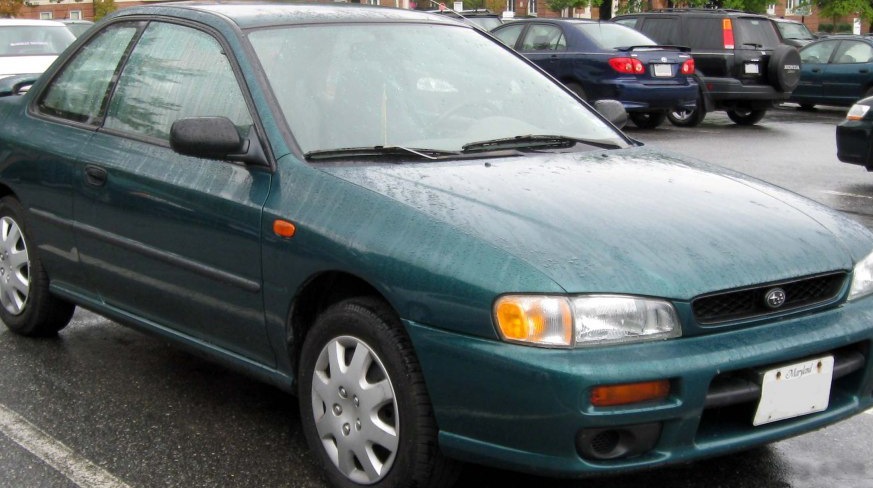
The Subaru Impreza IV Sedan (facelift 2015) 2.0i, producing 150 horsepower, represents a significant iteration within the fourth generation of Subaru’s popular compact car. Introduced for the 2015 and 2016 model years, this variant occupied a central position in the Impreza lineup, offering a balance between affordability, fuel efficiency, and Subaru’s signature symmetrical all-wheel drive. It was part of the global Impreza range, though its market emphasis varied depending on the region, with North America being a key target. The facelift brought subtle styling updates and refinements to the already well-regarded Impreza platform.
Technical Specifications
| Brand | Subaru |
| Model | Impreza |
| Generation | Impreza IV Sedan (facelift 2015) |
| Type (Engine) | 2.0i (150 Hp) AWD |
| Start of production | 2015 |
| End of production | 2016 |
| Powertrain Architecture | Internal Combustion engine |
| Body type | Sedan |
| Seats | 5 |
| Doors | 4 |
| Fuel consumption (urban) | 9.2 l/100 km (25.6 US mpg) |
| Fuel consumption (extra urban) | 5.9 l/100 km (39.9 US mpg) |
| Fuel consumption (combined) | 7.1 l/100 km (33.1 US mpg) |
| CO2 emissions | 164 g/km |
| Fuel Type | Petrol (Gasoline) |
| Acceleration 0 – 100 km/h | 10.5 sec |
| Acceleration 0 – 62 mph | 10.5 sec |
| Acceleration 0 – 60 mph | 10 sec |
| Emission standard | Euro 5 |
| Weight-to-power ratio | 8.9 kg/Hp |
| Weight-to-torque ratio | 6.8 kg/Nm |
| Power | 150 Hp @ 6200 rpm |
| Torque | 196 Nm @ 4200 rpm (144.56 lb.-ft. @ 4200 rpm) |
| Engine layout | Front, Longitudinal |
| Engine Model/Code | FB20 |
| Engine displacement | 1995 cm3 (121.74 cu. in.) |
| Number of cylinders | 4 |
| Engine configuration | Boxer |
| Cylinder Bore | 84 mm (3.31 in.) |
| Piston Stroke | 90 mm (3.54 in.) |
| Compression ratio | 10.5:1 |
| Number of valves per cylinder | 4 |
| Fuel injection system | Multi-port manifold injection |
| Engine aspiration | Naturally aspirated engine |
| Valvetrain | DOHC |
| Engine oil capacity | 4.8 l (5.07 US qt | 4.22 UK qt) |
| Coolant capacity | 7.7 l (8.14 US qt | 6.78 UK qt) |
| Kerb Weight | 1335 kg (2943.17 lbs.) |
| Trunk (boot) space | 460 l (16.24 cu. ft.) |
| Fuel tank capacity | 55 l (14.53 US gal | 12.1 UK gal) |
| Permitted trailer load (braked) | 1200 kg (2645.55 lbs.) |
| Permitted trailer load (unbraked) | 650 kg (1433 lbs.) |
| Permitted towbar download | 120 kg (264.55 lbs.) |
| Length | 4585 mm (180.51 in.) |
| Width | 1740 mm (68.5 in.) |
| Height | 1465 mm (57.68 in.) |
| Wheelbase | 2645 mm (104.13 in.) |
| Front track | 1510 mm (59.45 in.) |
| Rear track | 1515 mm (59.65 in.) |
| Ride height | 145 mm (5.71 in.) |
| Minimum turning circle | 10.6 m (34.78 ft.) |
| Drive wheel | All wheel drive (4×4) |
| Number of gears | 6 |
| Gearbox type | Manual transmission |
| Front suspension | Independent, McPherson with coil spring and anti-roll bar |
| Rear suspension | Double wishbone |
| Front brakes | Ventilated discs |
| Rear brakes | Disc |
| Assisting systems | ABS (Anti-lock braking system) |
| Steering type | Steering rack and pinion |
| Power steering | Electric |
| Tires size | 205/55 R16 91V |
| Wheel rims size | 6.5J x 16 |
Powertrain & Engine Architecture
The heart of the 2015 Impreza 2.0i is the FB20 2.0-liter naturally aspirated boxer engine. This engine is a hallmark of Subaru engineering, known for its horizontally opposed pistons which contribute to a low center of gravity and reduced vibration. The FB20 utilizes multi-point fuel injection and a double overhead camshaft (DOHC) valvetrain with four valves per cylinder. This configuration allows for efficient combustion and a relatively broad powerband. The engine produces 150 horsepower at 6,200 rpm and 196 Nm (144.56 lb-ft) of torque at 4,200 rpm. The engine’s longitudinal mounting, coupled with Subaru’s symmetrical all-wheel drive system, provides excellent traction and balanced handling. The 6-speed manual transmission was standard, offering precise gear changes and driver engagement.
Driving Characteristics
The 2.0i with the manual transmission delivers adequate, though not exhilarating, performance. Acceleration from 0-60 mph takes around 10 seconds. The engine feels responsive in the mid-range, making it suitable for everyday driving and commuting. The manual gearbox is well-matched to the engine’s characteristics, providing a satisfying driving experience. Compared to higher-output Impreza variants (like those with the 2.5-liter engine), the 2.0i feels less powerful, particularly during highway overtaking. However, it offers better fuel economy and a lighter feel. The all-wheel drive system provides confident handling in various weather conditions, a key selling point for Subaru.
Equipment & Trim Levels
The 2.0i trim typically included standard features such as air conditioning, power windows and locks, a basic audio system with auxiliary input, and stability control. Higher trim levels, available as options, added features like a touchscreen infotainment system, alloy wheels, a sunroof, and heated front seats. Interior upholstery was typically cloth, with options for upgraded materials. The dashboard layout was functional and straightforward, prioritizing usability over luxury.
Chassis & Braking
The Impreza IV Sedan utilizes a McPherson strut front suspension and a double-wishbone rear suspension. This setup provides a comfortable ride and predictable handling. The 2.0i model typically featured ventilated front disc brakes and solid rear disc brakes. Anti-lock braking system (ABS) was standard. The suspension tuning was geared towards comfort and everyday usability, rather than outright sportiness. The relatively lightweight nature of the 2.0i model, weighing in at approximately 1335 kg (2943.17 lbs), contributed to its nimble handling.
Market Reception & Comparison
The 2015 Impreza 2.0i was generally well-received by automotive critics as a practical and reliable compact car. It was praised for its standard all-wheel drive, fuel efficiency, and comfortable ride. However, some reviewers noted that the engine lacked the power of competitors and that the interior was somewhat basic. Compared to the 2.5i variant, the 2.0i offered a lower price point but sacrificed some performance. Fuel economy figures of around 33.1 US mpg combined were competitive for its class.
Legacy
The FB20 engine, in general, has proven to be a reliable powerplant, though preventative maintenance, particularly oil changes, is crucial. The Impreza IV Sedan (facelift 2015) 2.0i remains a popular choice in the used car market due to its affordability, practicality, and Subaru’s reputation for durability. While not a performance standout, it represents a solid and dependable option for buyers seeking a compact car with all-weather capability. Common issues reported with this generation Impreza include occasional oil consumption and potential head gasket issues, though these are not widespread and can often be mitigated with proper maintenance.