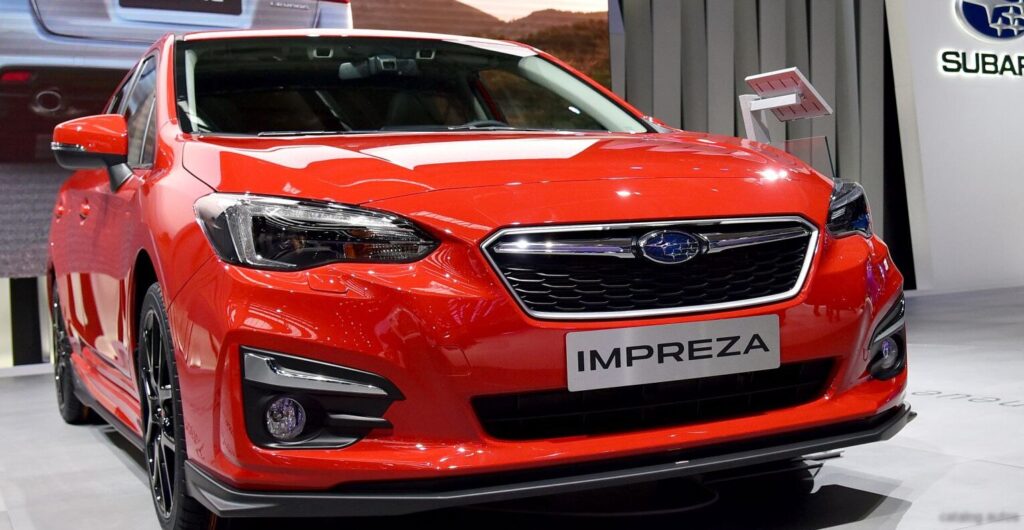
The Subaru Impreza V Hatchback 1.6i AWD Lineartronic, produced between 2016 and 2020, represents a key iteration of Subaru’s popular compact car. Falling within the fifth generation of the Impreza (introduced in 2016, internally designated as the GP/GJ platform), this variant offered a blend of Subaru’s signature symmetrical all-wheel drive with a fuel-efficient 1.6-liter boxer engine and a continuously variable transmission (CVT), marketed as Lineartronic. Positioned as an entry-level to mid-range offering within the Impreza hatchback lineup, it aimed to provide accessible all-weather capability and practicality for everyday use. This model was primarily sold in markets where Subaru had a strong presence, including North America, Europe, and Australia.
Technical Specifications
| Brand | Subaru |
| Model | Impreza |
| Generation | Impreza V Hatchback |
| Type (Engine) | 1.6i (114 Hp) AWD Lineartronic |
| Start of production | 2016 |
| End of production | 2020 |
| Powertrain Architecture | Internal Combustion engine |
| Body type | Hatchback |
| Seats | 5 |
| Doors | 5 |
| Fuel consumption (urban) | 7.7 l/100 km (30.5 US mpg) |
| Fuel consumption (extra urban) | 5.3 l/100 km (44.4 US mpg) |
| Fuel consumption (combined) | 6.2 l/100 km (37.9 US mpg) |
| CO2 emissions | 140 g/km |
| Fuel Type | Petrol (Gasoline) |
| Acceleration 0 – 100 km/h | 11.8 sec |
| Acceleration 0 – 62 mph | 11.8 sec |
| Acceleration 0 – 60 mph | 11.2 sec |
| Maximum speed | 180 km/h (111.85 mph) |
| Emission standard | Euro 6 |
| Weight-to-power ratio | 11.9 kg/Hp |
| Weight-to-torque ratio | 9.1 kg/Nm |
| Power | 114 Hp @ 6200 rpm |
| Torque | 150 Nm @ 3600 rpm (110.63 lb.-ft. @ 3600 rpm) |
| Engine layout | Front, Longitudinal |
| Engine Model/Code | FB16 |
| Engine displacement | 1600 cm3 (97.64 cu. in.) |
| Number of cylinders | 4 |
| Engine configuration | Boxer |
| Cylinder Bore | 78.8 mm (3.1 in.) |
| Piston Stroke | 82 mm (3.23 in.) |
| Compression ratio | 11:1 |
| Number of valves per cylinder | 4 |
| Fuel injection system | Multi-port manifold injection |
| Engine aspiration | Naturally aspirated engine |
| Valvetrain | DOHC |
| Engine oil capacity | 4.4 l (4.65 US qt | 3.87 UK qt) |
| Coolant capacity | 7.8 l (8.24 US qt | 6.86 UK qt) |
| Kerb Weight | 1359 kg (2996.08 lbs.) |
| Max. weight | 1920 kg (4232.88 lbs.) |
| Max load | 561 kg (1236.79 lbs.) |
| Trunk (boot) space – minimum | 385 l (13.6 cu. ft.) |
| Trunk (boot) space – maximum | 1310 l (46.26 cu. ft.) |
| Fuel tank capacity | 50 l (13.21 US gal | 11 UK gal) |
| Max. roof load | 68 kg (149.91 lbs.) |
| Permitted trailer load with brakes (12%) | 1200 kg (2645.55 lbs.) |
| Permitted trailer load without brakes | 650 kg (1433 lbs.) |
| Permitted towbar download | 80 kg (176.37 lbs.) |
| Length | 4460 mm (175.59 in.) |
| Width | 1775 mm (69.88 in.) |
| Height | 1480 mm (58.27 in.) |
| Wheelbase | 2670 mm (105.12 in.) |
| Front track | 1540 mm (60.63 in.) |
| Rear track | 1545 mm (60.83 in.) |
| Ride height (ground clearance) | 130 mm (5.12 in.) |
| Minimum turning circle | 11.4 m (37.4 ft.) |
| Drive wheel | All wheel drive (4×4) |
| Number of gears and type of gearbox | automatic transmission Lineartronic |
| Front suspension | Independent, type McPherson with coil spring and anti-roll bar |
| Rear suspension | Double wishbone |
| Front brakes | Ventilated discs |
| Rear brakes | Disc |
| Assisting systems | ABS (Anti-lock braking system) |
| Steering type | Steering rack and pinion |
| Power steering | Electric Steering |
| Tires size | 205/55 R16 91V |
| Wheel rims size | 6.5J x 16 |
Powertrain & Engine Architecture
The heart of the Impreza 1.6i Lineartronic is the FB16 1.6-liter horizontally-opposed (boxer) four-cylinder engine. This engine is a key component of Subaru’s engineering philosophy, known for its inherent balance and smooth operation. The FB16 utilizes multi-point fuel injection and a double overhead camshaft (DOHC) valvetrain with four valves per cylinder. The engine produces 114 horsepower at 6,200 rpm and 150 Nm (110.63 lb-ft) of torque at 3,600 rpm. Paired with this engine is Subaru’s Lineartronic CVT, a continuously variable transmission designed for smooth acceleration and improved fuel efficiency. Unlike traditional automatic transmissions with fixed gear ratios, the Lineartronic utilizes a belt and pulley system to provide an infinite number of gear ratios within its operating range. The engine is longitudinally mounted, a characteristic of Subaru’s all-wheel-drive systems, allowing for a more balanced weight distribution.
Driving Characteristics
The 1.6i Lineartronic offers a comfortable and predictable driving experience. Acceleration from 0-60 mph takes approximately 11.2 seconds, and 0-100 km/h in 11.8 seconds, making it adequate for daily commuting and general driving. However, it’s noticeably slower than Impreza variants equipped with the larger 2.0-liter engine or a manual transmission. The Lineartronic CVT, while providing smooth transitions, can sometimes exhibit a “rubber band” effect, where engine revs rise quickly but don’t immediately translate into proportional acceleration. Subaru attempted to mitigate this with programmed shift points to simulate traditional gear changes. The symmetrical all-wheel-drive system provides excellent traction in various weather conditions, a significant advantage over front-wheel-drive competitors. The steering is light and precise, contributing to easy maneuverability.
Equipment & Trim Levels
The 1.6i Lineartronic trim typically included standard features such as air conditioning, power windows and locks, a basic audio system with Bluetooth connectivity, and Subaru’s EyeSight driver-assist technology (depending on the market and year). EyeSight included features like adaptive cruise control, lane departure warning, and pre-collision braking. Interior upholstery was typically cloth, with a functional and durable design. Optional extras included a sunroof, upgraded audio systems, leather upholstery, and navigation systems. The dashboard layout was straightforward and user-friendly, prioritizing practicality over luxury.
Chassis & Braking
The Impreza 1.6i Lineartronic utilizes a McPherson strut front suspension and a double-wishbone rear suspension, providing a comfortable ride and predictable handling. The suspension was tuned for everyday driving, prioritizing comfort over sporty performance. Braking duties are handled by ventilated discs at the front and solid discs at the rear. Anti-lock braking system (ABS) is standard. The vehicle’s weight of approximately 1359 kg (2996 lbs) contributes to its balanced handling characteristics. Stabilizer bars are present at both the front and rear to reduce body roll during cornering.
Market Reception & Comparison
The Impreza 1.6i Lineartronic was generally well-received as a practical and fuel-efficient option within the compact car segment. Critics praised its standard all-wheel drive and EyeSight safety features. However, some reviewers noted the engine’s lack of outright power and the CVT’s sometimes-unresponsive feel. Compared to the 2.0-liter Impreza variants, the 1.6i offered lower running costs but sacrificed performance. Against competitors like the Honda Civic, Toyota Corolla, and Mazda3, the Impreza 1.6i Lineartronic stood out with its standard all-wheel drive, a feature rarely offered in this class. Fuel economy figures of around 37.9 US mpg combined were competitive for the segment.
Legacy
The FB16 engine, while not known for being a high-performance unit, has proven to be relatively reliable. Common maintenance items include regular oil changes and timing belt replacements (typically around 100,000 miles). The Lineartronic CVT, while generally durable, requires proper maintenance, including fluid changes, to ensure longevity. On the used car market, the Impreza 1.6i Lineartronic represents a good value proposition for buyers seeking a reliable, all-weather capable compact car. Its relatively low purchase price and good fuel economy make it an attractive option for budget-conscious consumers. However, potential buyers should be aware of the engine’s limited power and the CVT’s potential for occasional quirks.